
Interior Designer vs Architect: Which One for Your Villa, and When?
In a villa, the architect handles the skeleton and permits while the interior designer creates a livable interior. Here is who to hire and when, told through concrete scenarios.
If you are building a villa from scratch, you start with the architect and bring the interior designer to the table right after; if you are renovating a finished shell, the interior designer takes the lead. But the real difference lies not in which one you choose — it lies in whether you sit them both at the same table on day one of the project.
You have decided to build a villa. The first real question is not where the plot is or what the budget looks like; it is who you consult, and in what order. Start with the wrong person at the wrong stage, and you will make the most expensive-to-fix mistakes at the very beginning.
If you are building a villa from the ground up, you begin with the architect; the interior designer joins right afterwards, without delay. The reason is simple: the architect produces the building's shell, its structural logic, the relationship between mass and light, and the permits. The interior designer turns that shell into something livable, warm and truly yours. If you already own a finished building and want to renew its interior, the order flips: the stage belongs to the interior designer, and the architect steps in only where you touch the structure or the facade.
The question is not "which one is better". They do different jobs, and in a good villa the decisions of these two disciplines align. The real problem is that most villa owners hire them separately, at different times, unaware of each other. The column landing in the middle of the living room, the utility shaft that will not fit in the kitchen, the wardrobe that never quite works in the bedroom — all of these are products of that disconnect.
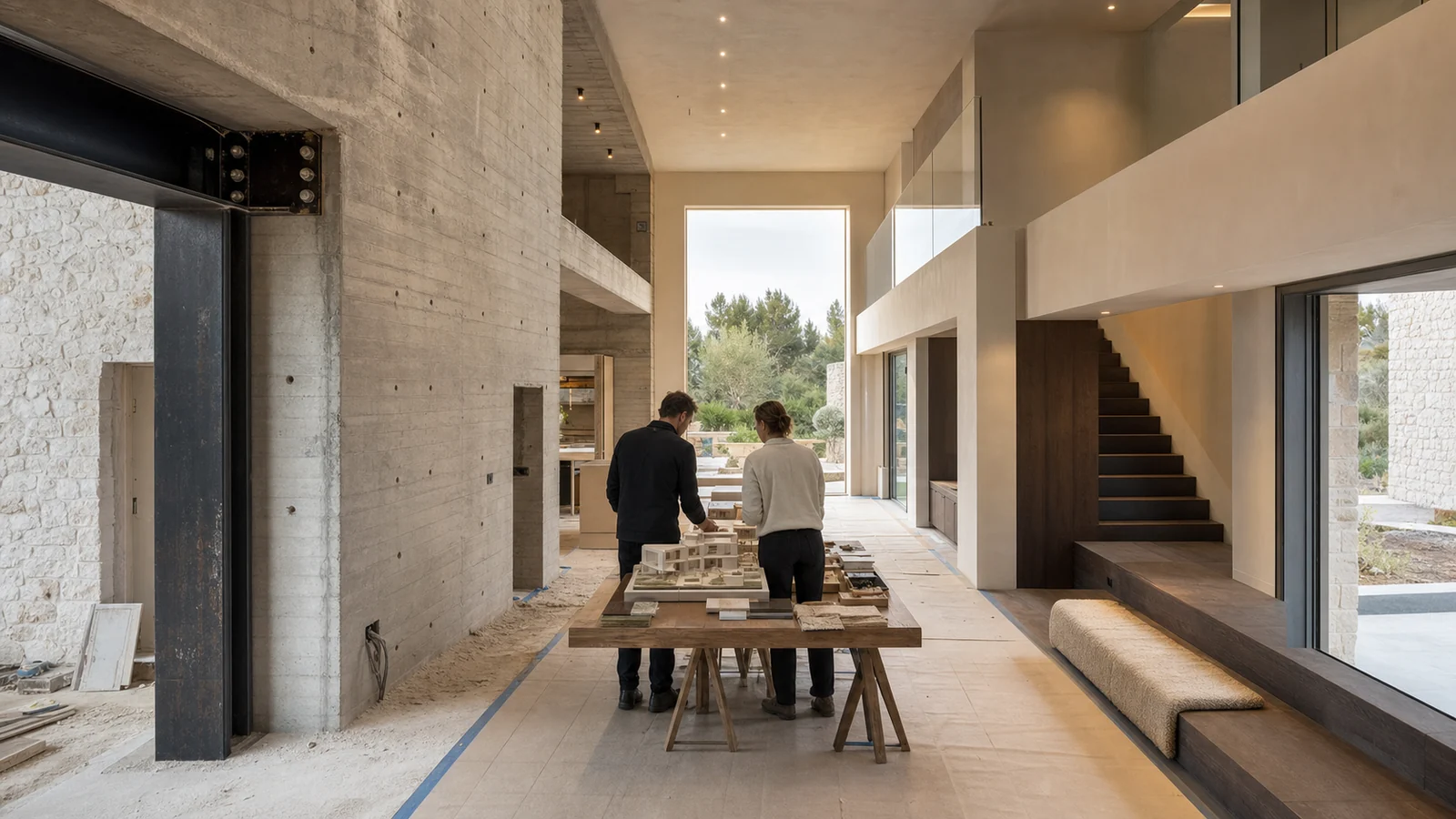
The architect starts by reading the plot. Zoning status, setback distances, floor heights, the sun's path through the day, the view and the wind all come together in the decision of where and how the building will sit. In villas these decisions directly shape the quality of life: which room you will have breakfast in, whether the pool sits in shade or sun in the afternoon, which door leads out to the terrace — the architect settled all of this while the project was still being drawn.
- Massing and siting — How the building sits on the plot, levels, the balance of view and privacy.
- Structural system — Columns, beams, shear walls; in other words, everything you can never move later.
- Permits and regulations — Zoning, building permit, occupancy certificate; if this paper chain breaks, construction stops.
- Facade and shell — Exterior appearance, roof, insulation, window proportions, the way light enters.
- Core spatial layout — How the rooms relate to each other, the floor plan, circulation.
The interior designer tunes the inside of the shell to your life. Not where the wall ends, but what texture, what color and what light that wall greets you with. From the height of the kitchen counter to the number of sockets, from the depth of the built-in wardrobe to the cable of the bedside lamp. This is where an interior designer's real value shows in a villa; because luxury is felt not in expensive materials, but in every detail being exactly where it belongs.
- Interior layout — Furniture placement, circulation, scale; making the room feel right rather than merely big.
- Materials and texture — Flooring, wall finishes, marble, wood, metal; all of them in conversation with each other.
- Lighting design — Layering ambient, accent and task lighting; this is what makes a villa livable after dark.
- Wet areas and kitchen detail — Bathrooms, kitchens, dressing rooms; spaces that work to the millimetre.
- Built-in furniture and storage — Fixed, made-to-measure solutions produced specifically for the villa.
Because the decisions are intertwined. If the interior designer dreams of a six-meter uninterrupted glass wall and a concealed library in the living room, it is the architect who designed the structure who says whether that is possible. If the architect wants to drop the ground floor by half a level, it is the interior designer who sees how that affects kitchen ergonomics. If these two disciplines do not sit at the same table at the start of the project, you will close the gap between them later — with your money and your time.
The most expensive thing in a villa is not the marble; it is the "I wish this had been done differently" you notice once the structural work is finished.
- 1I am building a villa from scratch — Start with the architect and bring the interior designer in at the schematic design stage. The interior designer must be at the table before the plumbing and electrical drawings are made; otherwise sockets, lighting circuits and shafts end up in the wrong places.
- 2I bought a villa with the shell complete and the interior empty — Now the interior designer takes the lead. The architect steps in only where the structure is touched: removing walls, altering the facade or intervening in the roof.
- 3I am renovating my old villa — Start with the interior designer; but the moment you want to remove a wall, ask an architect or a structural engineer. The question "is this wall load-bearing?" can turn into tragedy when walls come down before it is answered.
- 4I only want decoration — What you need is an interior designer or an interior design team; no architect required. Just note that in a villa, "only decoration" usually ends up touching the lighting and the services too; factor that in from the start.
A clear warning: the "per square meter" tables you find online are misleading for villas. Picture two two-story villas of the same size; one has a pool, a smart home system and a natural stone facade, the other standard render and ceramic tiles. Their costs can easily diverge by a factor of two. That is why a serious team will draw up a room-by-room finishes schedule for you before quoting any headline figure.
A finishes schedule is the document that records, line by line, which material, which brand and which workmanship every room of the villa will be built with. The price is generated from that list: item by item, transparent, comparable. Stay away from offers that say "turnkey for this much" without stating what they cover; the most common disputes in villa projects arise from items that were never written into the contract.
When you hire the architect from one place, the interior designer from another and the contractor from somewhere else entirely, you also take on an invisible job: coordination. When something goes wrong, the architect points to the contractor, the contractor to the interior designer, the interior designer back to the architect — and you are the one left in the middle. Vesya's approach of running everything under one roof, from design through implementation to construction, exists precisely to close this gap. When the same team holds the villa's shell, its interior and the work on site, the architect's and the interior designer's decisions align from the very first drawing; nobody can say "that wasn't my job".
This does not mean you must work with a single firm. Two separate offices can produce a superb villa too — as long as you can keep them at the same table, on the same schedule and under a single chain of responsibility. When making your decision, ask one question: who owns this project end to end?
- References — Has this team worked at villa scale before, or does its experience stop at apartments?
- Scope — Will the interior designer and the architect work on the same schedule, or does one start only when the other finishes?
- Documentation — Will I get a finishes schedule and an itemised quote, or just a lump-sum figure?
- Implementation — Will the team that designs also follow the site, or withdraw once the drawings are delivered?
- Changes — If I change my mind during construction, how are the cost and the process managed?
The right setup is actually simple: the architect resolves the villa's skeleton and its permits, the interior designer makes the inside livable, and the two sit at the same table from day one of the project. The day you get that trio in place, the question "which one should I hire" answers itself.
In short
- For a new-build villa, start with the architect and bring the interior designer to the table at the schematic stage; when renovating a finished villa, the interior designer leads.
- The architect resolves the structure, facade and permits; the interior designer resolves materials, lighting and made-to-measure detail. In a good villa their decisions align.
- Decide on the basis of an itemised finishes schedule, not a headline price per square meter; avoid 'turnkey' offers with no written scope.
- The real difference lies not in which one you choose, but in keeping both on a single schedule and under a single chain of responsibility.
How we can help you on this
Journal
 Interior
What Does an Interior Designer Do? When Do They Step Into a Project?
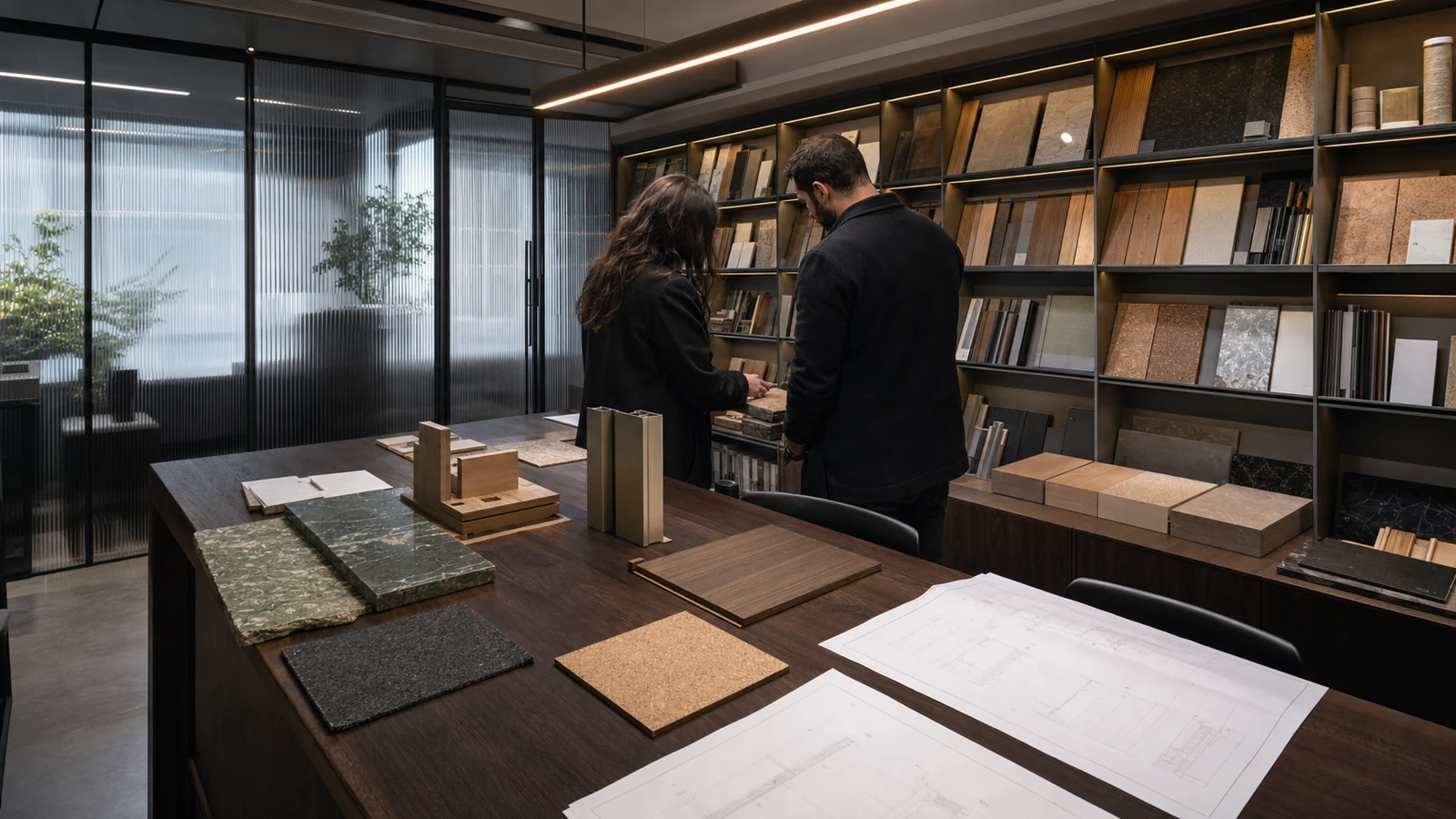
An interior designer shapes both how a space works and how it feels. We explain what they do, how they differ from an architect, and exactly when they should step into a villa or hotel project — through an expert lens.
July 20268 min read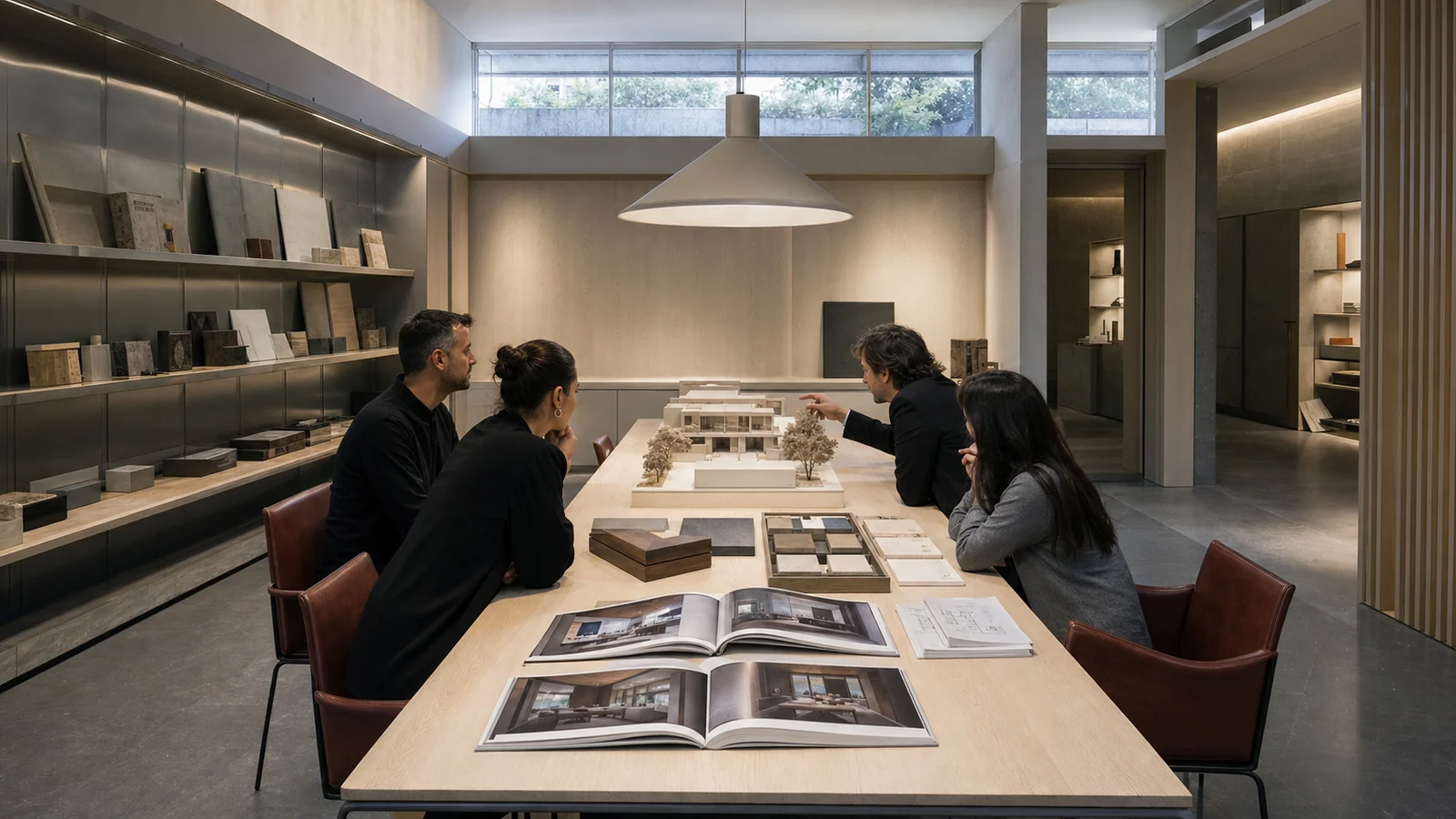 Interior
How to Choose an Interior Design Firm: 7 Critical Points to Watch
When choosing an interior design firm, we explain—through an expert's eyes—the 7 critical points to check, from portfolio to contract and from references to single-point responsibility, along with the questions to ask in your first meeting.
July 20268 min read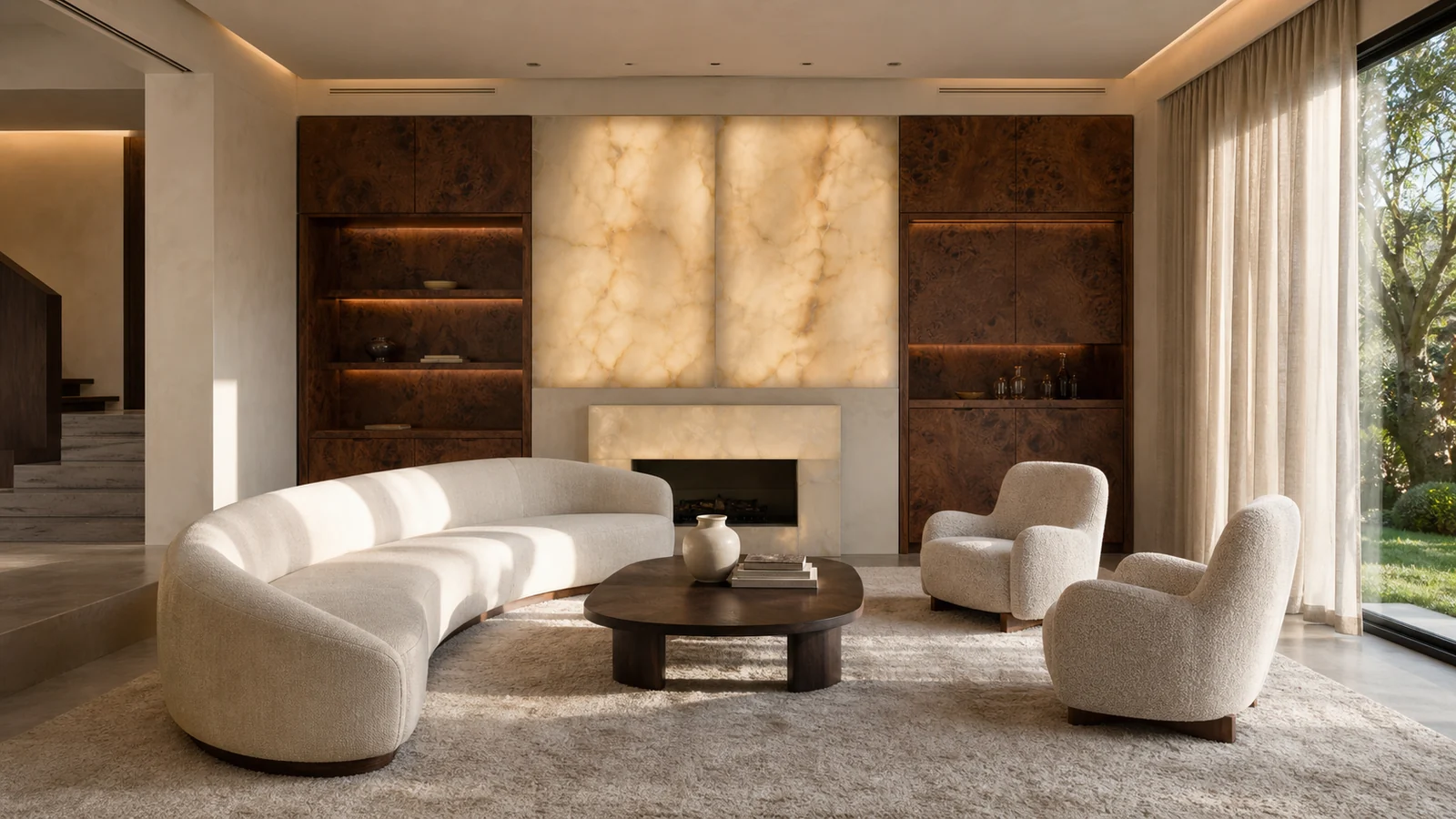 Interior
Luxury Villa Interior Design: Material, Texture, Light and the Grammar of Quiet Luxury
What makes a villa "good" rather than merely "expensive" is honesty of material, consistency of texture and the staging of light. We spell out the grammar of quiet luxury, line by line.
July 20268 min readFrequently asked questions
Vesya Project Team
Design · Build · Construction
- Response time
- Same day
- Channels
- Phone · Email · WhatsApp
Can't find your answer here? Send us your question directly — our team will reply shortly.
Free consultationIf you are building a villa from scratch, go to the architect first; how the building sits on the plot, the structural system and the permits are the architect's job. But do not keep the interior designer waiting — bring them in at the schematic design stage. The interior designer must be at the table before the plumbing and electrical drawings are made, so that sockets, lighting and kitchen ergonomics are set up correctly. If you bought a villa with the shell finished and the interior empty, the order flips and the interior designer takes the lead.
Vesya Project Team
The architect produces the building's shell: siting on the plot, structural system, facade, roof, floor plan and the building permit. The interior designer makes the inside of that shell livable: furniture layout, material and texture selection, lighting design, bathroom and kitchen detail, made-to-measure built-in storage. In short, the architect makes the decisions you can never change later, while the interior designer makes the decisions that touch your daily life.
Vesya Project Team
In most interior renovations the interior designer runs the job and no architect is needed. But if the work touches the structural system or the permits — removing a wall, changing the facade, intervening in the roof or adding a floor — you must consult an architect or a structural engineer. No wall should ever come down before the question 'is this wall load-bearing?' has been answered.
Vesya Project Team
The 'per square meter' tables online are misleading for villas; choices such as a pool, a smart home system or a natural stone facade can easily double the cost. The right method is a finishes schedule: a document that records, line by line, which material, brand and workmanship each room will be built with. The price is generated from that list, item by item. Avoid 'turnkey for this much' offers whose scope is not written down.
Vesya Project Team
No — two separate offices can deliver an excellent villa too. But then the coordination burden shifts to you. Having design, implementation and construction run from a single point brings a major advantage: decisions align at the first drawing, responsibility stays in one chain, and nobody on site says 'that wasn't my job'. Whoever you hire, ask who owns the project end to end.
Vesya Project Team
The common mistake is calling the interior designer only for decoration, once construction is over. If the interior designer joins before the plumbing and electrical drawings are made, lighting circuits, socket positions, shafts and wet-area dimensions are placed correctly from the start. Every decision made too late comes back to you as the cost of breaking and redoing work after the structural phase is finished.
Vesya Project Team