
Why Travertine Never Gets Old
Its porous texture softens light and turns flaws into character. Why travertine returns to our projects again and again — and the three rules of using it well.
Some materials become fashionable, then pass. Travertine does not. From the two-thousand-year-old buildings of Rome to contemporary villas in Bodrum, the same stone stands with the same calm. The reason is no aesthetic coincidence; it is hidden in the physics of the stone and in the relationship it builds with light.
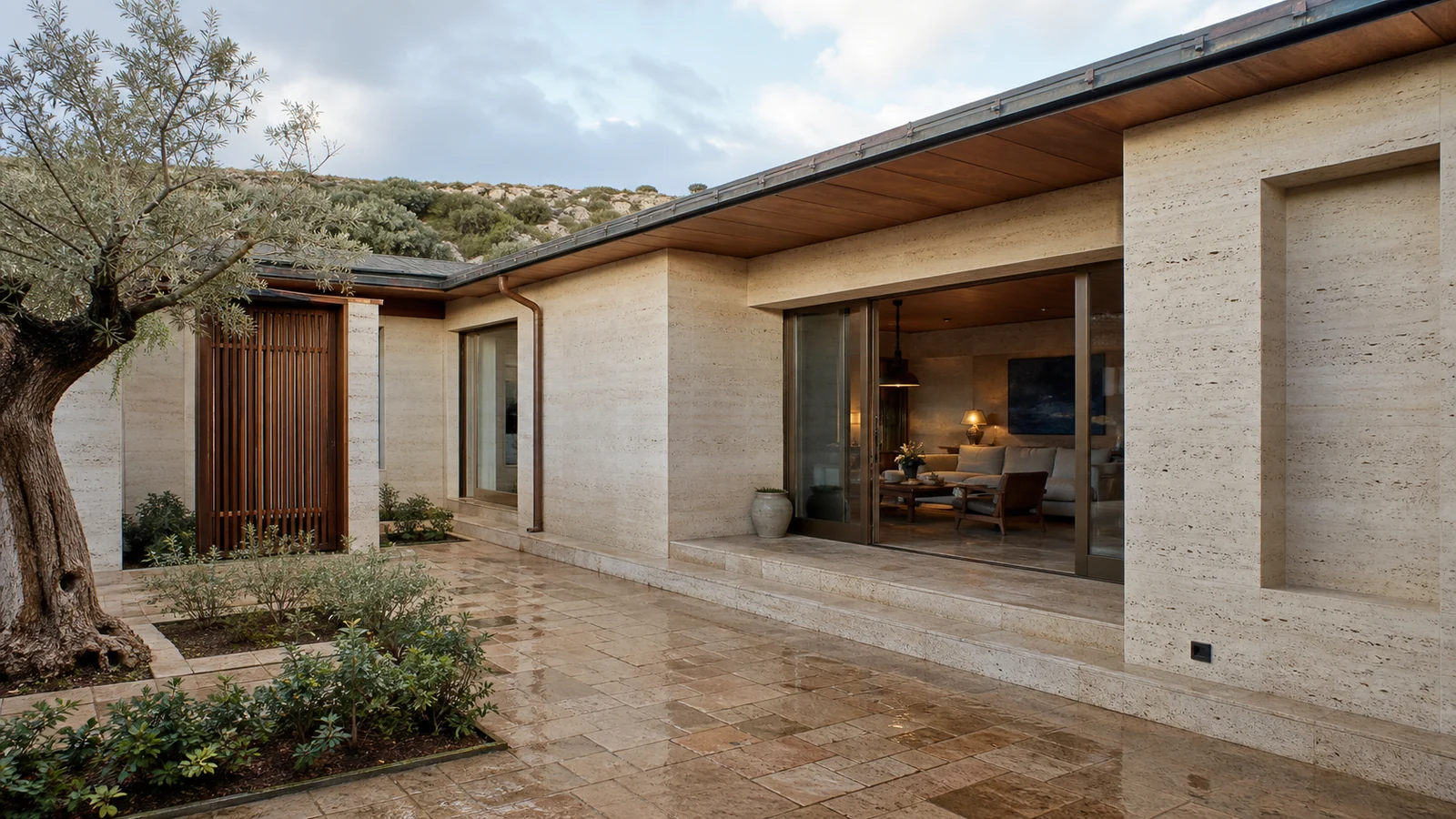
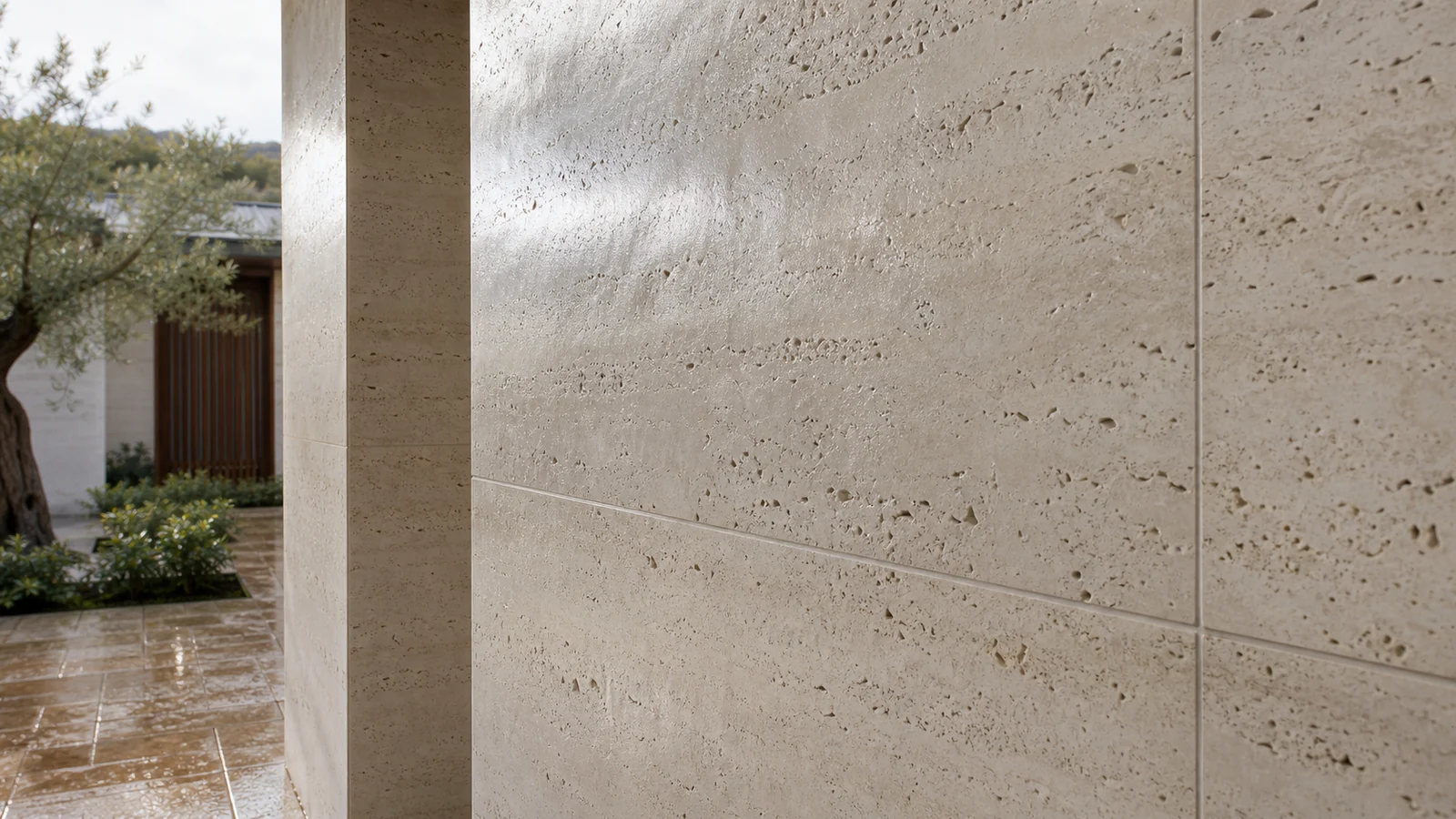
The surface of travertine is filled with micro pores. These pores do not reflect light like mirrors; they absorb it, scatter it and soften it. Travertine has neither the harshness of polished granite nor the coldness of polished marble — even under the midday sun the facade does not tire the eye, and in evening light it turns a warm skin tone. This is why, in our day/night render sets, travertine facades “settle” in both lights.
Mass-produced claddings are flawless and faceless; every tile is identical to the next. In travertine, every slab is different: the veining, the voids and the tonal shifts are the signature the stone brings from the quarry. The patina that forms over time joins this signature — travertine does not age, it matures. With the right surface finish (filled/unfilled, honed/brushed), stains and wear become character.
- Choose the stone at the quarry, not on a screen — slab by slab; decide with a real sample of the batch that will be used in the project.
- Set the surface finish according to the space — brushed/unfilled breathes on an exterior facade, honed and filled is safe in wet areas.
- Resolve joint and eave details from the start — the stone's relationship with water is managed in the detail; a solution added later remains visible.
Travertine does not age, it matures — it is one of the rare materials that turns flaws into character.
You can see the whole of our material philosophy on our Interior Architecture page, and our travertine projects in our portfolio with day/night pairs.
The first technical decision when working with travertine is whether the stone's natural voids will be filled. Filled travertine has its pores closed with a cement- or resin-based grout: the surface is flat, easy to clean and more tolerant of furniture and foot traffic. Unfilled travertine leaves the voids open; it takes light into itself and gains depth of shadow, but dust and moisture enter those same voids. In a villa the rule is practically this: horizontal, heavily used surfaces filled; vertical, untouched surfaces unfilled.
- Honed (matt) finish: the most common interior choice; silky matt, not slippery, holding the light rather than scattering it.
- Polished finish: it asks for gloss but is slippery when wet and shows scratches; in a villa it is rarely the right decision.
- Tumbled finish: rounded edges, an aged texture; it finds its place in courtyards, terraces and a rustic language.
- Brushed finish: the texture is preserved but the grip is increased; the safest choice around a pool and on exterior steps.
Travertine is a limestone-family stone, which means it is acid-sensitive. That single sentence largely determines where and how the material is used. Poolside there is chlorine and constant wetness: here a brushed or tumbled finish, an impregnating sealer and correct joint spacing are required. In a bathroom soap and limescale build-up are the real problem; if the surface protection is not renewed, matt stains remain. On a facade the decisive factor is frost — in a climate where water enters the stone and freezes, a travertine with low water absorption and a properly detailed drip edge are mandatory. In short, travertine is not a stone that 'works anywhere'; there is a different travertine for each place.
Travertine's bad reputation comes almost entirely from wrong maintenance. Correct care is not expensive, but it takes habit:
- Do: use a pH-neutral cleaner; wipe spills immediately; renew the sealer within the manufacturer's interval.
- Do not: vinegar, lemon, limescale removers and chlorine-based products — all of them dull the surface with acid and leave a mark.
- Do not: scrub with an abrasive pad; on a honed surface it leaves shiny traces that cannot be reversed.
- Do: put mats at the doors — sand carried in from outside is the real thing that scratches travertine.
Both are carbonate stones and both are acid-sensitive; the difference is in texture and character. Marble is homogeneous, glossy and imposing — it reflects light. Travertine is porous, calm and earthy — it softens light. In a villa, where marble is used heavily the eye reads 'luxury' but tires over time; where travertine is used heavily the space grows calm. In our practice the two are not rivals but partners in role: floors and large surfaces calm down with travertine, while a single focus such as a counter or fireplace is emphasised in marble. How material selection ties into the project is explained in detail on our interior architecture page and in our villa interior trends article.
In short
- Travertine's porous texture absorbs and softens light; the facade is easy on the eye in both lights.
- Every slab is different: veining and tonal shifts are the stone's signature, and patina joins it over time.
- The right result rests on three decisions: selection at the quarry, surface finish by space, details resolved from the start.
Project visuals
03 media
 01
01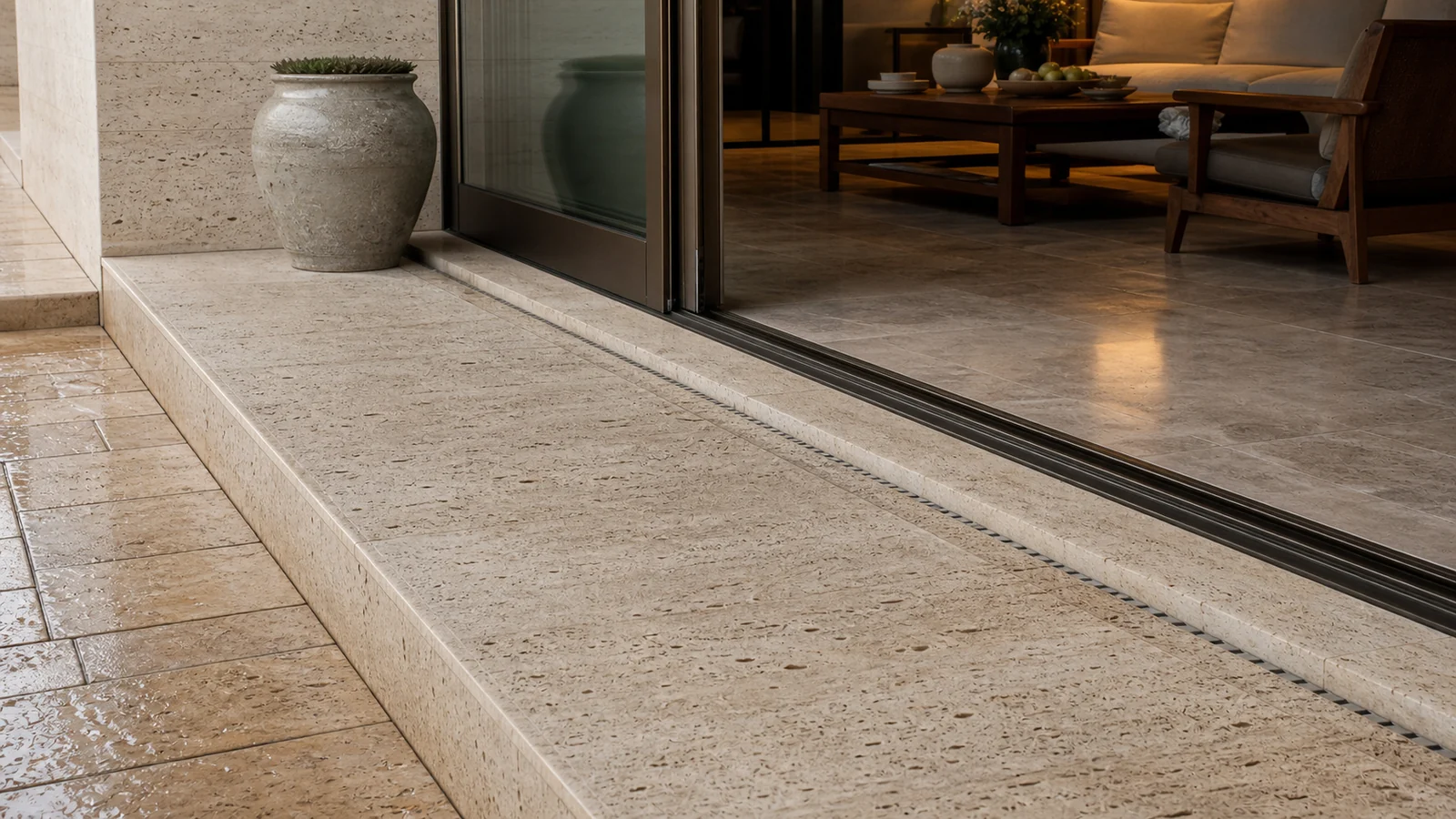 02
02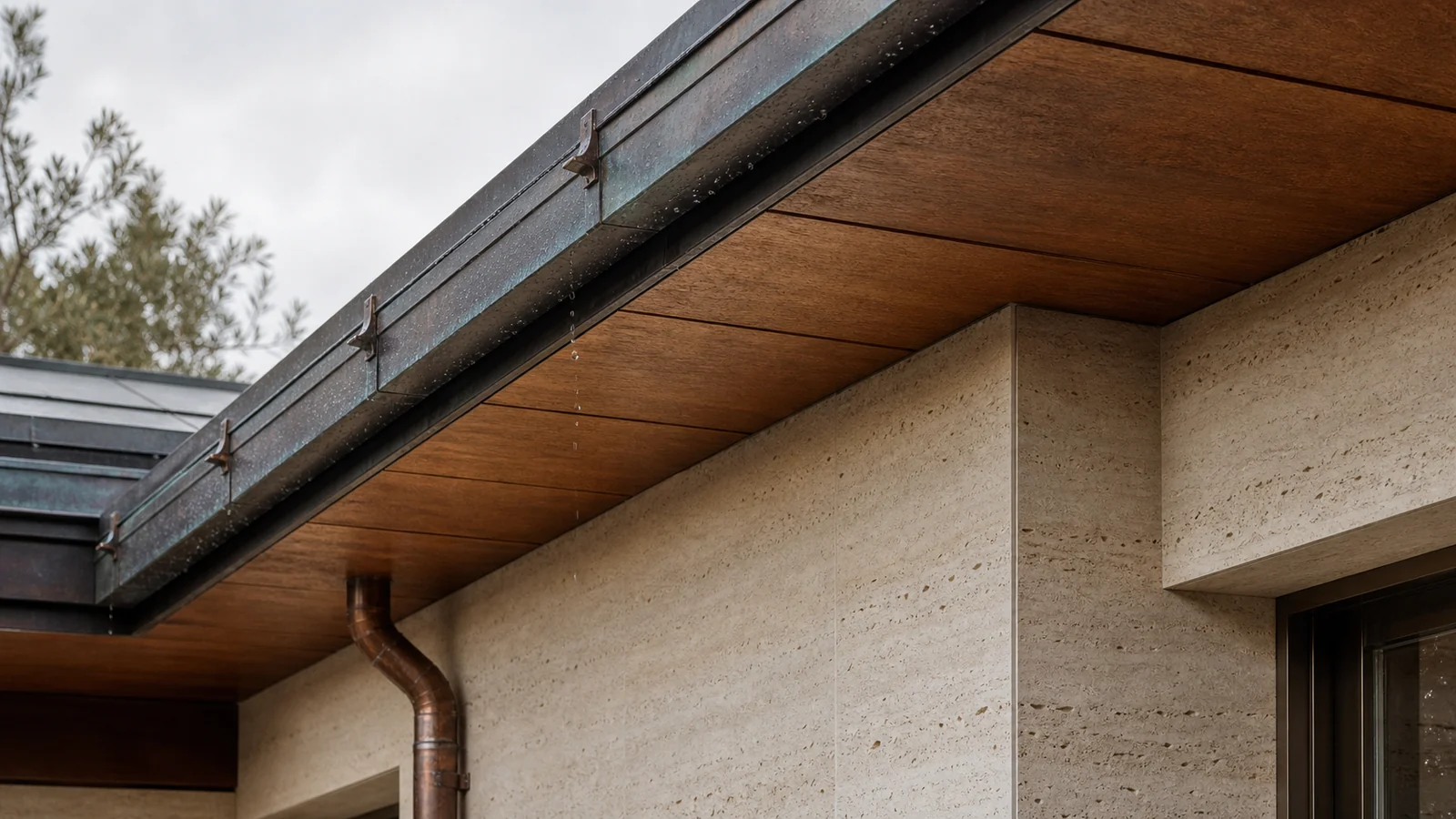 03
03How we can help you on this
Journal
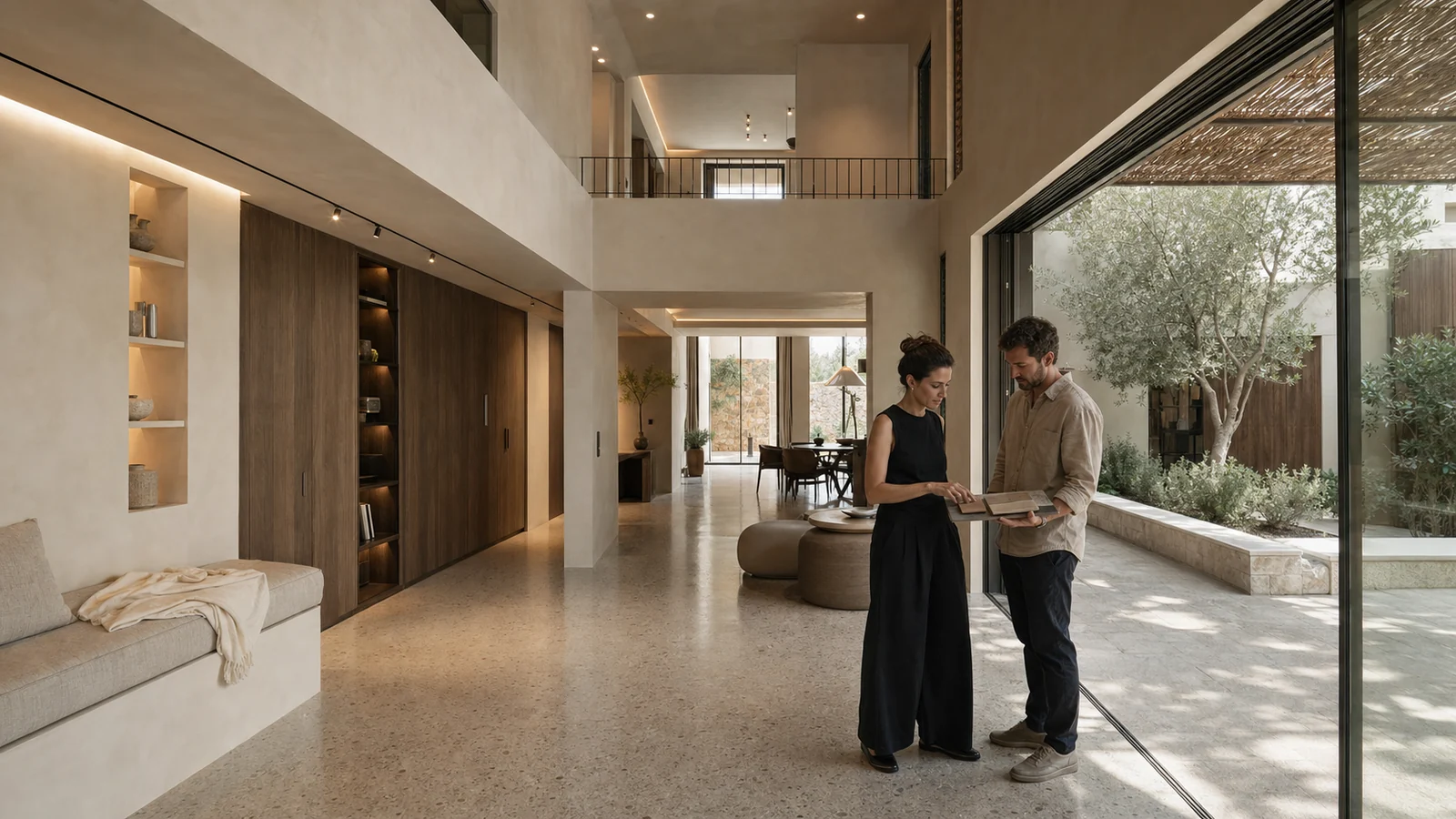 Interior
The Role of the Interior Architect in Villa Design
In a villa, the interior architect does not merely choose decor; they tie light, circulation and material to the backbone of the space. The four things an interior architect working in step with the architecture brings to a villa.
June 20266 min read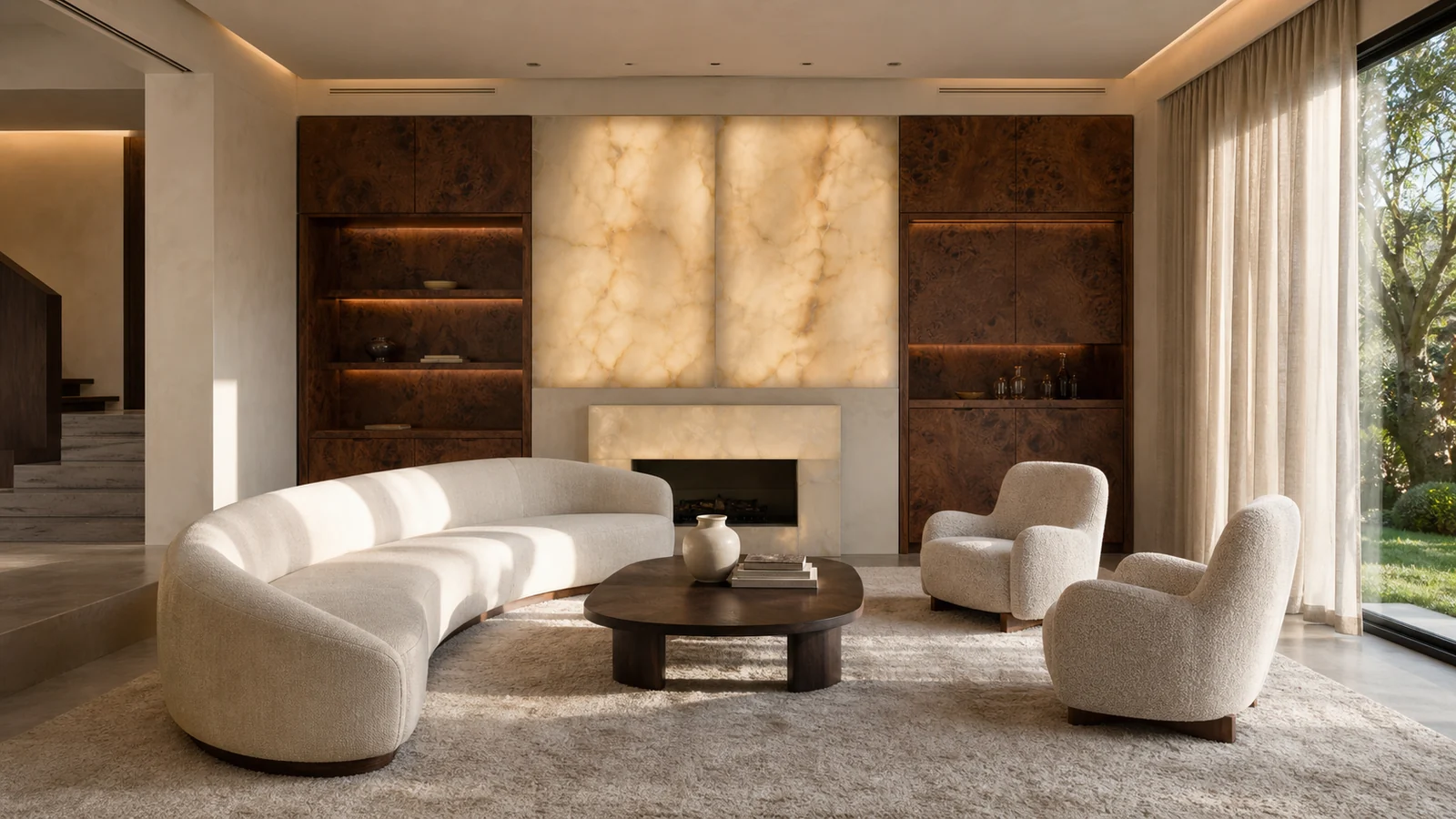 Interior
Luxury Villa Interior Design: Material, Texture, Light and the Grammar of Quiet Luxury
What makes a villa "good" rather than merely "expensive" is honesty of material, consistency of texture and the staging of light. We spell out the grammar of quiet luxury, line by line.
July 20268 min read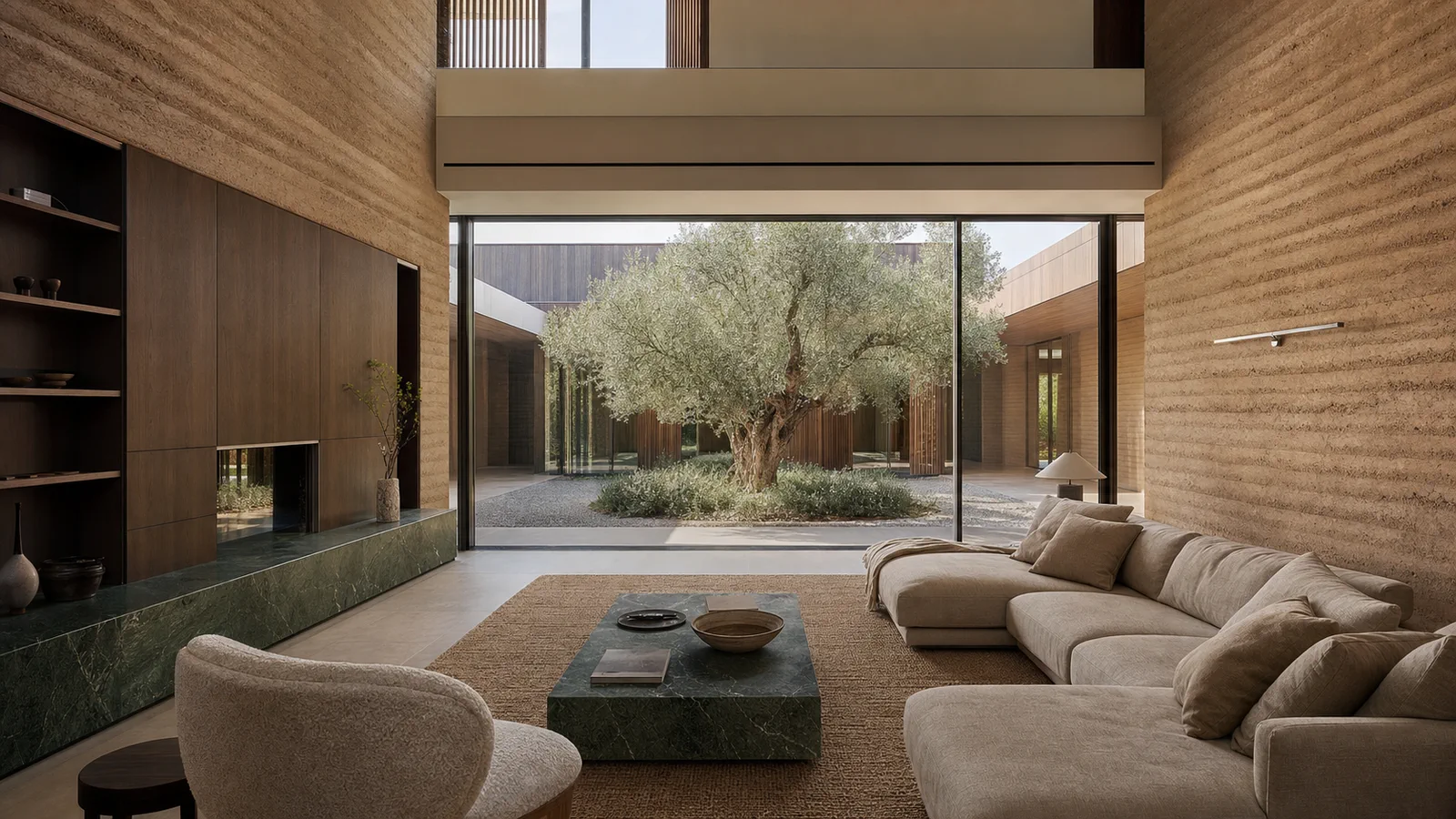 Trends
2026 Villa Interior Design Trends: Quiet Luxury and Nature
The luxury line of 2026 runs through calm rather than display: quiet luxury, biophilic design, natural materials and warm minimalism. We separate lasting trends from passing fads.
July 20267 min readFrequently asked questions
Vesya Project Team
Design · Build · Construction
- Response time
- Same day
- Channels
- Phone · Email · WhatsApp
Can't find your answer here? Send us your question directly — our team will reply shortly.
Free consultationYes — with the right surface finish and detailing, travertine is a freeze-thaw resistant, long-lived facade stone. What is critical is that the joints, eaves and the relationship with water are resolved in the design.
Vesya Project Team
On an exterior facade no special maintenance is needed; in interiors and wet areas, an impregnation (protective) treatment increases stain resistance. Patina is not a flaw but the maturing of the stone.
Vesya Project Team
If you want a warm, textured surface that softens light, travertine; if you want a polished, veined and dramatic surface, marble. On villa facades, the calm of travertine usually wins.
Vesya Project Team