
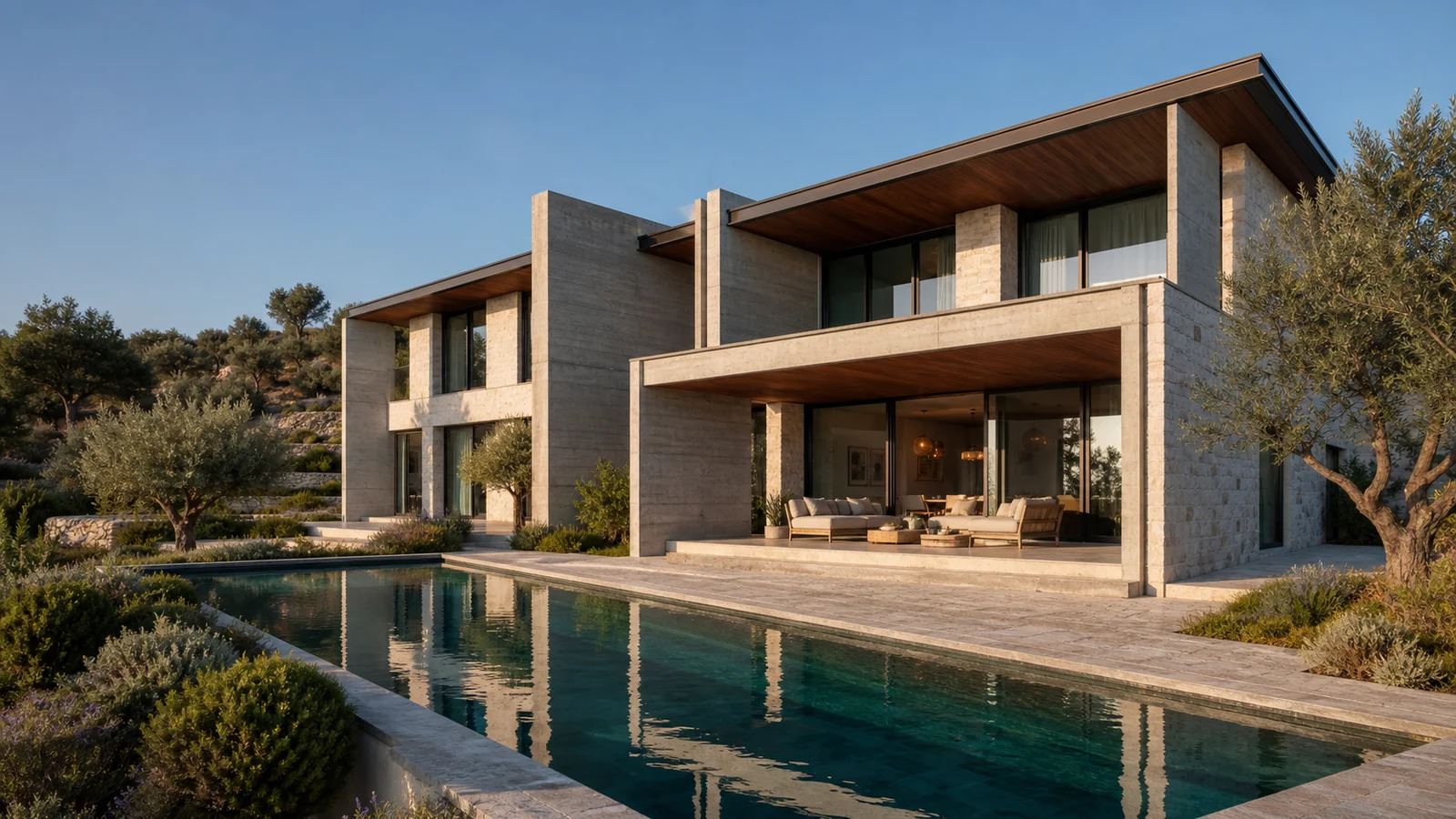
Turnkey Villa: One Team From Design to Handover
One contract, one responsibility — from land to keys. We explain step by step how a turnkey villa works, what determines its cost and what to watch for in the contract.
Building a villa means bringing dozens of decisions, dozens of tradespeople and a process spread over months together into a single result. The promise of the “turnkey” model is simple: one team carries this complexity for you, and you remain only the owner of the decisions. But how does this model actually work, what determines its cost and what does a good contract look like? As a team that runs design, implementation and construction under one roof, let us explain the process in the simplest terms.
A turnkey villa is a model in which full responsibility for the structure to be built on your land is handed to a single company under a single contract. Architectural design; structural, mechanical and electrical projects; permit procedures; shell construction; fine finishing and interior design — all fall within the same scope. Instead of managing different teams one by one throughout the process, you move forward on a predefined scope and schedule.
The “key” in the name describes the moment the work is done: on the date set in the contract, you step into a home ready to be lived in. What makes the difference is not the building itself, but whose shoulders carry the process that leads to it.
In villa construction the most expensive item is often not the material but the lack of coordination. If the architect, interior designer, contractor and installer are different companies, every gap between them comes back to you as delay and extra cost. When a problem arises, the “was the project wrong or the workmanship?” argument lands on your table.
Having design, implementation and construction in one team closes these gaps. When the person who draws the design and the person who builds it on site share the same responsibility, there is a single decision-maker and accountability is clear. Details do not look good on paper only to stall on site, because whoever draws them knows from the start how they will be built.
In a good turnkey process the client manages only one thing: the decisions. Coordinating everything else is the team’s job.
A healthy turnkey process consists of these mutually reinforcing stages:
- 1Needs analysis and discovery — Your lifestyle, the location of the land, the zoning status and the budget framework are discussed. This stage is the ground for every decision that follows.
- 2Concept design — The villa’s architectural language, massing, floor plans and material palette are defined. Here the question “what kind of home” gets a visual answer.
- 33D visualization — The project is presented with photorealistic imagery before it is built; you make decisions from a near-real image rather than from a model.
- 4Working drawings and permit — The architectural, structural, mechanical and electrical projects are detailed, and the municipal permit process is carried out.
- 5Shell construction — Foundation, waterproofing, reinforced-concrete load-bearing system, roof and exterior façade.
- 6Fine finishing and interior design — Floor and wall coverings, kitchen and bathroom, lighting, doors and joinery, furniture and final-layer details.
- 7Inspection and handover — Inspection against the room-by-room schedule, closing of any snags and handover of the keys.
There is no single answer to “how much does a villa cost?”, because cost is the sum of the decisions taken. The items that truly shape a quote are these:
- Land and ground conditions — Slope, the soil survey result and the need for retaining structures directly affect the foundation cost.
- Square meters and floor layout — As much as the total area, the efficiency of the plan is decisive; every square meter is both a construction and an operating cost.
- Material level — Natural stone, solid timber, custom joinery and fixtures are where the budget is most flexible.
- Technical systems — Underfloor heating, VRF/air conditioning, smart-home automation and renewable-energy solutions.
- Landscape and outdoor elements — Pool, garden, parking and lighting are often a separate budget heading.
- Permits, fees and official procedures — Permit and fee items that vary by region.
- Location and logistics — Site access, material transport and local labour conditions.
As of 2026 the per-square-meter cost of turnkey villas moves within a wide range depending on the chosen quality; in the luxury segment this figure rises markedly with materials and technical equipment. That is why “average” figures online give only a starting idea. The right approach is not a vague “all-inclusive” price but a transparent, item-by-item quote — with a room-by-room schedule and material brands. A clear quote protects you more than the cheapest one.
The duration depends on size, level of detail and the permit process. A rough framework:
- 1Design and working drawings: 2–4 months
- 2Permit process: 1–3 months depending on the region
- 3Construction and fine finishing: 10–16 months depending on the villa’s scale
In total, most villas are completed within a 14–22 month band from land to keys. Decisions such as smart-home systems, custom-made joinery or complex landscaping can extend the timeline. The advantage of the turnkey model is that this schedule is written into the contract from the start and responsibility for any delay is gathered at a single point.
A good turnkey contract puts trust into writing. The following headings need to be clear:
- Item-by-item scope — What is included and what is excluded must be written out one by one.
- Room schedule and material brands — Not “quality material”, but which product/brand/class; defined room by room.
- Payment plan and progress billing — Payments should be tied to the progress of the work (progress billing), not blocked upfront.
- Timeline and delay terms — The delivery date and the terms that apply in case of delay.
- Guarantee and warranty — Workmanship and manufacturing warranty, responsibility after handover.
- Permit and approval responsibility — Who is responsible for the official procedures must be clearly stated.
- Revision procedure — How cost and time will be updated if you request changes during the process.
Imposing a single model on every project is not right. If you have construction experience, plenty of time and enjoy managing the process yourself, you can break the work into parts and work with separate teams. But for most villa owners what is truly valuable is time, predictability and the peace of working with a single point of contact. This is exactly where the turnkey model is strong: the decisions stay with you, the burden with the team.
We run design, implementation and construction under one roof, because the quality of a villa lies in how invisible the seams between these three stages are. The team that draws the concept also follows how that detail comes to life on site. Our aim is to offer you a “surprise-free” process: a clear scope from the start, a transparent quote and a home that matches what was promised at handover.
In short
- Turnkey = one contract, one responsibility; you manage only the decisions.
- Cost is set by material level, technical systems and land conditions — an “average” price is only a starting idea.
- It is the clearest item-by-item quote with a room schedule, not the cheapest one, that protects you.
- Most villas are completed within a 14–22 month band from land to keys.
How we can help you on this
Journal
 Villa
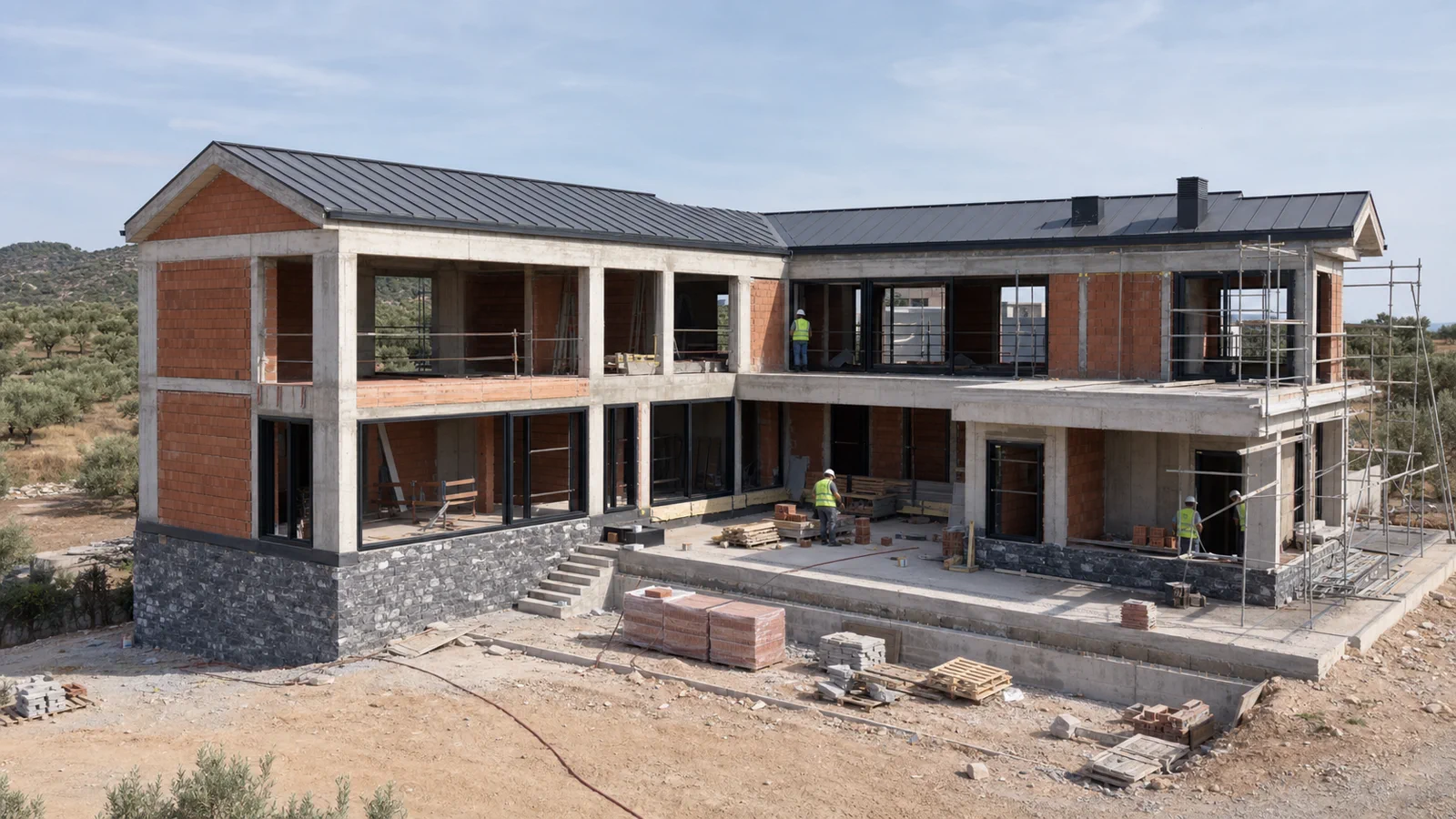
VillaVilla Construction Cost 2026: The Factors That Set the Price
There is no single answer to "how much does a villa cost?"; the cost is the sum of the decisions you make. We explain what determines the m² price, which line items get overlooked, and how to read a transparent quote.
July 20268 min read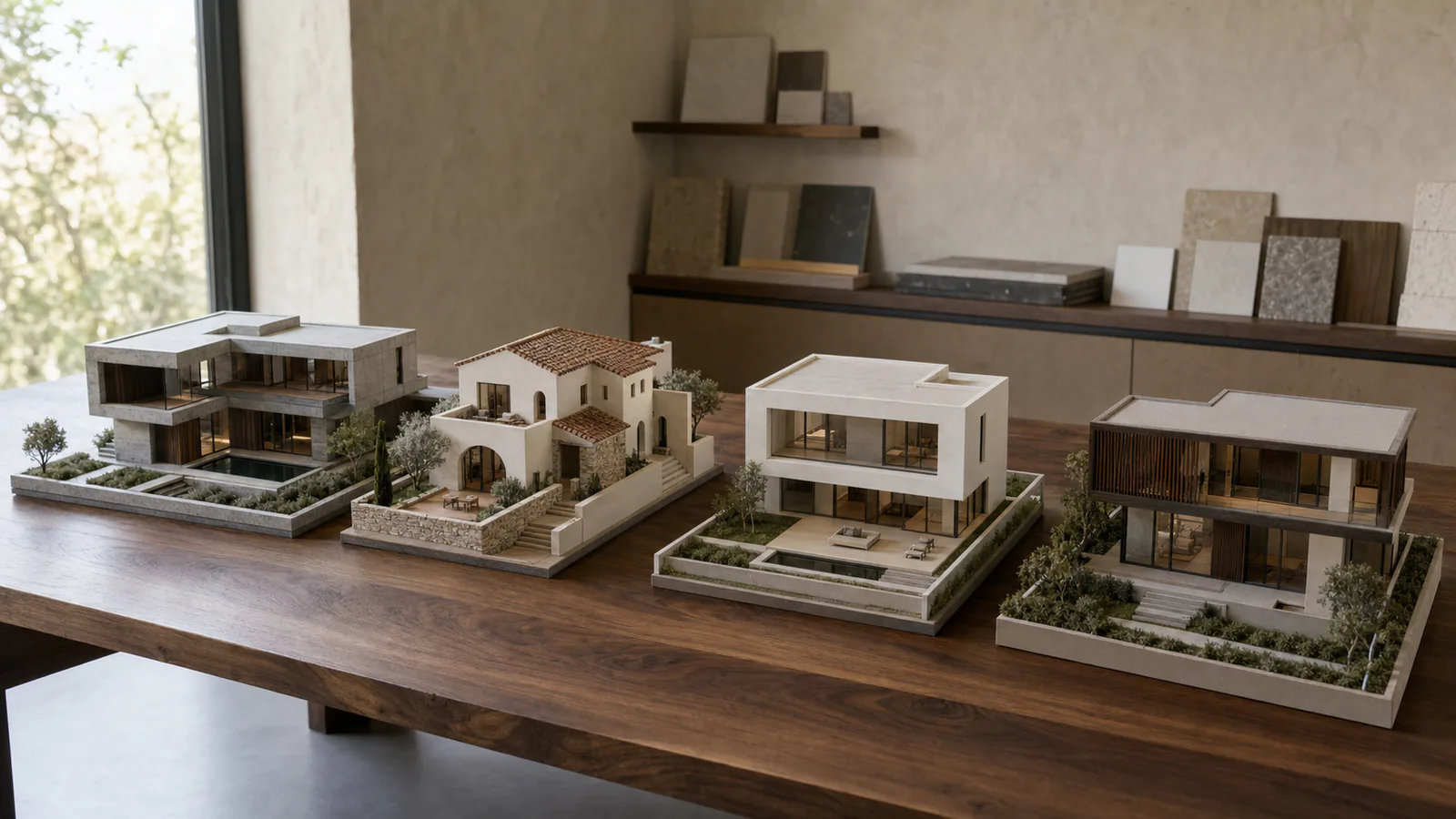 Villa
VillaVilla Models Guide: Which Style Is Right for You?
Modern, Mediterranean or minimalist? Choosing a villa model is as much about the plot, the climate and your lifestyle as it is about taste. We compare the leading styles by character to help you find the one that fits you best.
July 20267 min read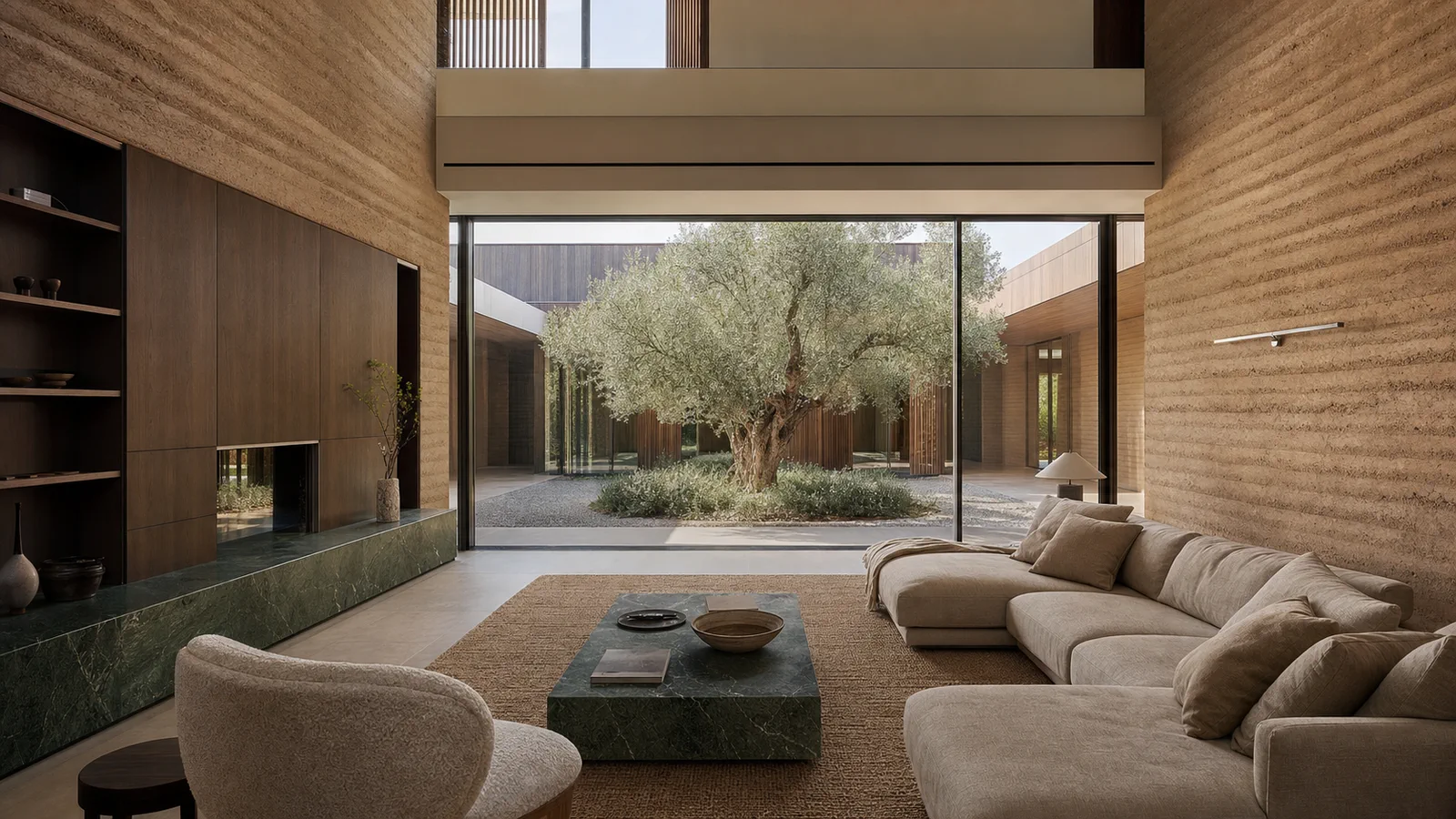 Trends
2026 Villa Interior Design Trends: Quiet Luxury and Nature
The luxury line of 2026 runs through calm rather than display: quiet luxury, biophilic design, natural materials and warm minimalism. We separate lasting trends from passing fads.
July 20267 min read Process
What Does Turnkey Mean? Definition, Scope and Process
Turnkey means entrusting a project, from design to finished handover, to a single firm under a single contract. What it covers, how it differs from managing the work piece by piece, and what to watch for — we make it clear.
July 20266 min read Villa
VillaVilla Construction Phases: From Needs Analysis to Permits and Turnkey Handover
From an expert's perspective, we explain the eight phases that take a villa from scratch to handover, the critical hand-offs between them, and what you need to know in the Turkey 2026 context.
June 20268 min read Villa
VillaHow Many Months Does It Take to Design a Villa? A Realistic Timeline
The short answer: concept in 2–3 weeks, full architectural project and permit set in 6–10 weeks, 3–4 months together with interiors. The long answer depends on “what is being waited for” — we explain the five things that set the timeline, and our own rhythm.
July 20265 min readFrequently asked questions
Vesya Project Team
Design · Build · Construction
- Response time
- Same day
- Channels
- Phone · Email · WhatsApp
Can't find your answer here? Send us your question directly — our team will reply shortly.
Free consultationAs of 2026 the per-square-meter cost varies within a wide range depending on the chosen quality; in the luxury segment materials, technical equipment and custom work raise this figure markedly. Online averages give only a starting idea; the real figure becomes clear from an item-by-item quote based on the room schedule and material choices.
Vesya Project Team
No. The turnkey scope generally covers the structure to be built on your land and the related processes; the land cost is separate. Pool, landscaping and some outdoor elements are also often separate budget headings — which is why it matters that the scope is written out item by item.
Vesya Project Team
Design and drawings take 2–4 months, the permit 1–3 months, and construction and fine finishing 10–16 months depending on scale. Most villas are completed within a 14–22 month band from land to keys; custom manufacturing, smart-home systems or complex landscaping can extend the timeline.
Vesya Project Team
In a good contract, no. Payments are tied to the progress of the work, i.e. progress billing; you pay as specific works are completed. A progress-linked plan, rather than a blocked upfront payment, protects both you and the work.
Vesya Project Team
Yes, and this is the most enjoyable part of the process. The material level is where the budget is most flexible; choices from natural stone to fixtures are decided together in the room schedule and written into the contract as brand/class.
Vesya Project Team
In the turnkey model the permit and official approval processes are part of the scope and are carried out by the team. Even so, make sure the contract clearly states who holds the responsibility.
Vesya Project Team