
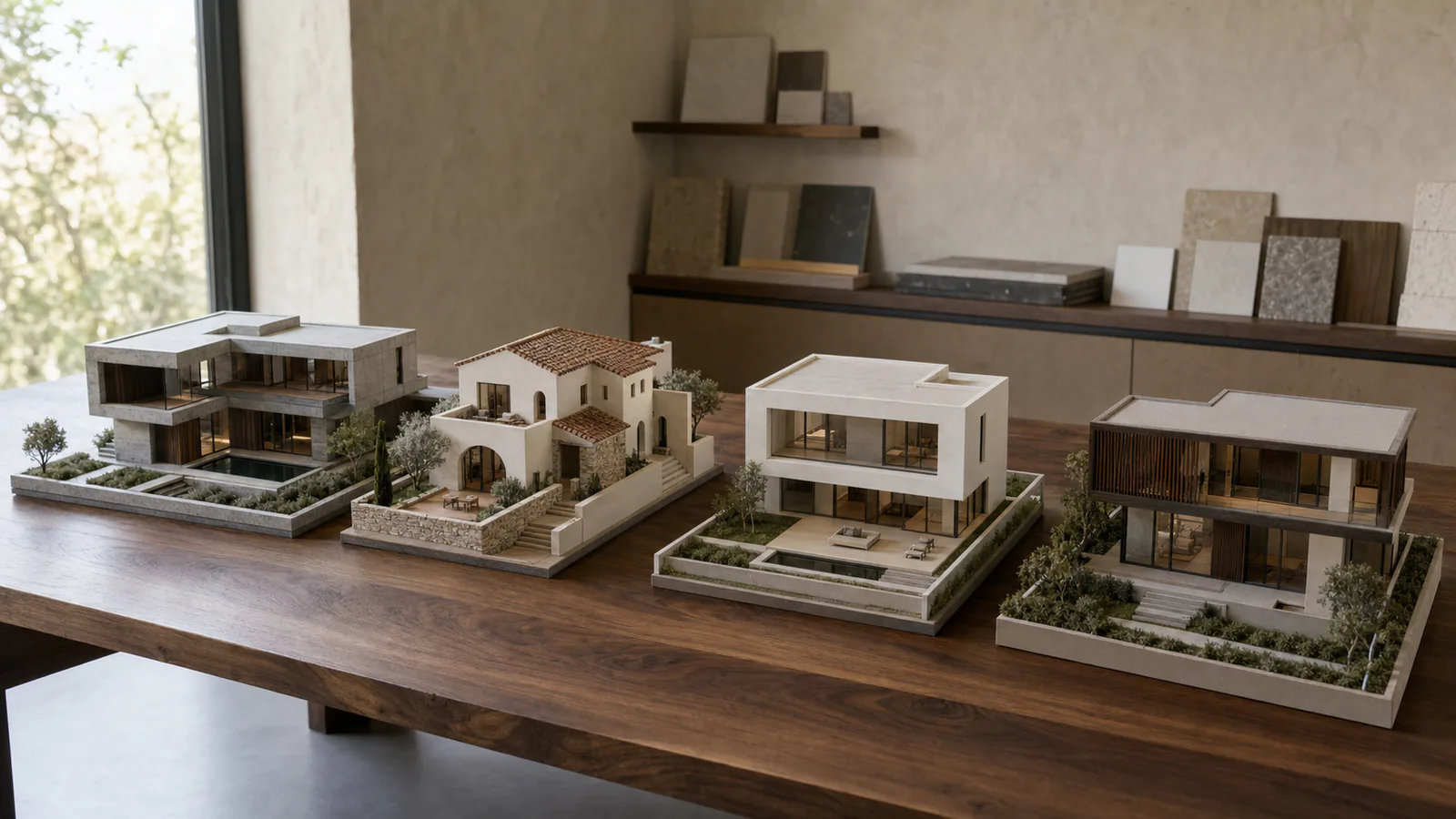
Villa Models Guide: Which Style Is Right for You?
Modern, Mediterranean or minimalist? Choosing a villa model is as much about the plot, the climate and your lifestyle as it is about taste. We compare the leading styles by character to help you find the one that fits you best.
When people imagine a villa, a “feeling” usually comes first: warm stone walls and a shaded courtyard, or floor-to-ceiling glass and sharp lines? Choosing a villa model means translating that feeling into an architectural language. But a good choice is never purely aesthetic; the plot's orientation, the climate, the need for privacy and how you live are just as decisive as visual taste. Let's compare the leading villa models by their character, without the frills.
A modern villa is defined by clean geometry, large glass surfaces, a flat or gently sloped roof and a fluid transition between indoor and outdoor space. It draws in natural light and frames the view. It is ideal for panoramic plots and view-oriented lots. Its strength: a timeless, airy and prestigious look. Watch out for: large glass surfaces call for careful thermal insulation and shading design.
With natural stone, lime plaster, wooden shutters, arches and shaded courtyards, the Mediterranean villa is warm and inviting. In hot climates, thick walls and inner courtyards provide natural coolness. It is tailor-made for those who build a life intertwined with the garden, the pool and outdoor living. Its strength: character and harmony with the climate. Watch out: the detailed craftsmanship (stone, plaster) is exacting and demands real skill.
A minimalist villa carries the “less is more” principle into the living space: clean lines, hidden storage, a calm material palette and volumes stripped of the unnecessary. It is a strong choice for those seeking to escape the clutter, craving serenity and order. Its strength: calm and elegance. Watch out: simplicity demands perfection in the detail — every joint, every seam becomes visible.
On a limited plot, the way to create generous living space is to go up. A duplex layout separates day (social) and night (private) areas across floors, delivering both efficiency and privacy. It is also a natural solution for sloped plots. Its strength: spaciousness on a compact plot and a clear separation of zones. Watch out: the staircase layout and vertical services plan must be resolved well from the start.
With open plans, wide terraces, natural materials and a design that merges with the landscape, the tropical villa turns the home into a holiday experience. It is popular for second homes and resort regions. Its strength: a strong bond with the outdoors and a sense of ease. Watch out: open spaces require a climate and maintenance plan.
Choosing a model may look like a matter of taste, but it is really the answer to a few concrete questions:
- Plot — Which massing do its orientation, slope, view and distances to neighbours make possible?
- Climate — Is it hot, windy, very sunny? A style should work with the climate, not against it.
- Lifestyle — A crowd of guests or a quiet nuclear family; indoor living or garden life?
- Privacy — Do you want a glass box or a sheltered courtyard?
- Scale and budget — The model ties directly to cost through m² and material decisions.
A good villa model is not the one in fashion; it is the one that gives the truest answer to your plot, your climate and your way of life.
In practice, the best villas are often not a pure style but a synthesis made just for you: a modern volume softened by Mediterranean warmth, or a minimalist language opening onto a tropical terrace. Because we carry the design, the detailing and the construction under one roof, we design not only for the model you choose to look beautiful, but for it to be executed flawlessly on site.
In short
- Choosing a villa model is as much about the plot, climate, privacy and lifestyle as it is about aesthetics.
- Modern offers airiness and views; Mediterranean brings warmth and climate harmony; minimalist offers serenity.
- A duplex gives spaciousness on a compact plot, while tropical delivers a strong indoor-outdoor bond.
- The best result is usually not a pure style but a synthesis made just for you.
How we can help you on this
Journal
 Villa
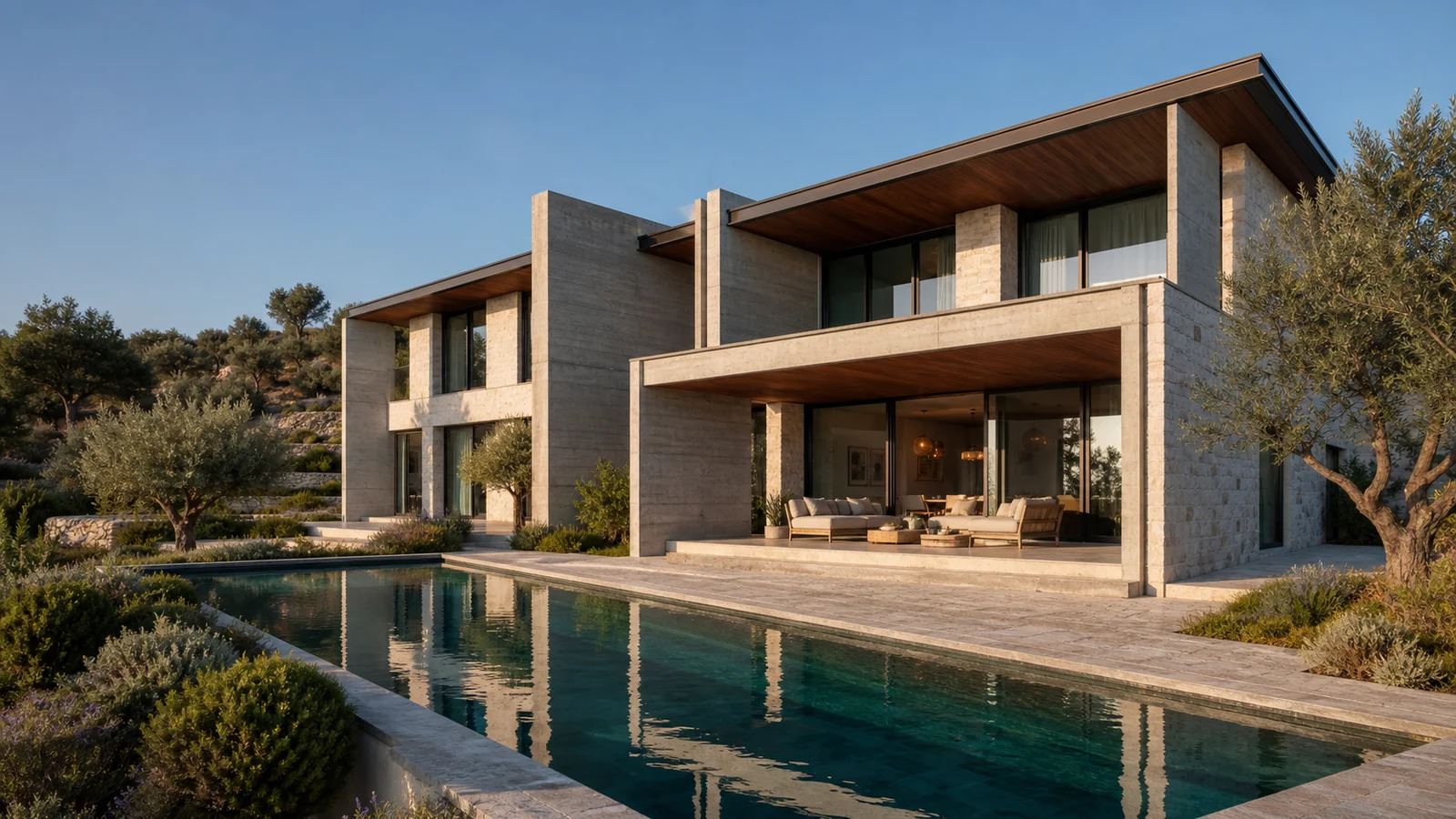
VillaTurnkey Villa: One Team From Design to Handover
One contract, one responsibility — from land to keys. We explain step by step how a turnkey villa works, what determines its cost and what to watch for in the contract.
July 20269 min read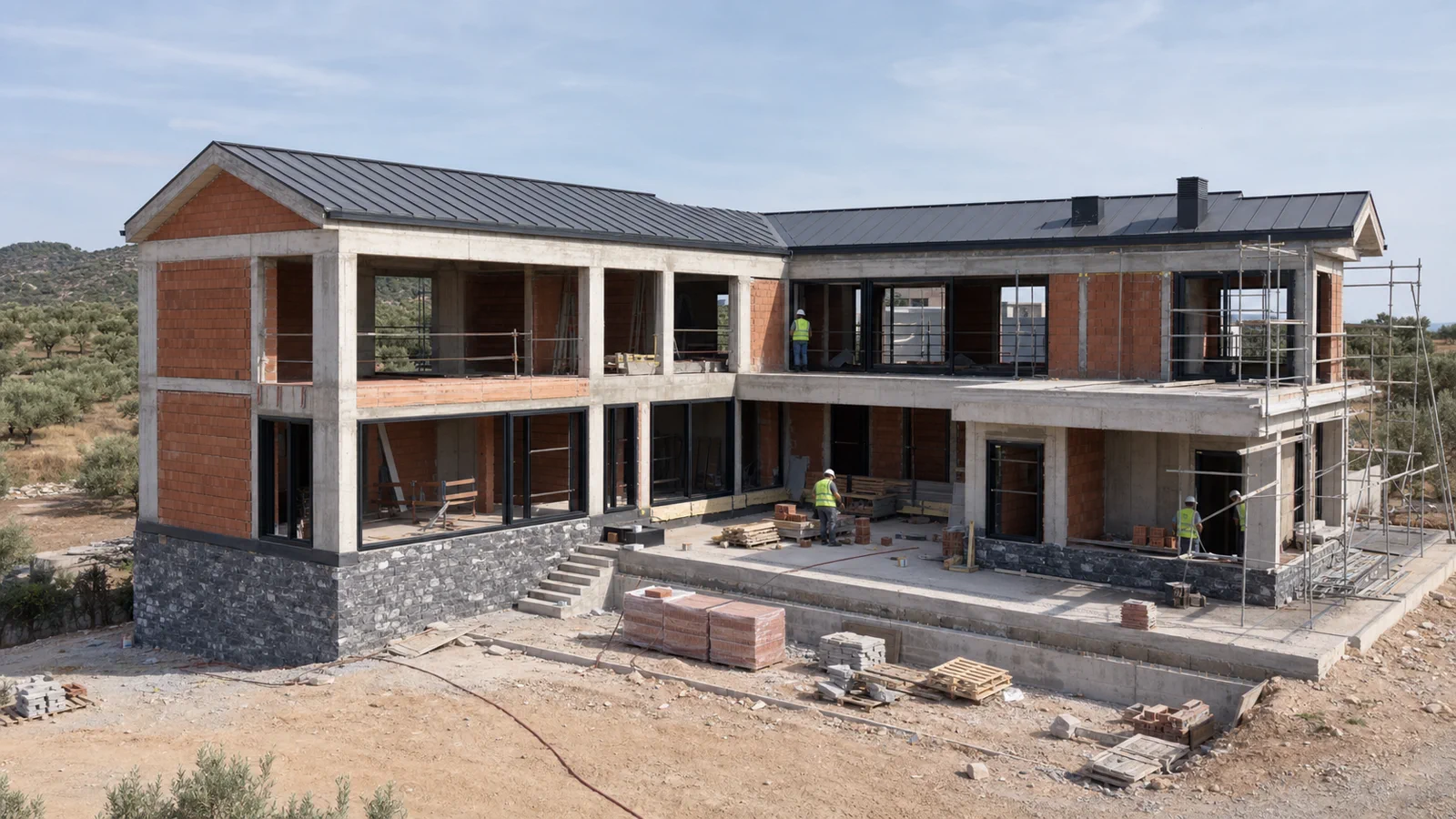 Villa
VillaVilla Construction Cost 2026: The Factors That Set the Price
There is no single answer to "how much does a villa cost?"; the cost is the sum of the decisions you make. We explain what determines the m² price, which line items get overlooked, and how to read a transparent quote.
July 20268 min read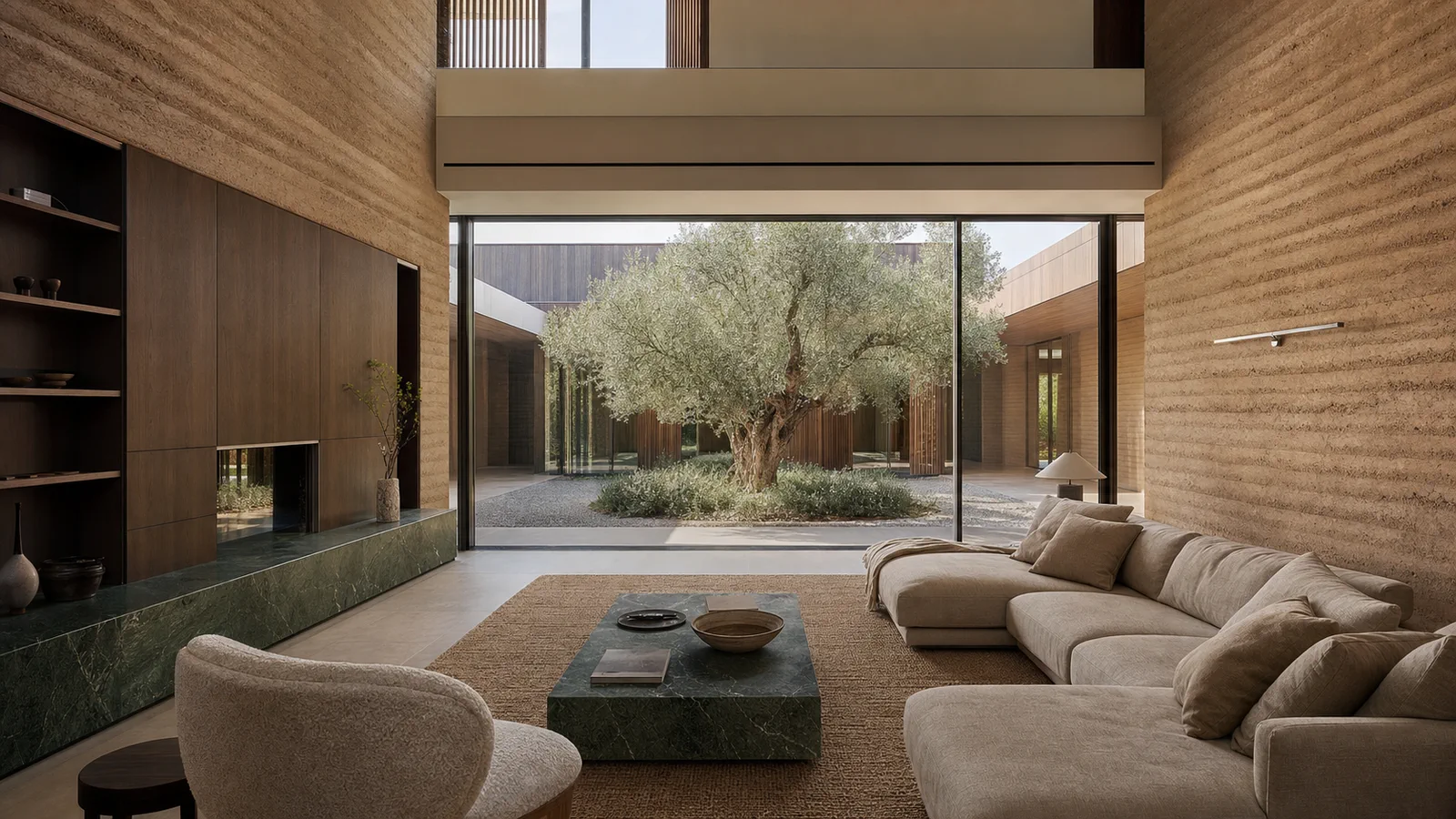 Trends
2026 Villa Interior Design Trends: Quiet Luxury and Nature
The luxury line of 2026 runs through calm rather than display: quiet luxury, biophilic design, natural materials and warm minimalism. We separate lasting trends from passing fads.
July 20267 min read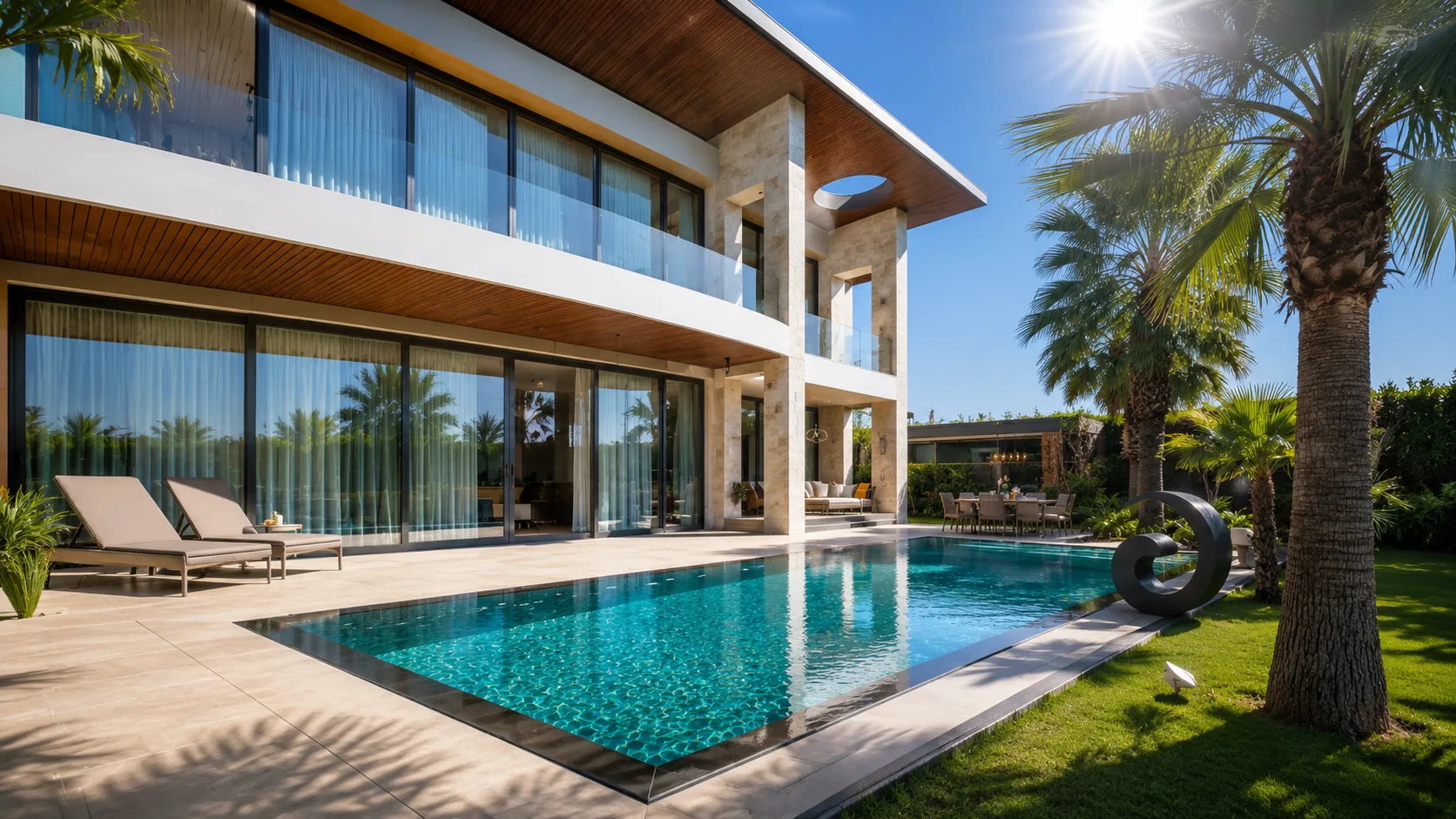 Villa
Villa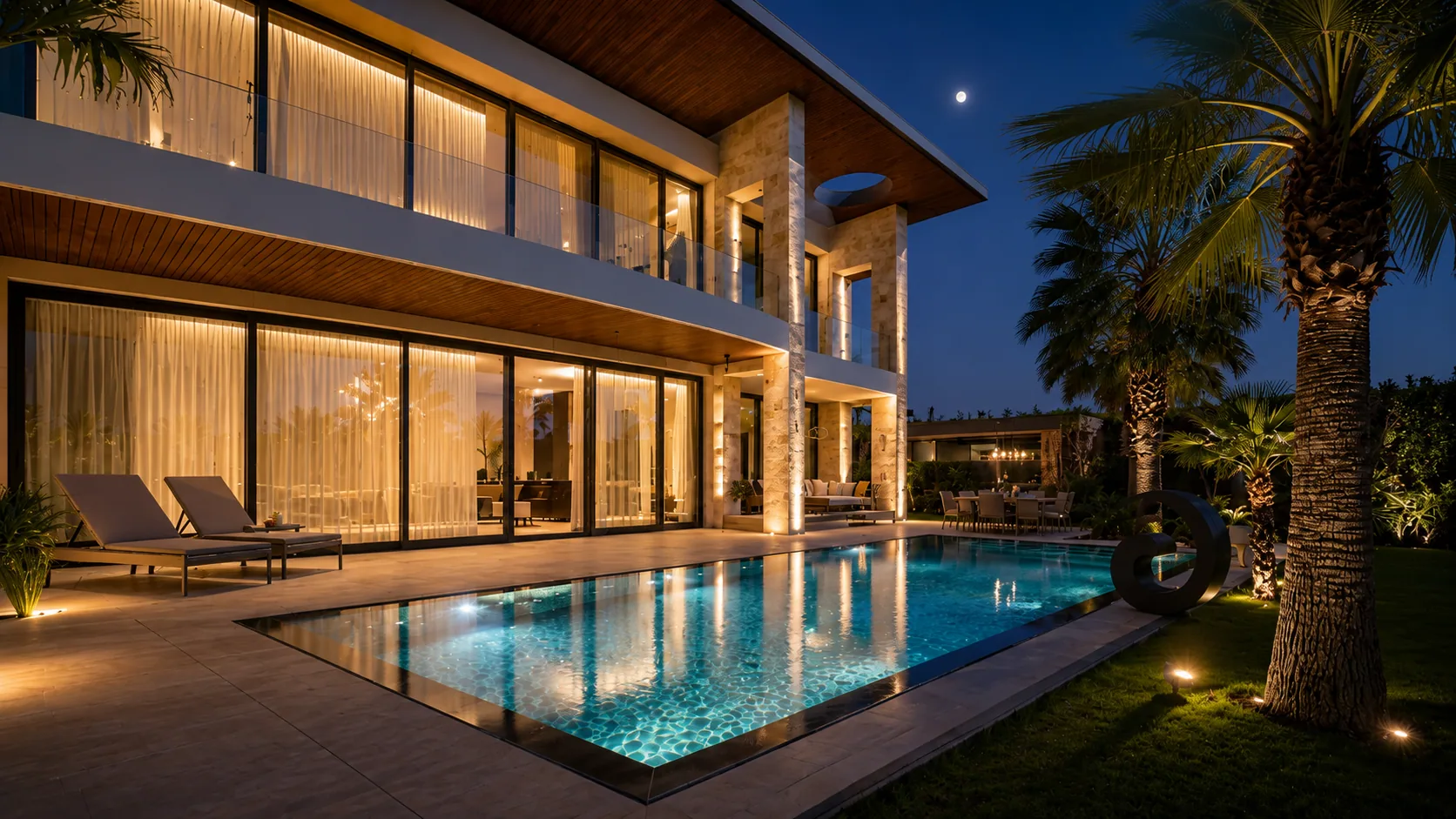
Mediterranean Villa Architecture: Light, Stone and Warm Simplicity
White facades, arches, terracotta tiles and inner courtyards — we examine the origins, characteristic elements and contemporary interpretation of Mediterranean villa architecture with an expert eye.
June 20267 min read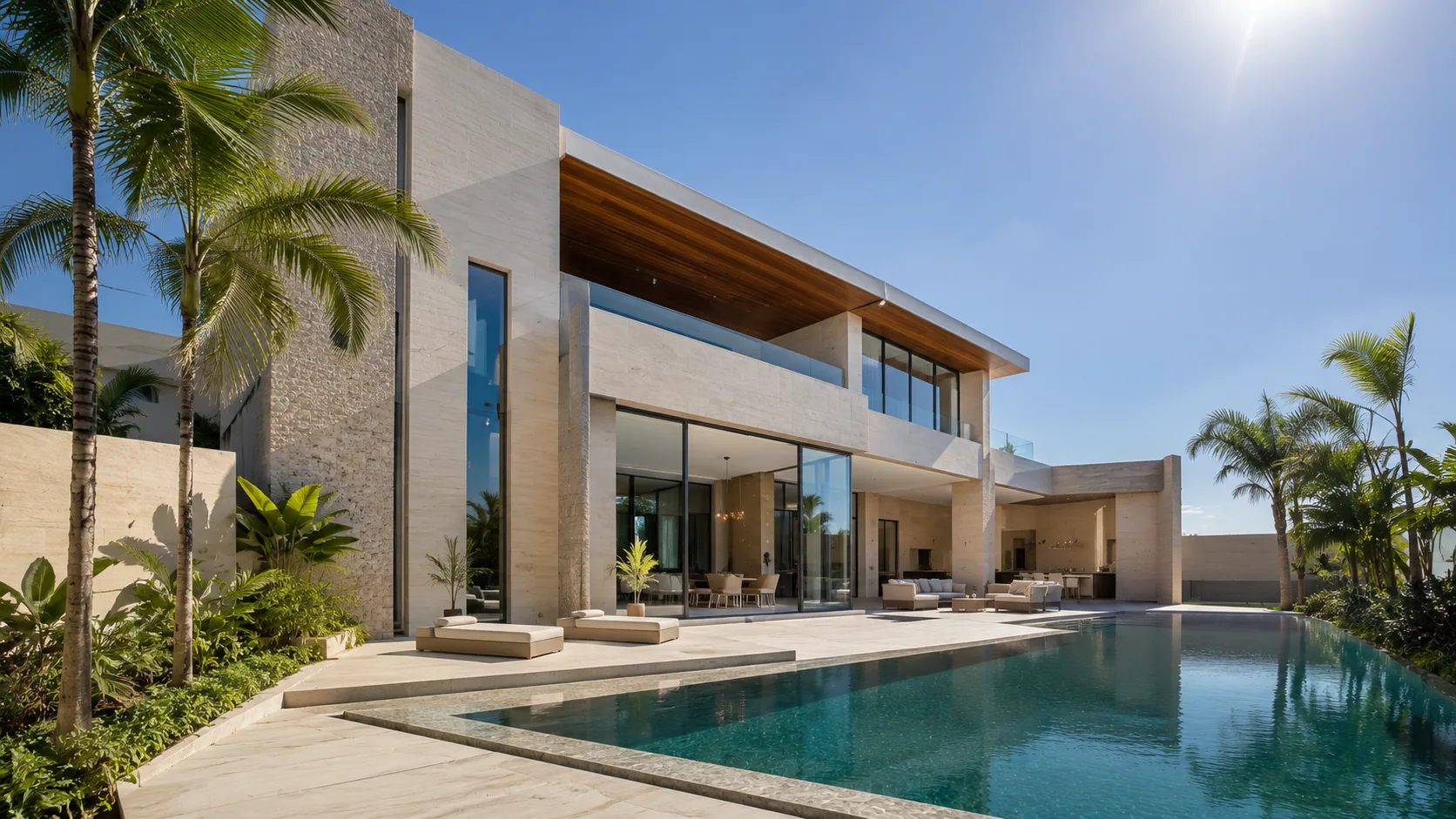 Villa
Villa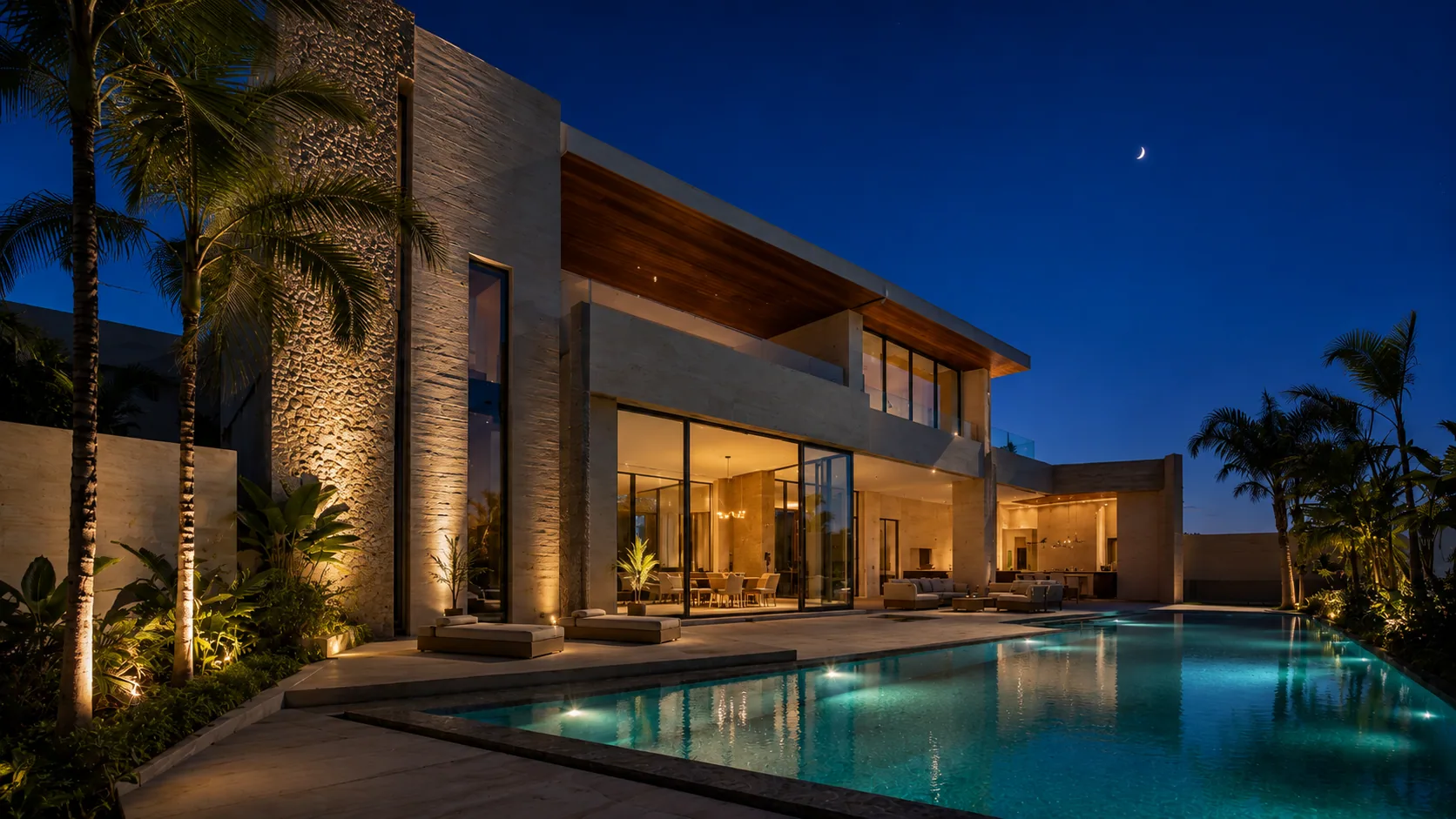
10 Spaces Every Luxury Villa Should Have
What truly makes a villa luxurious is not its square meters but its well-composed spaces. From the primary suite to the home cinema, from the wine cellar to the wellness area, we have compiled the 10 must-have rooms.
June 20268 min read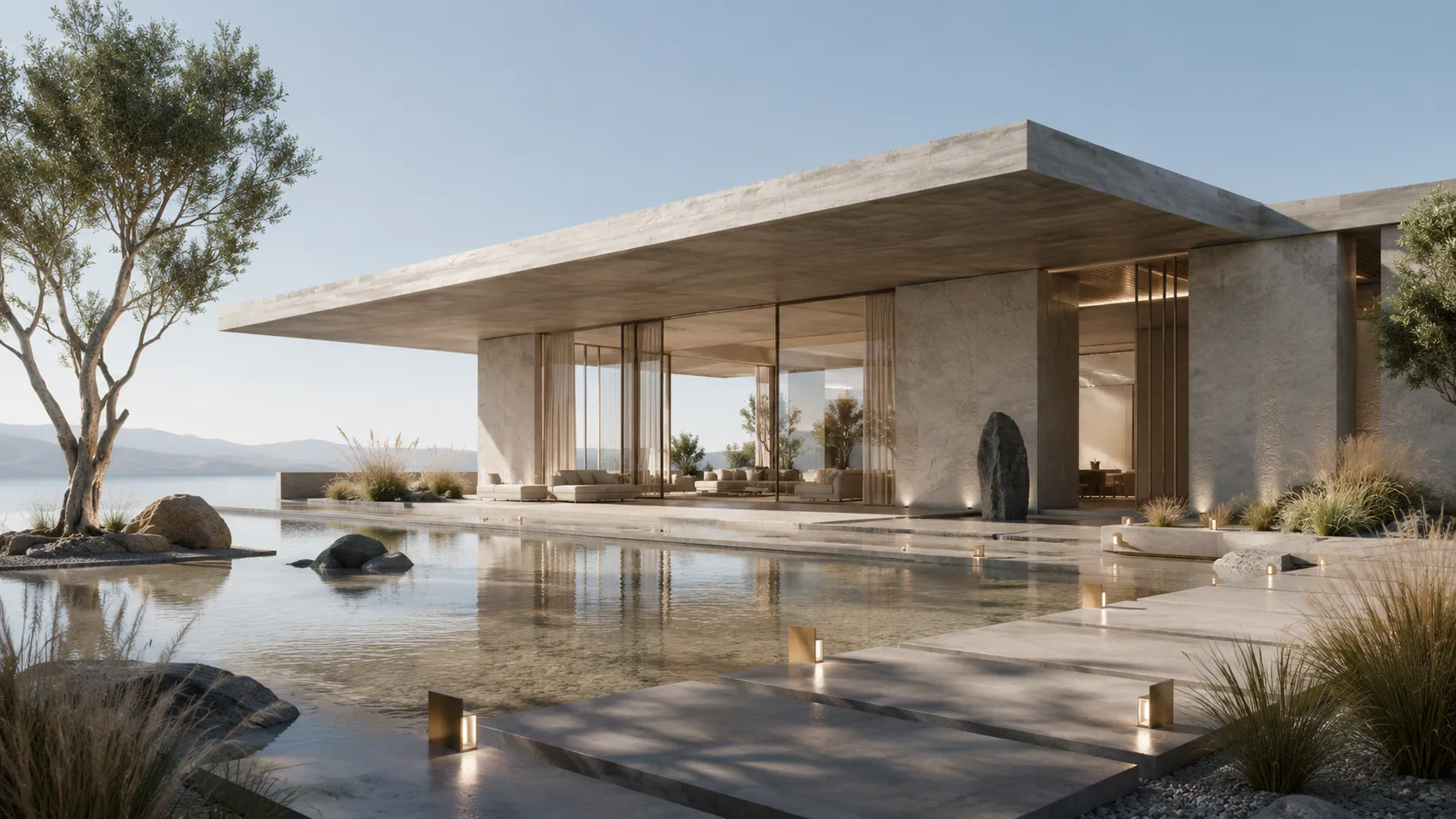 Villa
Villa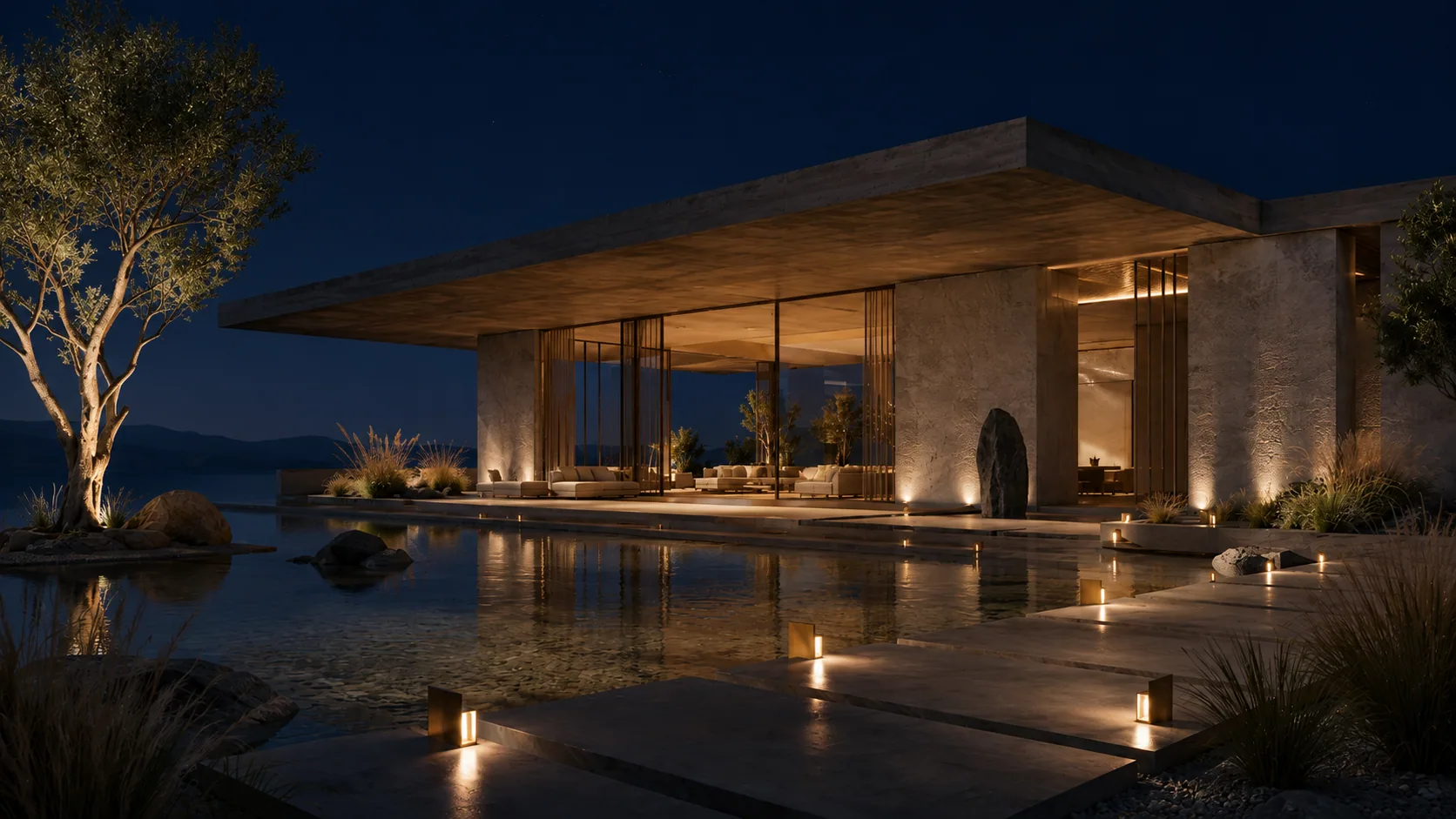
Modern Villa Design: The Architecture of Clean Lines and Light
A modern villa speaks the language of clean lines, wide glass surfaces and the open plan. We explore the lines that define the modern villa, the approach to interior space and the process of seeing the design in 3D.
July 20268 min readFrequently asked questions
Vesya Project Team
Design · Build · Construction
- Response time
- Same day
- Channels
- Phone · Email · WhatsApp
Can't find your answer here? Send us your question directly — our team will reply shortly.
Free consultationIn Turkey and worldwide, the modern villa — with its large glass surfaces and view-focused layout — is the most preferred style. Yet in hot-climate regions, Mediterranean and tropical models are strong alternatives thanks to their harmony with the climate. The right question is not “the most popular,” but the model best suited to your plot.
Vesya Project Team
Yes. The model directly affects cost because it determines the square meters, the complexity of the massing, the facade material and the technical requirements. For example, modern villas with large glass surfaces call for custom joinery and insulation, while Mediterranean villas require quality stonework.
Vesya Project Team
Absolutely — and the most original villas are often born this way. A modern volume can be softened with Mediterranean materials, or a minimalist interior can open onto a tropical terrace. What matters is that the synthesis is coherent and in harmony with the plot.
Vesya Project Team
Start with the plot. Its orientation, slope, view and climate conditions largely determine which models are possible and sensible. Then your lifestyle and need for privacy bring the choice into focus.
Vesya Project Team