
Mediterranean Villa Architecture: Light, Stone and Warm Simplicity
White facades, arches, terracotta tiles and inner courtyards — we examine the origins, characteristic elements and contemporary interpretation of Mediterranean villa architecture with an expert eye.
Mediterranean villa architecture is a way of living distilled over centuries by the coastal culture of the Mediterranean: an architectural language that is spare yet warm, attuned to the sun, the sea and the earth. At its core lie white and off-white facades, terracotta tiles, stone textures, arches, wooden shutters and inner courtyards. The aim is not display but a comfort that adapts to climate and view, cools through shade and lets inside and outside flow into one another. In this article we examine the origins of the style, its characteristic elements, its relationship with climate and its contemporary interpretation — with a focus on the Turkish coast.
Mediterranean architecture is the shared accumulation not of a single country but of the entire Mediterranean basin. The gleaming white cube houses of the Greek islands, the stone villas of Italy's Tuscany and the Amalfi coast, the Andalusian courtyards of Spain and the adobe tradition of North Africa are all different interpretations of the same climate. The common denominator is strong sun, mild winters and the sea breeze. These conditions gave rise to thick walls, small and shaded openings, flat or low-pitched terracotta roofs, and a layout that places the outdoors at the center of life. In other words, the style emerged first as a response to climate rather than an aesthetic.
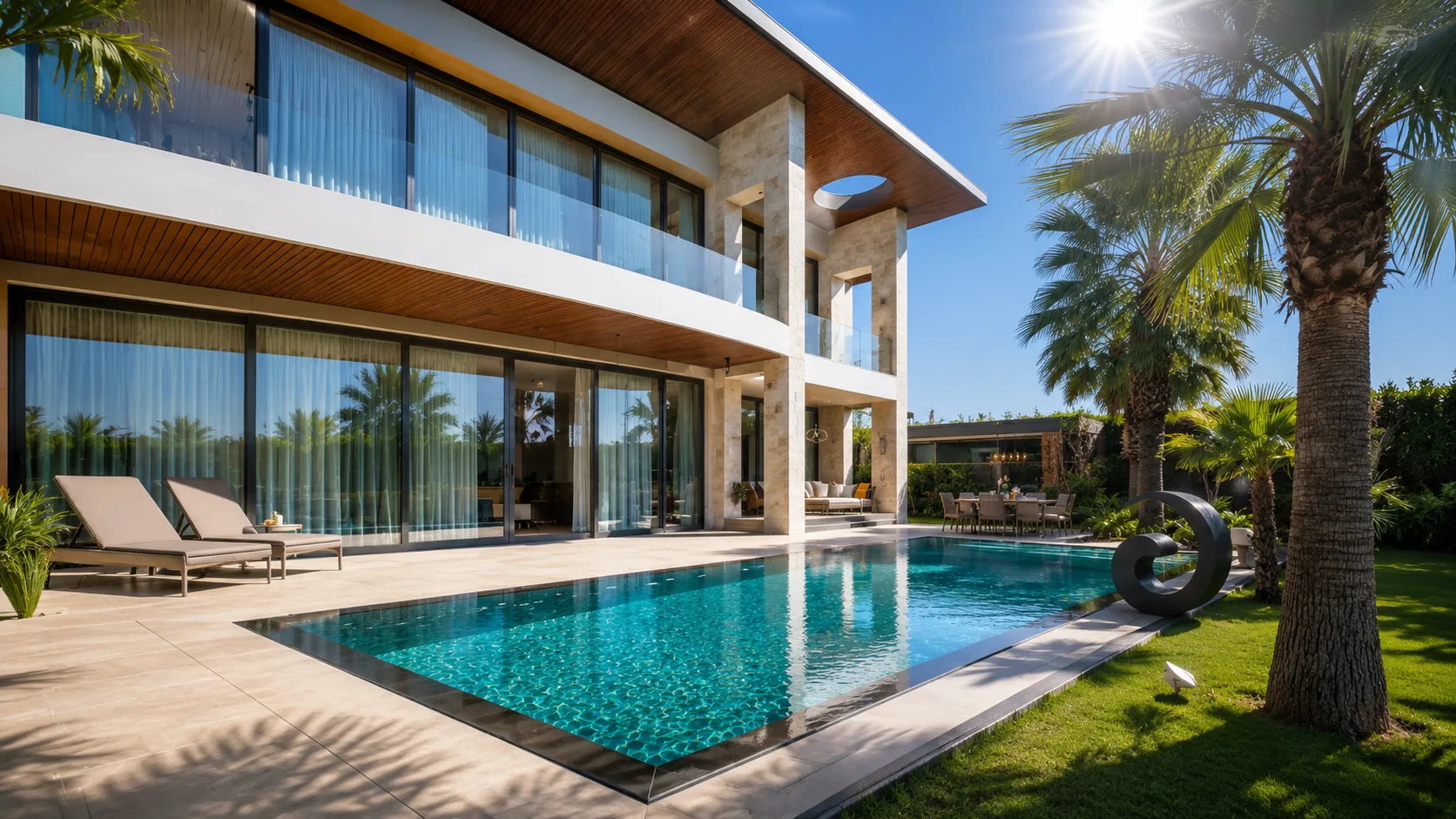
A few enduring elements make a Mediterranean villa recognisable. White and off-white plastered facades reflect the sun and keep the space cool; earth tones, stone and wood warm this simplicity. Arches and vaults are both a load-bearing tradition and a way of adding a gentle rhythm to space. Terracotta tile roofs, lime plaster, natural stone walls and wooden shutters build textural richness. The inner courtyard — a shaded core, often with a water feature — becomes the heart of the villa, while pergolas and canopies carry life outdoors. These elements produce the Mediterranean character not one by one but when they work together.
Mediterranean architecture does not decorate its material; it surrenders it to the sun, the shade and the wind. Beauty is born from this natural relationship itself.
In a Mediterranean villa, life is not confined by walls. Terraces, shaded verandas and loggias, inner courtyards and dining areas beneath the pergola are a natural extension of the interior. Large openings and transitional thresholds connect the living room to the terrace, the terrace to the garden and the garden to the view. The priority of the design is often to frame the view: an arch, a row of columns or a pergola turns the sea or the olive grove into a painting. This uninterrupted flow is the most defining quality of Mediterranean living.
The genius of Mediterranean architecture is that it draws comfort from the architecture itself before any mechanical system. Thick stone and plastered walls act as thermal mass; they absorb heat during the day and release it at night. White surfaces reflect the sun back. Deep eaves, shutters, pergolas and courtyards produce shade; the inner courtyard and facing openings provide natural cooling through cross ventilation. Orientation is set with care: closed to the harsh midday sun, open to the breeze and the view. These passive principles also form the basis of energy efficiency in a contemporary villa.
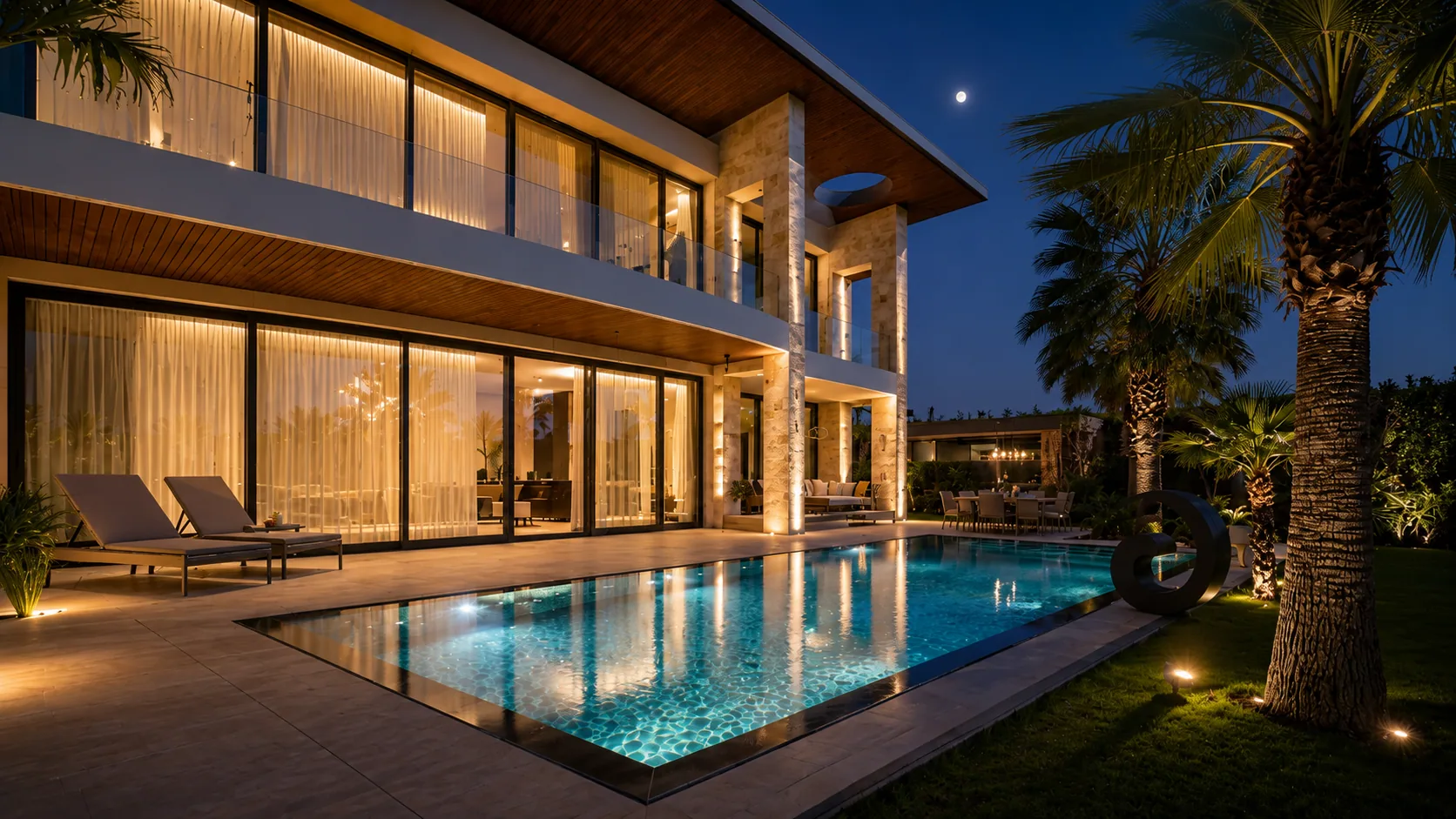
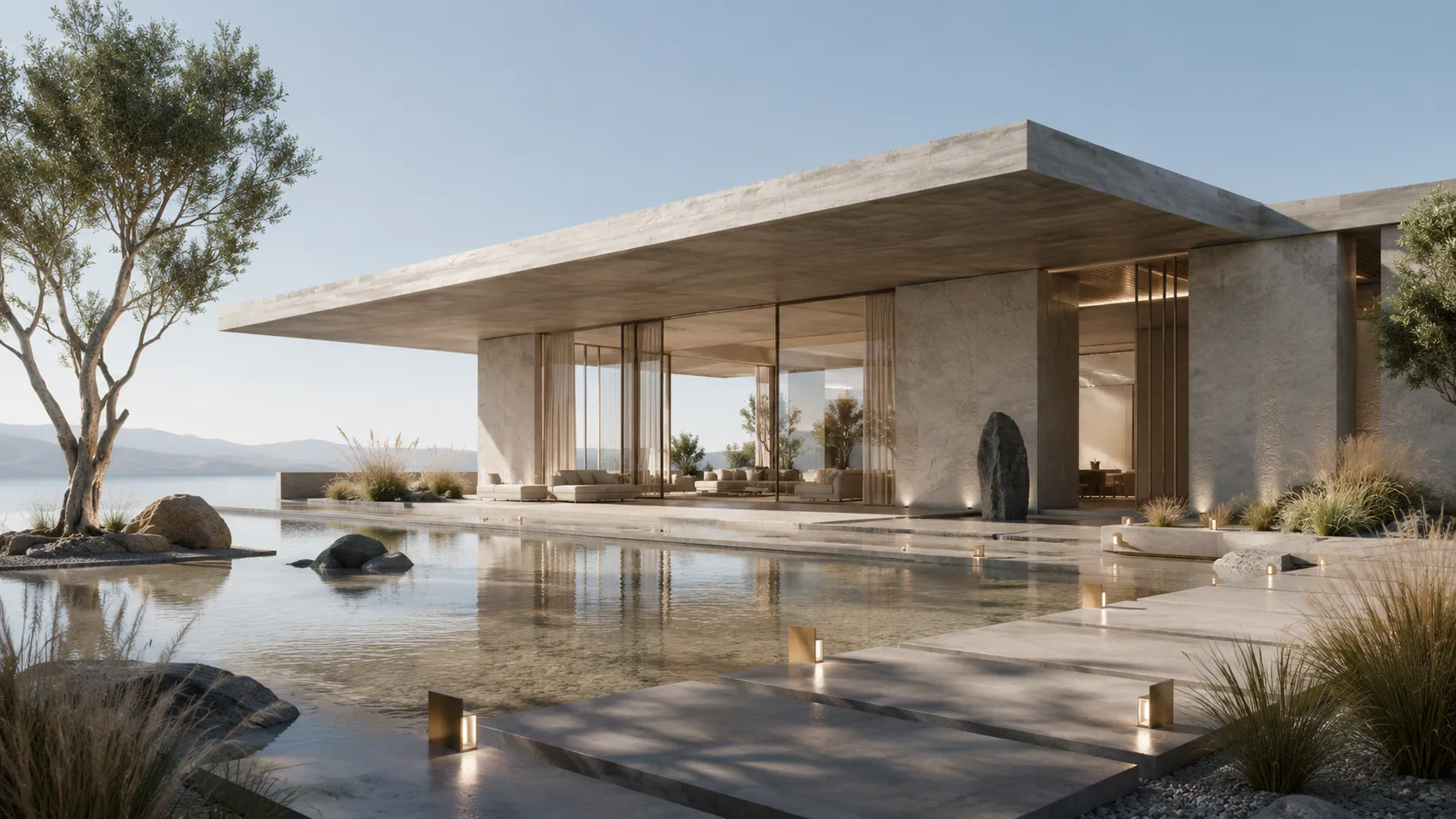
The contemporary Mediterranean villa preserves the spirit of tradition while simplifying its language. Arches and vaults are sometimes replaced by clean, wide openings; ornament recedes and the texture of the material comes forward. This is the natural meeting of warm minimalism and the Mediterranean: spare yet inviting, calm rather than bare. Off-white plaster, micro-concrete, natural stone and wood come together with layered light and shadow. The result is neither a museum-piece copy nor a characterless box — it is a timeless villa, rooted yet belonging to today.
What keeps the Mediterranean character consistent is a disciplined palette of materials and colors. The basic framework is built from these elements:
- Facade & color: white and off-white plaster, sand, beige and earth tones; olive green and deep Mediterranean blue as accents.
- Wall & floor: natural stone, lime plaster (tadelakt), travertine and terracotta paving.
- Roof: low-pitched terracotta tiles and wide eaves.
- Wood: natural, ageable wood in shutters, blinds, pergolas and door-window joinery.
- Outdoor space: pergola, inner courtyard, shaded loggia and water features (pool, fountain, reflecting pool).
Turkey's Aegean and Mediterranean coasts — Bodrum, Çeşme, Kaş, Göcek — are the most natural ground for this style, because they share the same climate, the same light and the same local stone. When Bodrum's white cubic tradition and the Mediterranean's arched, terracotta language are united with local stone and olive textures, an original interpretation is born. A good contemporary Mediterranean villa does not copy; it reads the orientation, the view and the wind of the plot, bringing local material together with contemporary detail. This is why at Vesya we run concept design and realistic visualization from a single hand: to turn the warmth of the Mediterranean into a villa that belongs to the plot and to you, one that endures over the years.
In short
- Mediterranean villa architecture is a response to climate: white facades, shade and natural cooling are the basis of its aesthetic.
- Its character is built jointly by elements such as arches, vaults, terracotta tiles, stone, wooden shutters and inner courtyards.
- Indoor-outdoor living and framing the view are the most defining qualities of the style.
- The modern interpretation unites the spirit of tradition with warm minimalism; it stays rooted yet belonging to today.
How we can help you on this
Journal
 Villa
Villa
Modern Villa Design: The Architecture of Clean Lines and Light
A modern villa speaks the language of clean lines, wide glass surfaces and the open plan. We explore the lines that define the modern villa, the approach to interior space and the process of seeing the design in 3D.
July 20268 min read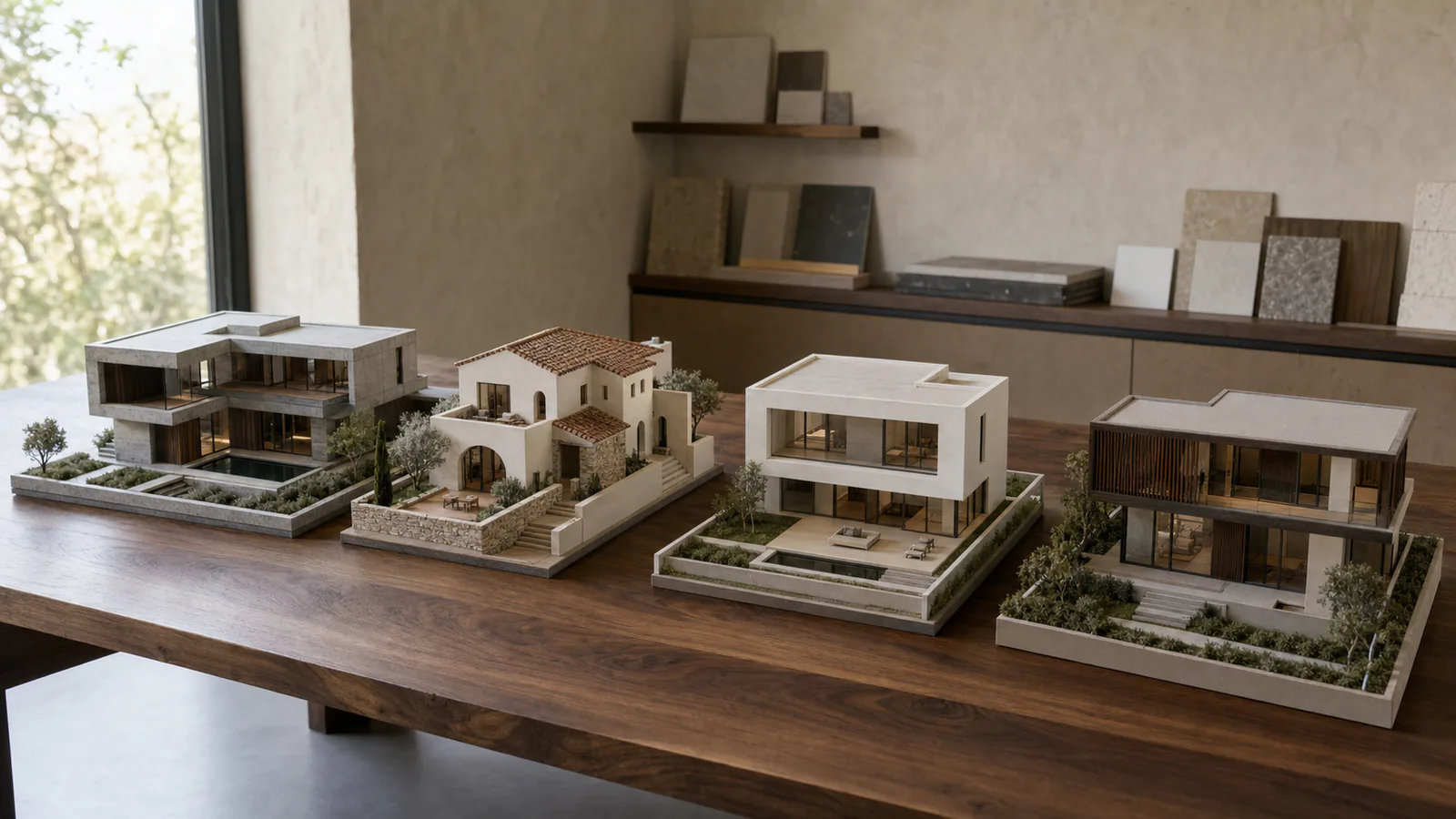 Villa
VillaVilla Models Guide: Which Style Is Right for You?
Modern, Mediterranean or minimalist? Choosing a villa model is as much about the plot, the climate and your lifestyle as it is about taste. We compare the leading styles by character to help you find the one that fits you best.
July 20267 min read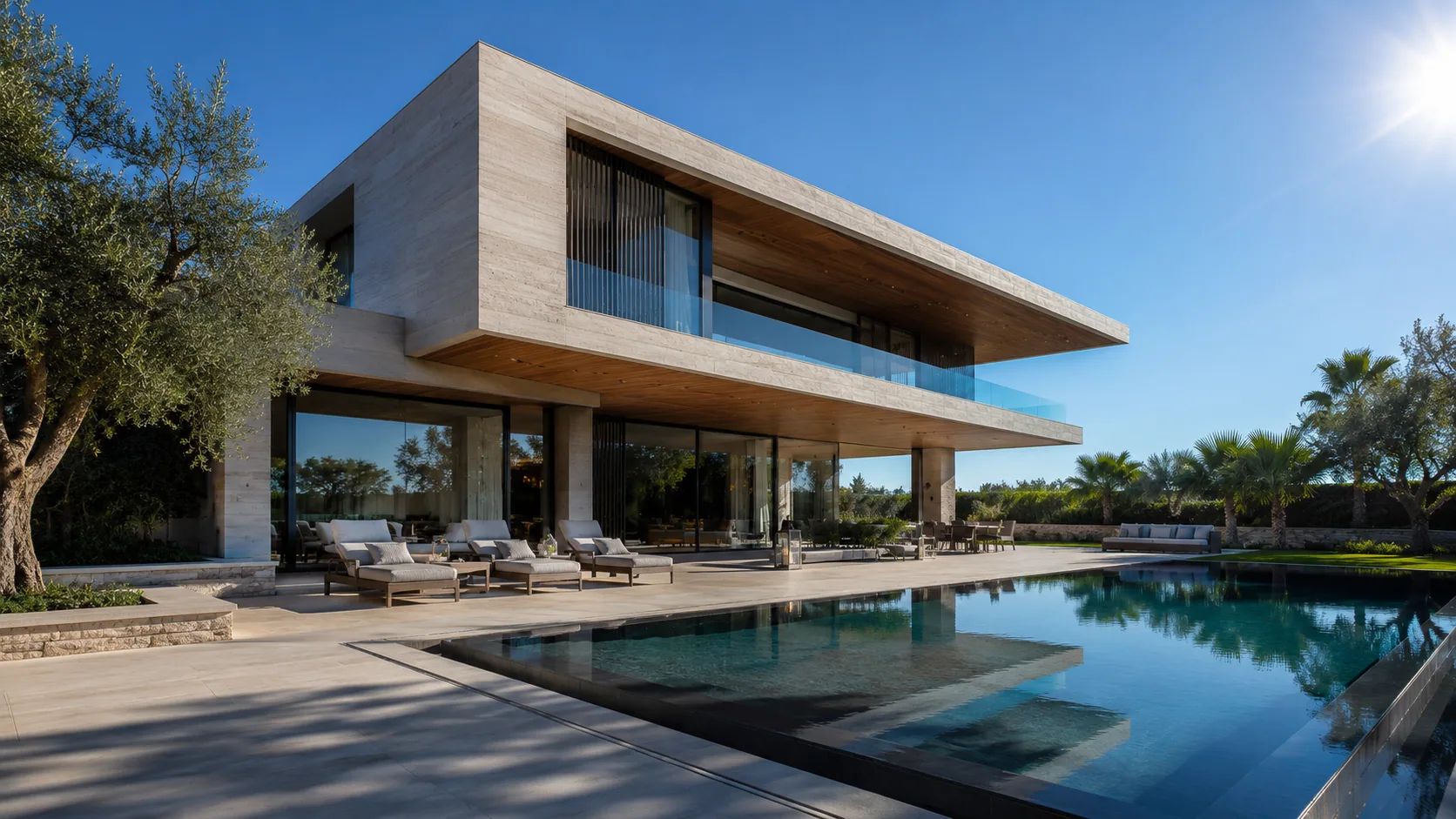 Villa
Villa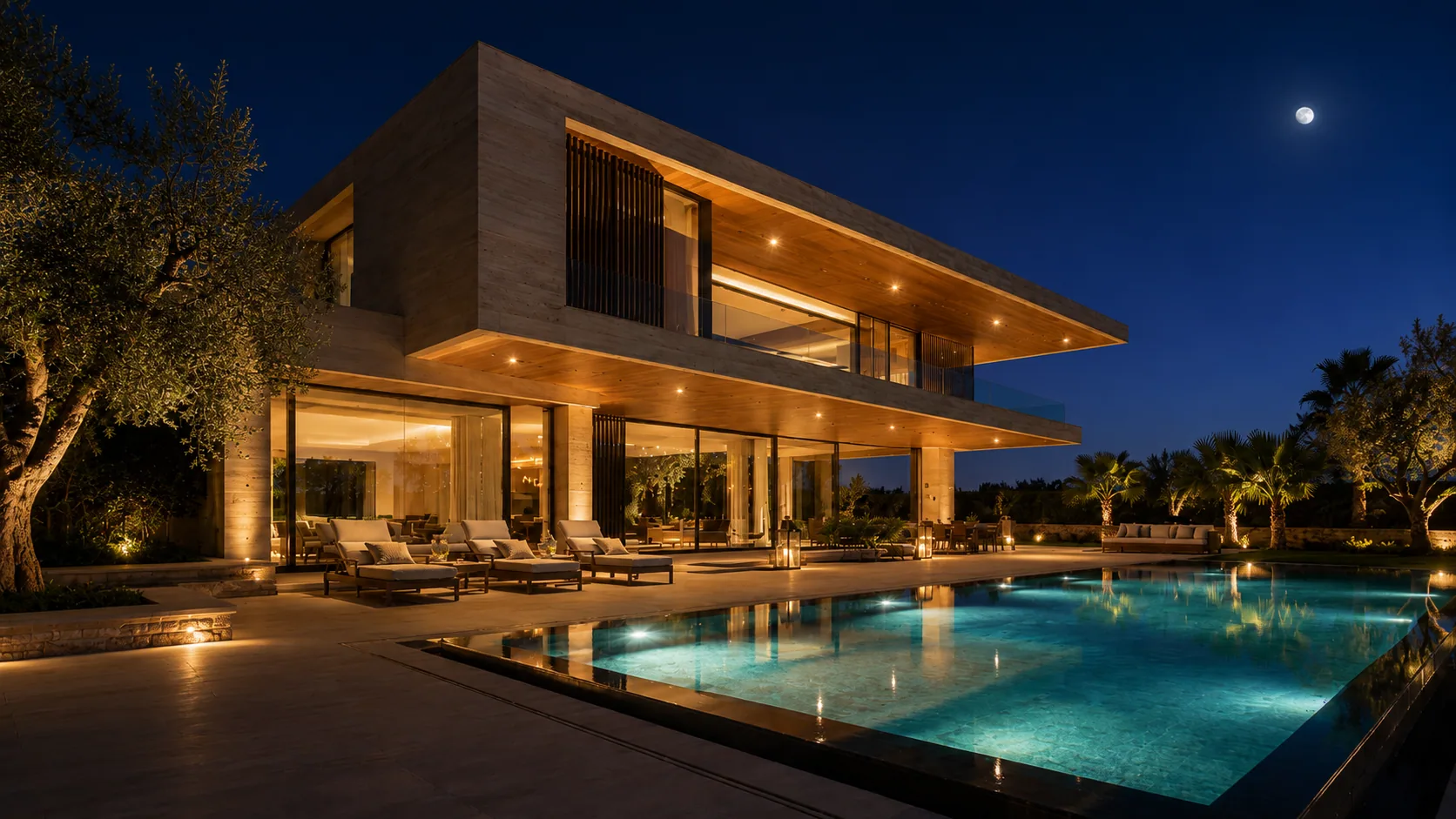
Villa Exterior Facade Design: A Guide to Materials, Style and Decisions
A villa's exterior facade shapes first impressions, value and climate performance all at once. An expert guide to getting material, style, color, lighting and insulation right — and finalizing the facade with a 3D visual.
July 20267 min read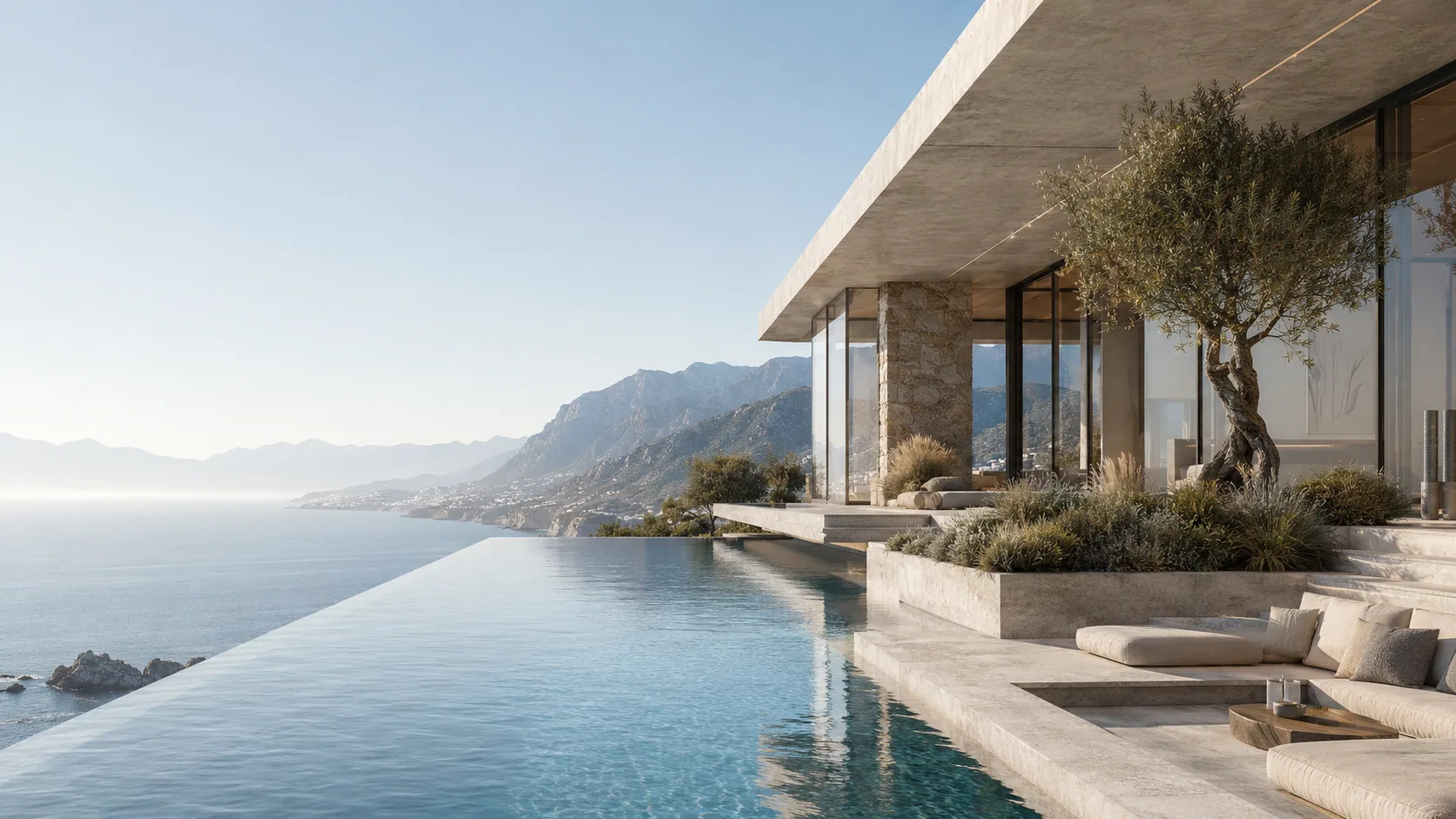 Villa
Villa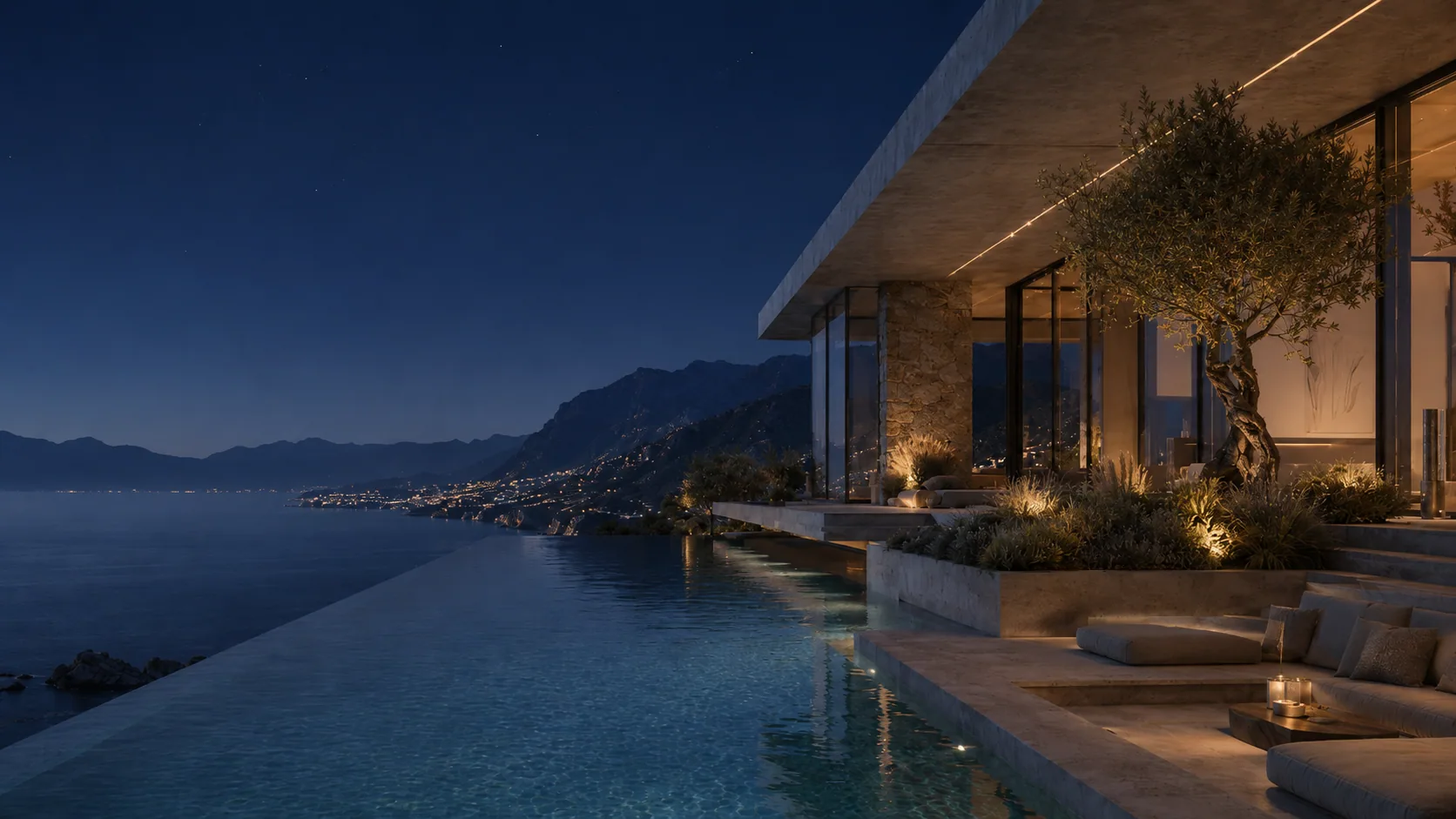
Villa Garden Landscape Design: Extending Living Space into Nature
A well-designed villa garden carries the boundaries of the home outward. From zoning to plant selection, from the pool to the lighting, this is the expert guide to turning your garden into a space that is lived in all year round.
July 20267 min readFrequently asked questions
Vesya Project Team
Design · Build · Construction
- Response time
- Same day
- Channels
- Phone · Email · WhatsApp
Can't find your answer here? Send us your question directly — our team will reply shortly.
Free consultationMediterranean architecture is a building tradition born of the warm climate of the Mediterranean basin. It is defined by white and earth-toned facades, arches, terracotta tiles, stone, wooden shutters and inner courtyards. Its aim is not display but a spare, warm comfort that adapts to the sun, the shade and the view, and lets inside and outside flow into one another.
Vesya Project Team
A typical Mediterranean villa has white or off-white plastered facades, a low-pitched terracotta roof, arches and vaults, natural stone walls, wooden shutters, a shaded terrace and pergolas, and an inner courtyard. Thick walls and deep eaves produce shade and keep the space cool; large openings connect life to the garden and the view.
Vesya Project Team
The palette is built around white and off-white, accompanied by sand, beige and earth tones. The accent colors come from nature: olive green, the warm brown of wood, the gray of stone and deep Mediterranean blue. The colors are not bright but natural and calm, working together with the texture of the material.
Vesya Project Team
A modern Mediterranean villa preserves the spirit of tradition while simplifying its language. Ornament recedes and wide openings and clean lines come forward; off-white plaster, natural stone and wood meet warm minimalism. The result is a timeless villa that is rooted yet belongs to today, suited to both climate and view.
Vesya Project Team
Yes, it is very suitable. The Aegean and Mediterranean coasts — Bodrum, Çeşme, Kaş, Göcek — share the same climate, light and local stone as the Mediterranean style. When local material and texture are combined with contemporary detail, original villas emerge that suit both tradition and the terrain.
Vesya Project Team