
Villa Exterior Facade Design: A Guide to Materials, Style and Decisions
A villa's exterior facade shapes first impressions, value and climate performance all at once. An expert guide to getting material, style, color, lighting and insulation right — and finalizing the facade with a 3D visual.
A villa's exterior facade is the first sentence a home speaks to the world: the texture of the material, the balance of proportions and the way light breaks across the surface describe the villa before you even step inside. A good facade is not merely beautiful; it carries first impression, real estate value and thermal-humidity performance at the same time. In this guide we cover facade materials, style approaches, color and texture, integration with the landscape, lighting and insulation, and show you how to finalize the facade with a 3D visual before construction begins.
The facade is both the face and the shell of the villa. As its face, it sets the first impression: a villa's character, its relationship with the plot it sits on and its perceived value are read from the facade within seconds. As its shell, it is the first line of defense against the climate — sun, rain, wind and moisture strike the facade directly. A well-designed exterior facade lifts a property's market value, while the wrong material and detail come back within a few years as cracks, stains and heat loss. In other words, the facade is a technical investment as much as an aesthetic choice.
The material determines both the character and the lifespan of the facade. Let us briefly distinguish the most common options and where each belongs:
- Natural stone (travertine, basalt, andesite): Timeless, strong and durable. It lends weight and prestige to a villa and does not lose value as it ages; its cost and workmanship precision are high.
- Wood and thermo-wood: Carries warmth and naturalness, and works very well with Mediterranean and organic languages. It requires regular maintenance; thermal treatment and correct detailing extend its life considerably.
- Decorative render and mineral coating: Economical, flexible and high in color freedom. It gives clean surfaces on modern and minimal facades; its quality depends on the mastery of application.
- Composite panel (HPL, fiber cement, aluminum composite): A contemporary, clean-lined look with fast installation and easy maintenance. With ventilated facade systems it strengthens insulation.
- Glass and large openings: Draws the view inside, lightens the facade and plays with light. With heat-controlled glass and proper shading, energy performance is preserved.
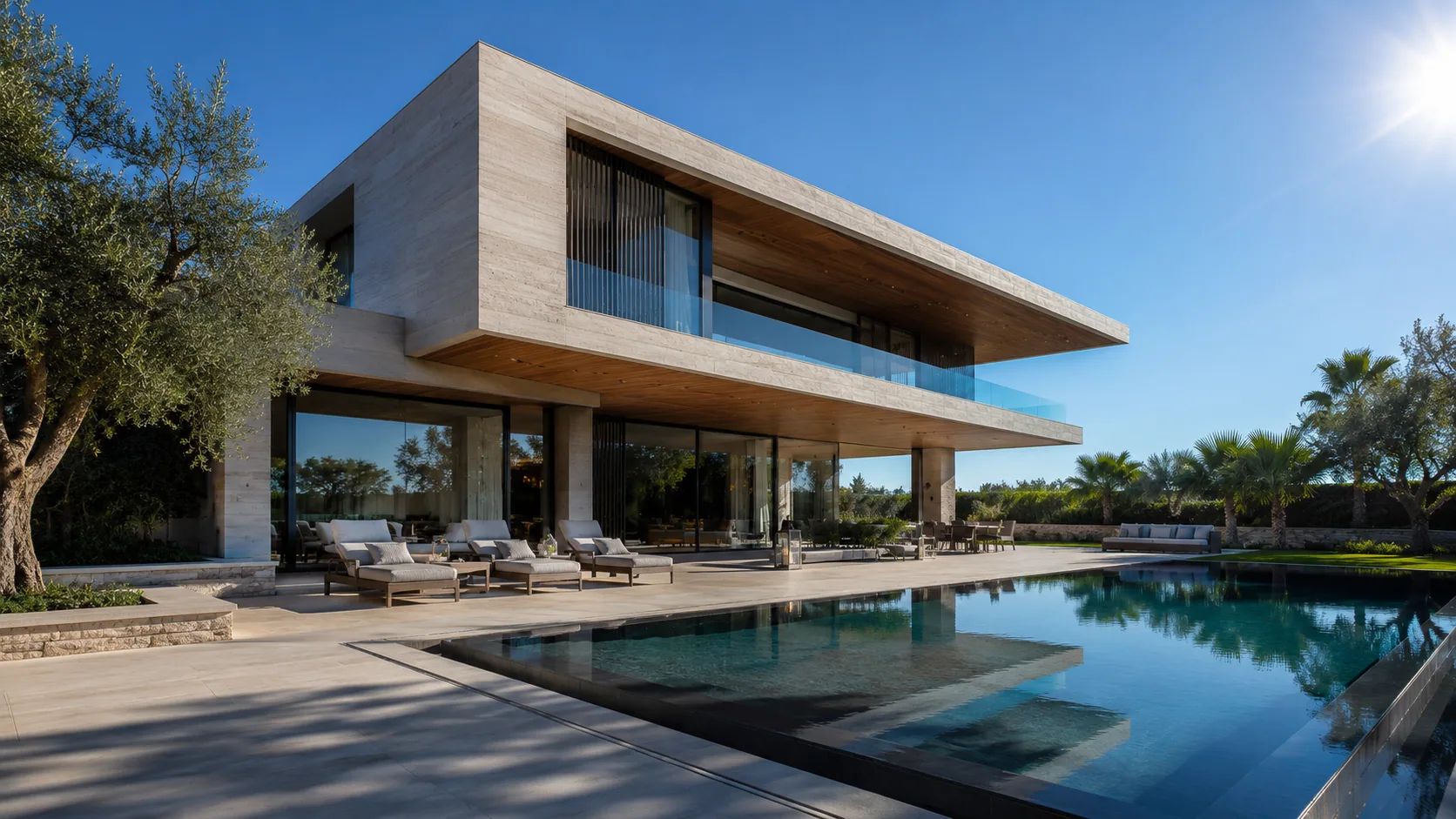
The strongest facades rely not on a single material but on a deliberate combination of materials: when the weight of stone, the warmth of wood and the lightness of glass meet in the right proportion, the facade reads as both rich and balanced.
The language of the facade should reflect the identity of the villa and the character of the plot. A modern facade is defined by clean geometry, expansive glass surfaces, a flat roof and horizontal lines — usually built on the union of stone, composite and glass. The Mediterranean approach establishes a soft continuity with the plot through warm earth tones, natural stone and wood, and shaded terraces; it is especially powerful in coastal and vineyard villas. A minimal facade, meanwhile, produces a quiet luxury through detail reduced to a minimum, single-tone surfaces and concealed solutions. The right style is not a matter of fashion; it is the shared answer of the plot, the climate and your way of life.
Color and texture are the silent tools that define the emotion of a facade. Neutral and earth tones (sand, greige, anthracite, warm white) are timeless and harmonize with the plot; sharp colors, by contrast, age quickly. The real depth comes from texture: flat render beside rough stone, the contrast of a fine wooden slat beside a matte surface, keeps a facade alive even in a single color. Light wandering over these textures throughout the day gives the facade a living surface rather than a static one. Color and texture should be evaluated together, and ideally under real light conditions.
A villa facade cannot be conceived apart from the plot. The most striking facades speak the same language as the garden, the driveway, the pool and the terrace: the stone on the facade continues in the garden wall and the ground paving; the wood detail echoes in the pergola and the outdoor furniture. The landscape frames and softens the facade; plant texture and a water feature balance the hard surfaces. Designing the facade and the landscape not separately but as a single composition raises the villa's holistic value and the quality of outdoor living together.
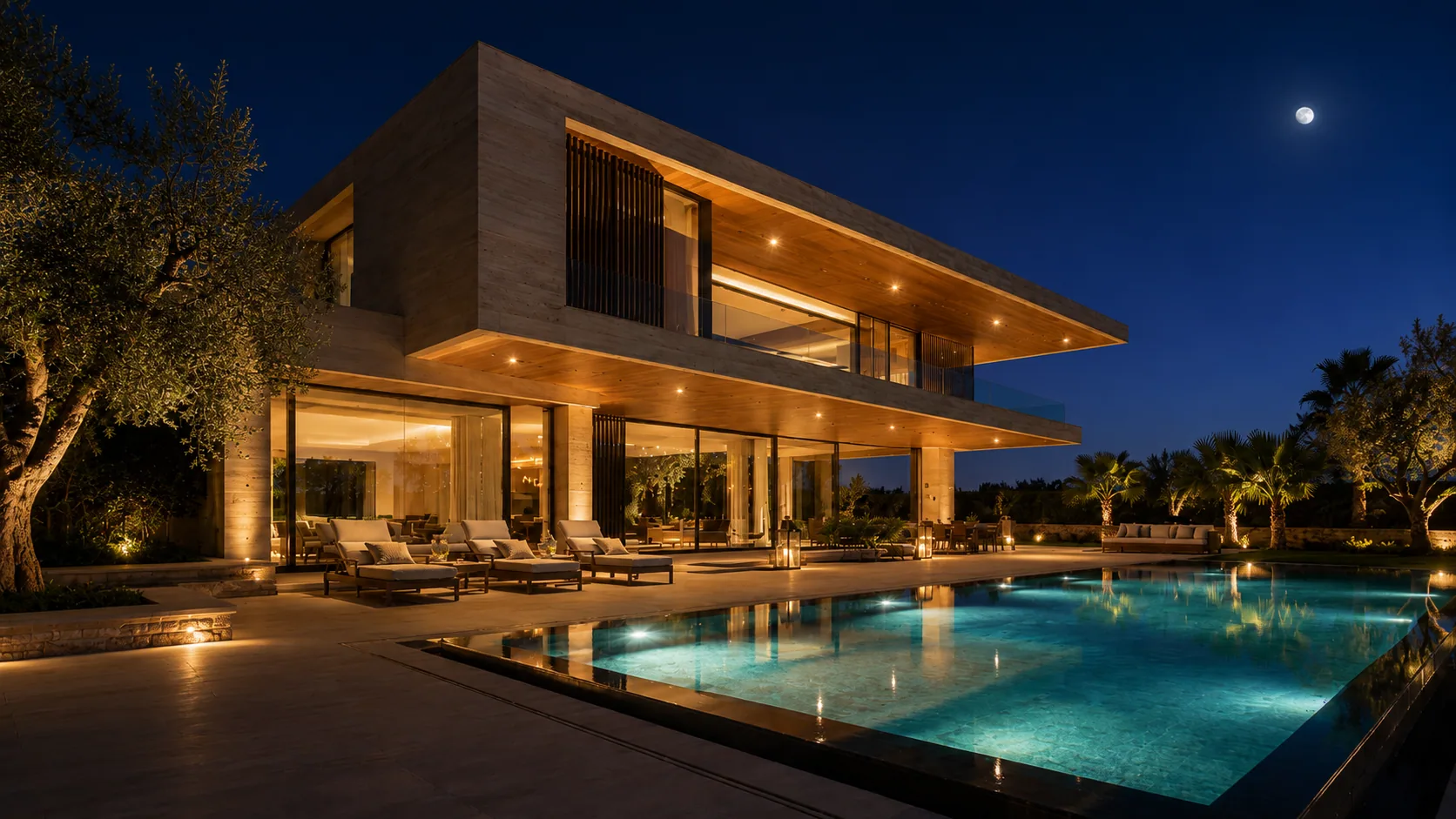
A villa exists by its material during the day and by its light at night. Correct facade lighting works with soft wall-wash lights that graze the texture of the stone, concealed linear fixtures that accentuate wood and recesses, and warm focal points that define the entrance. The aim is not to illuminate the facade but to rewrite its character at night. Excessive, cold light flattens the facade; a measured, warm and layered composition produces depth and elegance. The lighting scenario, just like day and night visuals, should be considered during the design stage.
A good facade speaks with its material by day and its light by night; when the two are not designed together, the villa remains unfinished.
A facade's performance is as much a part of the design as its beauty. Thermal insulation directly determines the villa's energy bill and comfort; waterproofing and correct detailing are the true barrier against cracks, mold and damp. Ventilated facade systems both strengthen insulation and extend the life of the material. On the maintenance side, each material has its own rhythm: wood requires periodic protection, stone and composite are relatively low maintenance, and render is renewed with spot repairs. The right material choice pays for itself over the long term, both aesthetically and in terms of budget.
The exterior facade is one of the most misleading decisions to make on paper: the same material looks entirely different under different light and in different proportions. That is why seeing the facade through photorealistic 3D visualization before construction begins is the most valuable step. At Vesya we model your villa with your real plot, its real orientation and day and night light conditions; we compare stone, wood, render and glass alternatives within the same scene. This way, decisions about material, color, texture and lighting rest not on guesswork but on an image you can see — surprises are resolved on the screen, not on the construction site.
The costliest facade mistakes usually come from the same places. Avoid these before you decide:
- Too many materials: Gathering five different claddings on one facade produces clutter, not richness; two or three materials are usually enough.
- A style detached from the plot: Choosing the facade to match an image liked online rather than the climate, orientation and surroundings alienates the villa from its place.
- Leaving lighting to the end: When the nighttime scheme is considered only after the design is finished, the facade loses its character at night.
- Sacrificing insulation for aesthetics: Weakening a detail for visible beauty comes back within a few years as cracks and damp.
- Choosing material only from a catalog: A small sample piece reads very differently across the whole facade and under real light.
The best facades are the sum not of a single material but of the right decisions. That is precisely why we carry out design, visualization and construction under one roof: so that the facade built is identical to the one you see on the screen.
In short
- A villa's exterior facade carries first impression, real estate value and climate performance all at once.
- The strongest facades rely not on a single material but on a balanced combination such as stone, wood and glass.
- When facade, landscape and lighting are designed together, the villa reads as a whole both by day and by night.
- Finalizing the facade with a 3D visual before construction moves material and color surprises from the site to the screen.
How we can help you on this
Journal
 Villa
Villa
Modern Villa Design: The Architecture of Clean Lines and Light
A modern villa speaks the language of clean lines, wide glass surfaces and the open plan. We explore the lines that define the modern villa, the approach to interior space and the process of seeing the design in 3D.
July 20268 min read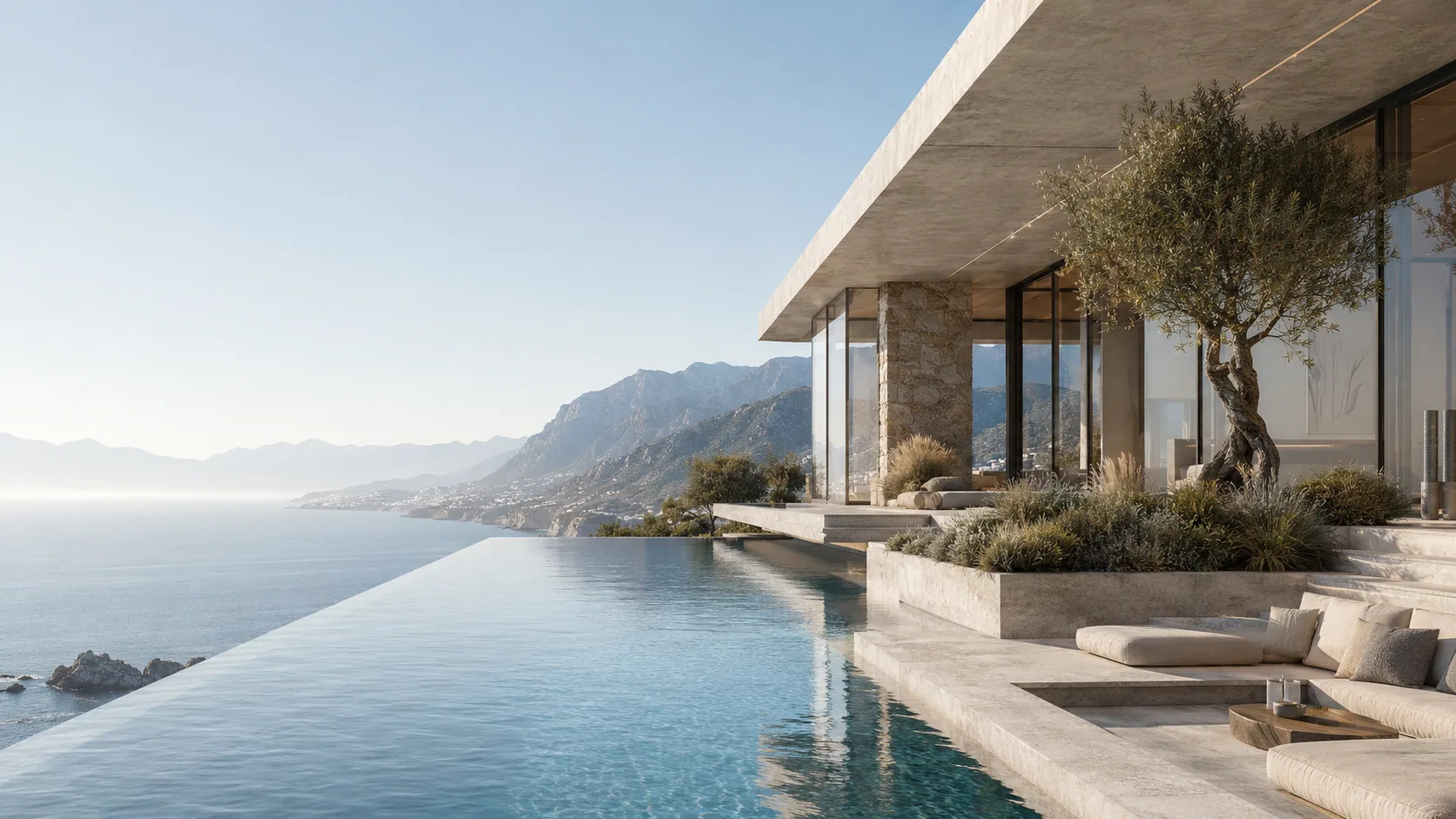 Villa
Villa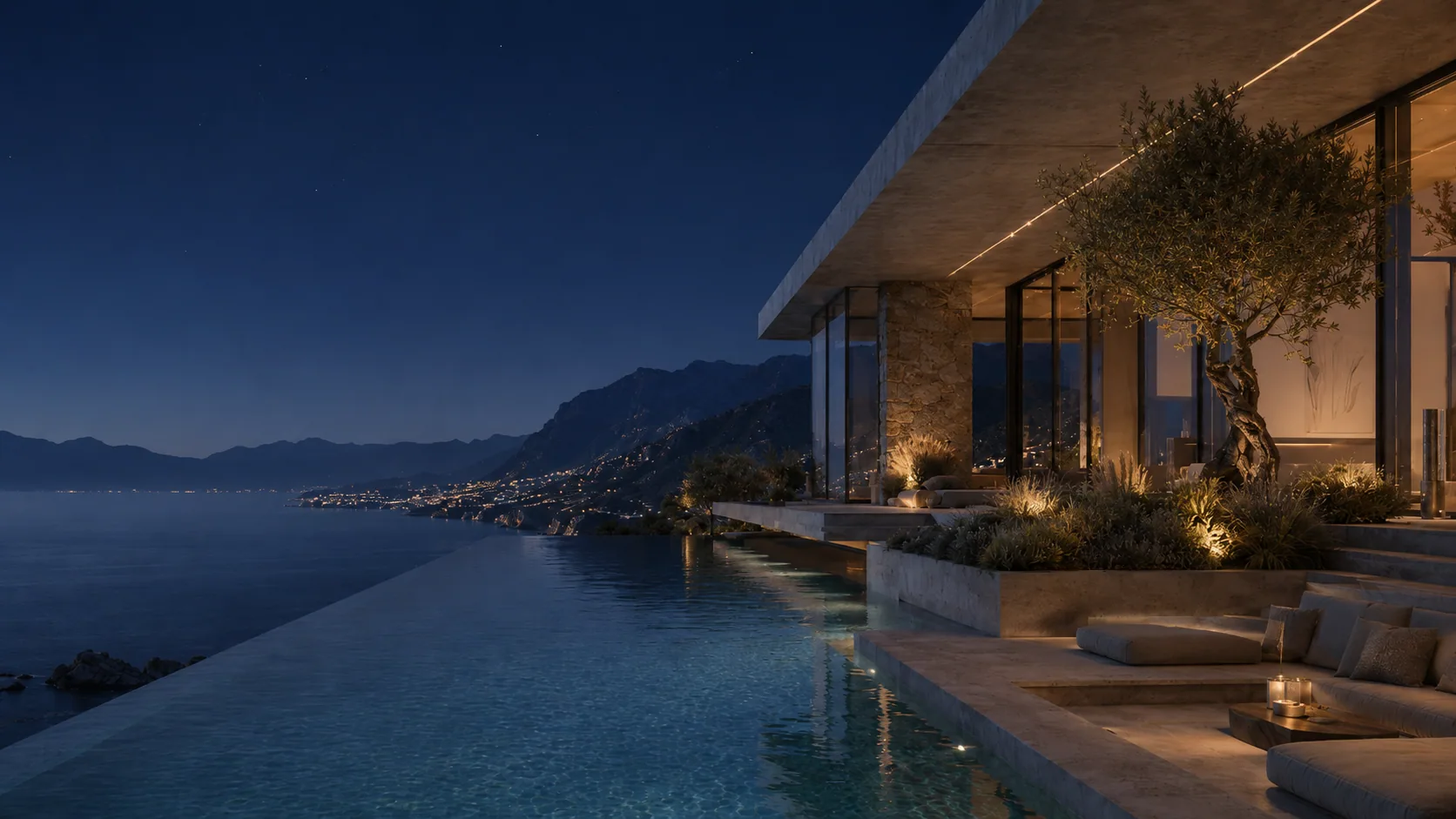
Villa Garden Landscape Design: Extending Living Space into Nature
A well-designed villa garden carries the boundaries of the home outward. From zoning to plant selection, from the pool to the lighting, this is the expert guide to turning your garden into a space that is lived in all year round.
July 20267 min read Villa
VillaVilla Models Guide: Which Style Is Right for You?
Modern, Mediterranean or minimalist? Choosing a villa model is as much about the plot, the climate and your lifestyle as it is about taste. We compare the leading styles by character to help you find the one that fits you best.
July 20267 min read Villa
Villa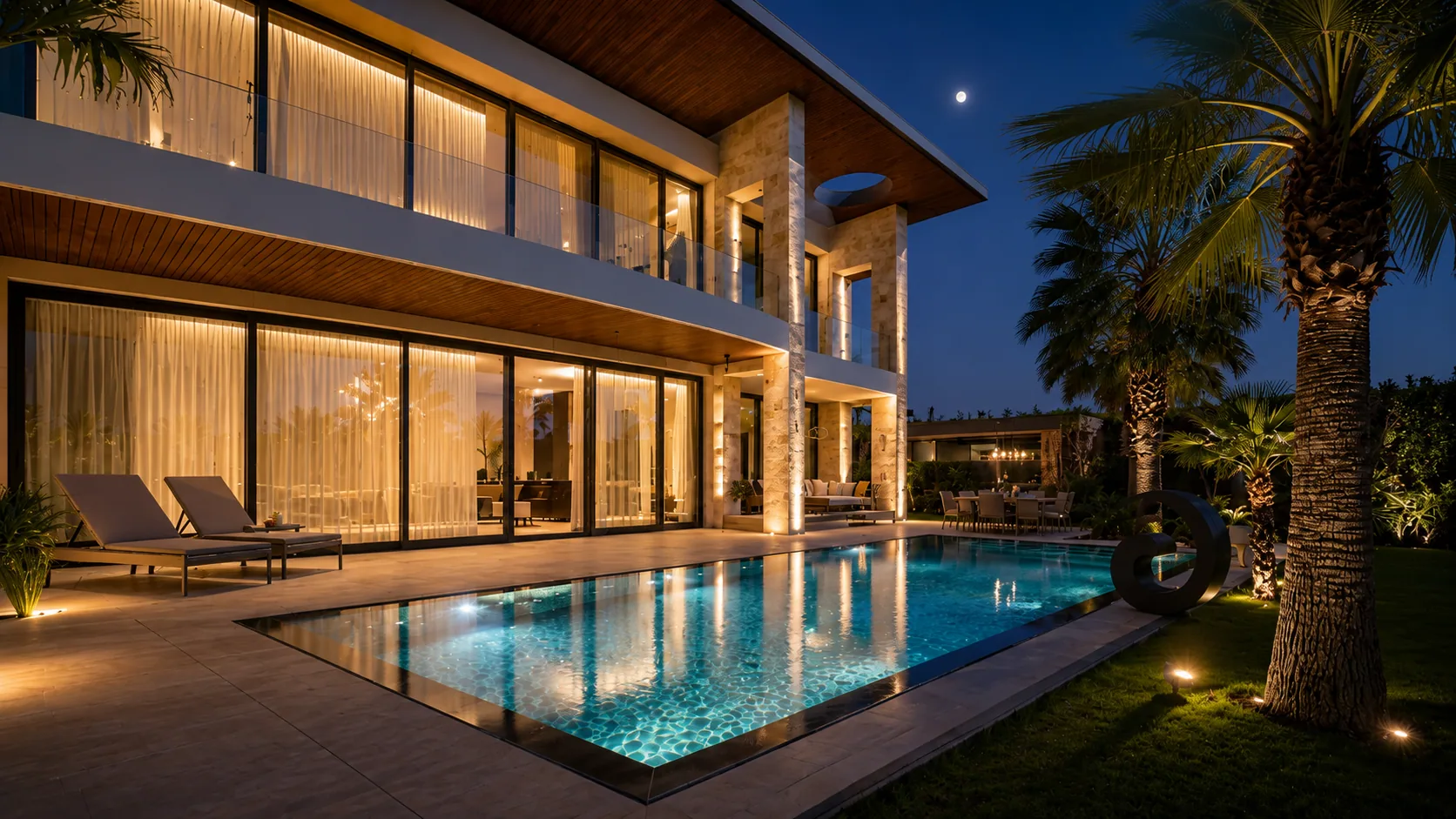
Mediterranean Villa Architecture: Light, Stone and Warm Simplicity
White facades, arches, terracotta tiles and inner courtyards — we examine the origins, characteristic elements and contemporary interpretation of Mediterranean villa architecture with an expert eye.
June 20267 min readFrequently asked questions
Vesya Project Team
Design · Build · Construction
- Response time
- Same day
- Channels
- Phone · Email · WhatsApp
Can't find your answer here? Send us your question directly — our team will reply shortly.
Free consultationThere is no single 'best' material; the right choice depends on climate, style and budget. Natural stone offers timelessness and durability, wood offers warmth, and composite panel offers a contemporary, low-maintenance look. The finest facades usually bring stone, wood and glass together in a balanced combination.
Vesya Project Team
Cost is determined by the type of material, the facade area, the density of detail and the precision of workmanship. Natural stone and bespoke wood applications sit in the upper segment, while decorative render and composite panel are more economical solutions. Insulation and correct detailing, though they raise the initial cost, pay for themselves over the long term through energy and maintenance savings.
Vesya Project Team
A modern facade is defined by clean geometry, horizontal lines, expansive glass openings and a flat roof. It usually rests on a simple combination of natural stone, composite panel and glass, neutral colors and concealed lighting. The safest way to clarify the decision is to see the facade through photorealistic 3D visualization under day and night conditions.
Vesya Project Team
Facade insulation directly affects the villa's energy consumption, interior comfort and material lifespan; it is the true barrier against cracks, mold and damp. Insulation is not a layer added afterward but a system that should be conceived at the very start of the design, together with material and detail. Ventilated facade solutions strengthen both insulation and durability.
Vesya Project Team