
Villa Garden Landscape Design: Extending Living Space into Nature
A well-designed villa garden carries the boundaries of the home outward. From zoning to plant selection, from the pool to the lighting, this is the expert guide to turning your garden into a space that is lived in all year round.
Villa garden landscape design is an architectural discipline that extends the interior life of the home into nature and converts the full potential of the plot into value. A good landscape is not merely a matter of randomly planted trees; it is a holistic plan that brings together areas for relaxing, dining, swimming and greenery, composed with climate-appropriate plants, hard surfaces, water features and lighting. A properly designed garden markedly raises both daily living comfort and the villa's market value. In this guide we address every stage, from planning to maintenance, through an expert lens.
In a luxury villa the garden is not where the interior ends; it is where life spills into the open air. A well-composed landscape unites a terrace that reads as a continuation of the living room, a dining area where summer evenings unfold and a green texture that frames the view, all within a single composition. This integrity is not merely an aesthetic preference but a measurable investment: a quality landscape raises the perceived value and sales potential of the villa, turning the square meters of the plot into a genuine living space. The garden is the space that first tells the character of the home.
A successful garden is born from a plan. The first step of landscape design is to divide the plot into areas according to function — that is, to zone it. Each zone serves a different moment of life, and its boundaries are shaped as carefully as the transitions between them:
- Relaxation zone — Shaded, sheltered and turned toward the view; an area set aside for loungers, a seating group and quiet.
- Dining and hosting zone — Close to the kitchen, beneath a pergola or canopy, the social core where gatherings take place.
- Pool and wet zone — A pool positioned to face the sun best, with a sun terrace and a shower.
- Green and privacy zone — Planting of trees and shrubs that blocks neighbours' sightlines and gives the garden depth.
- Service zone — A practical area where parking, technical volumes and storage are kept out of sight.
Zoning is carried out by reading the direction of the sun, the prevailing wind, the slope and the view. A well-composed plan leaves no wasted corner in the garden; every square meter corresponds to a function and a feeling.
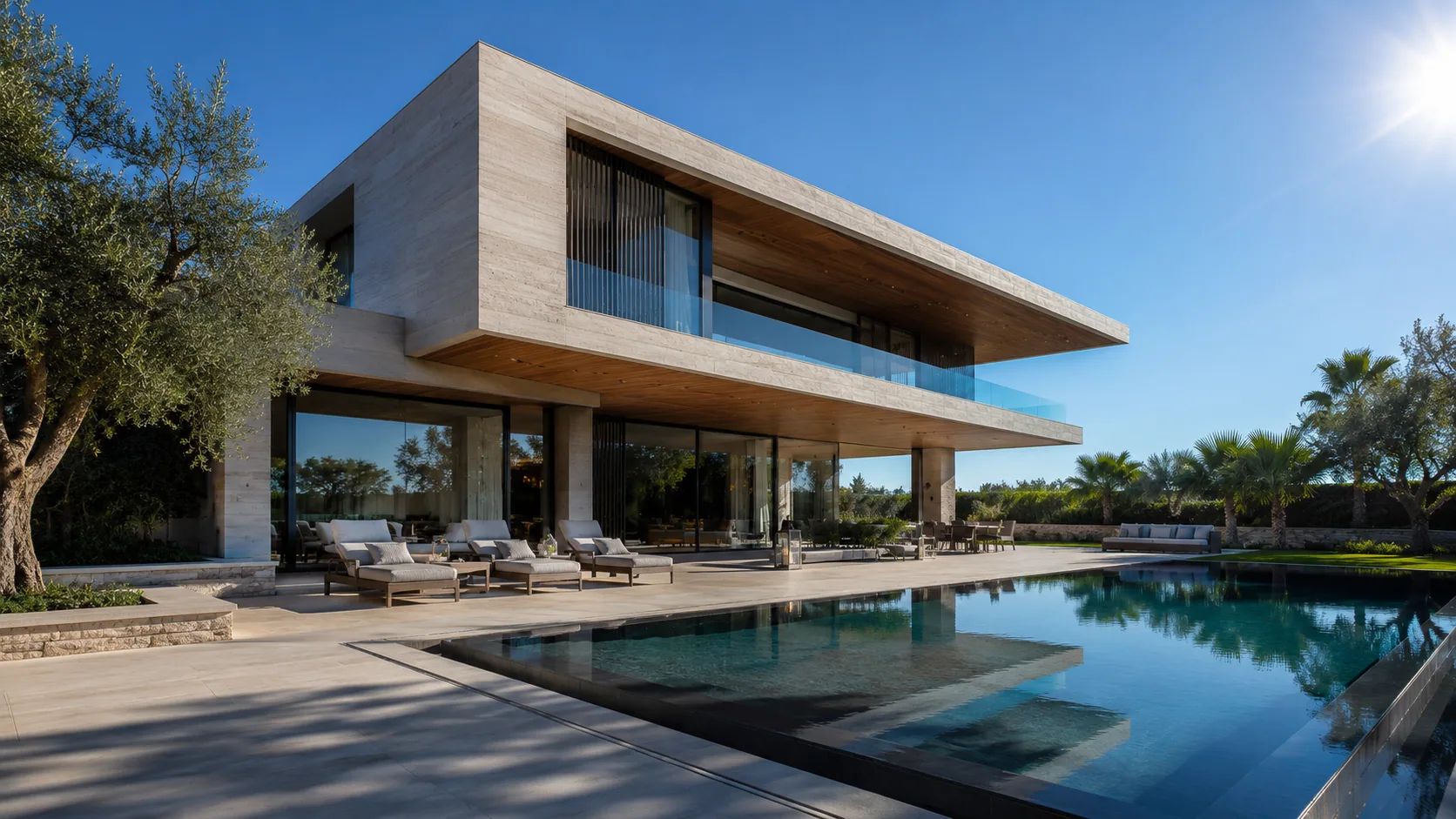
A landscape consists of two layers. Hardscape covers structural elements such as stone walkways, terraces, retaining walls, steps, pergolas and the pool edge. Softscape is the living texture of trees, shrubs, lawn and flowers. The secret of a quality garden lies in the ratio of the two: too much hard surface makes the garden cold and sterile, while too much planting creates a cluttered look that is hard to maintain. When honest materials such as natural stone, timber and gray-toned concrete meet a soft texture, a whole emerges that is both timeless and sustainable to maintain.
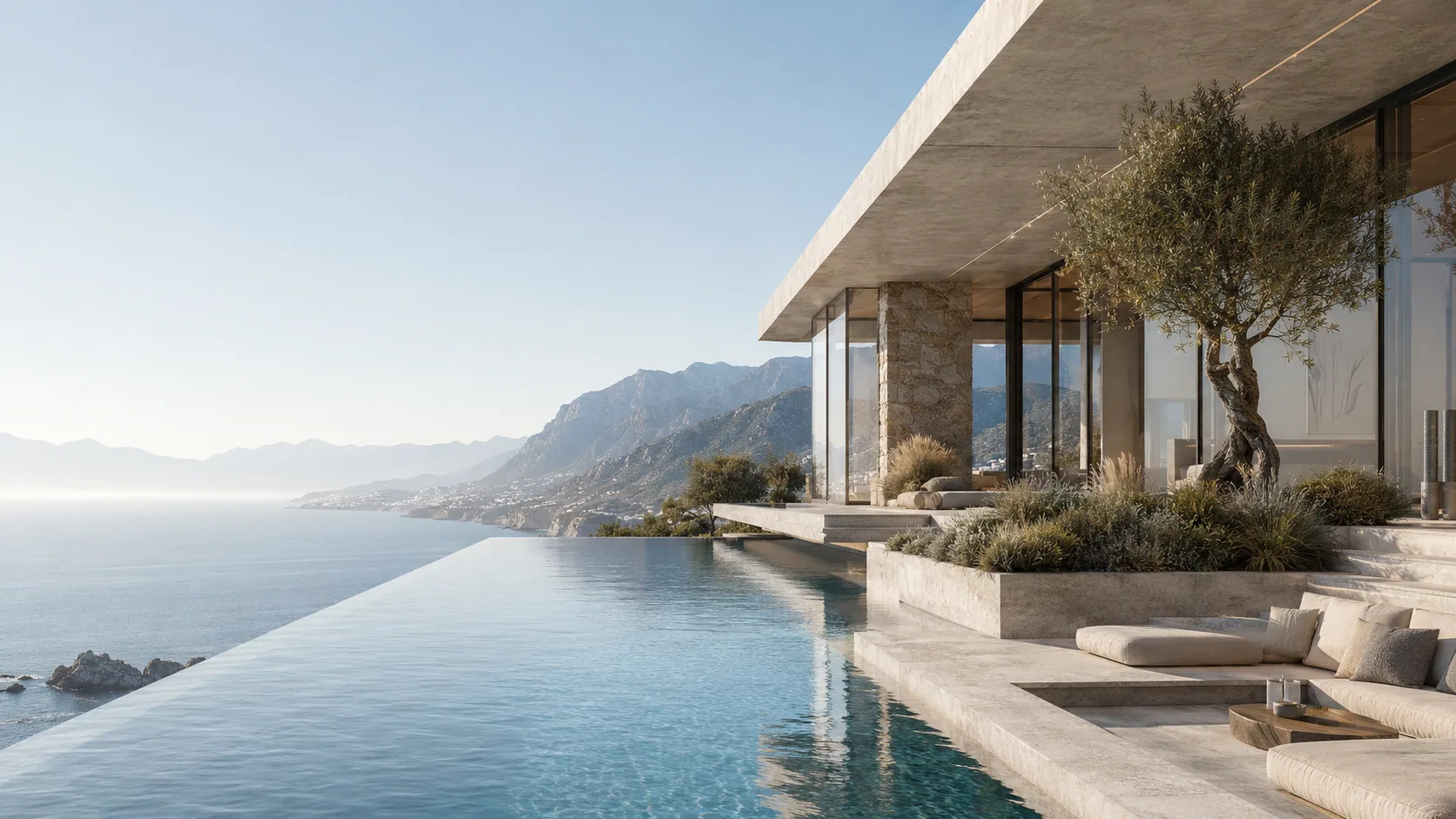
The pool is often the visual and functional core of a luxury villa garden. Its position is determined according to where it receives the sun the longest and is seen best from the villa. Infinity edges, a dark interior finish and a water line aligned with the view turn the pool into an architectural element. Beyond the pool, small water features — still mirrors, gently murmuring fountains or cascades — add both coolness and a serenity that arrives through sound. Water is a living surface that, by reflecting light, also enriches the evening atmosphere.
A good garden is designed first for living, not for the eye; its beauty is the inevitable result of the right plan.
The longevity of a garden lies in the right choice of plants. In the climate of Istanbul and the Mediterranean, the most sustainable approach is to build on species suited to the local climate and with a low dependence on water. Olive, cypress, laurel, lavender, rosemary and ornamental grasses require little maintenance while establishing a natural character that belongs to the region. In selecting plants, not only aesthetics but also growth rate, root structure, seasonal change and mature size are taken into account. Thus the garden continues to live in the right proportions not in the first year it is planted, but ten years later as well.
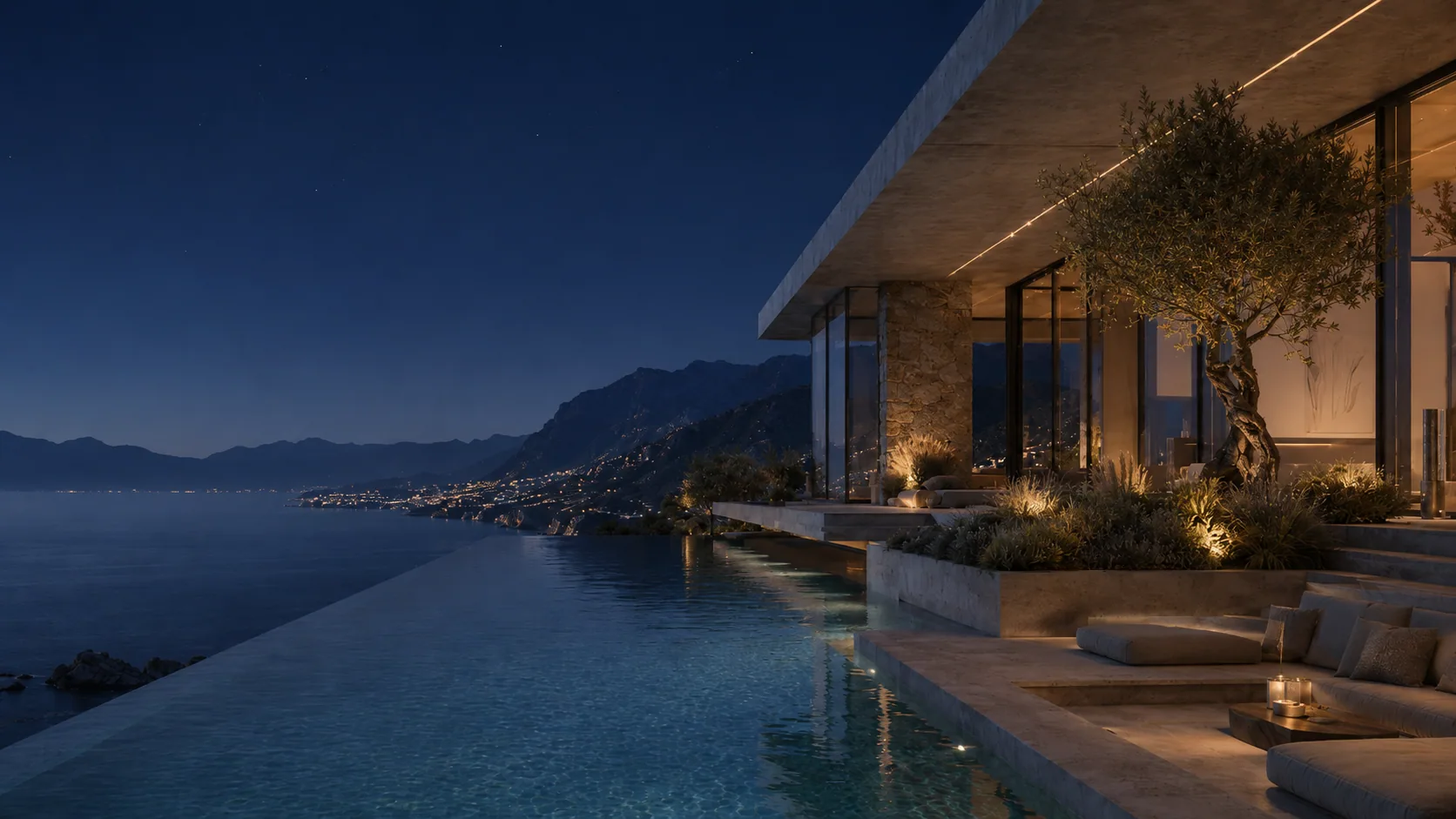
Lighting recreates the garden at night. Good landscape lighting shows not the light source but the surface it illuminates: recessed spots striking tree trunks, low fixtures tracing the walkways, underwater lights softening the pool from within and indirect beams washing the façade. A layered, warm-toned lighting turns the garden in the evening into a dramatic space independent of daytime. Avoiding blinding glare and limiting light pollution preserves both comfort and the sense of luxury.
The modern villa garden is now an open-air room. A seating area sheltered by a pergola or canopy, an outdoor kitchen and barbecue core, a fireplace or fire pit make the garden livable through much of the year. This comfort is completed by an invisible technology: automatic drip and sprinkler irrigation systems manage water according to need with moisture sensors; lighting and shading scenarios come into play at a single touch. Automation makes it easy not to labour over the garden, but to enjoy it.
Even the most beautiful garden loses its value when left unmaintained; that is why maintenance begins in the design itself. Low-water plants, durable materials, correct drainage and automatic irrigation ease the daily burden from the outset. A maintenance plan for seasonal pruning, lawn care, fertilising and pool water management keeps the garden at its original quality. A sustainable landscape respects both the environment and the budget: when composed correctly, it becomes an investment that grows more beautiful as it matures over the years.
What truly makes a villa garden valuable is that the architecture and the landscape are composed by the same hand, with the same vision. At Vesya we design the villa and its garden as a single whole; from concept to execution, we compose every layer according to your way of life.
In short
- A good villa garden landscape is an investment that carries the interior life of the home outward and increases the villa's value.
- Successful landscaping begins with zoning: relaxation, dining, pool, green and service areas are deliberately separated.
- The balance of hardscape and softscape, together with a climate-appropriate plant selection, makes the garden both aesthetic and sustainable.
- The pool, layered lighting, outdoor living space and automation turn the garden into a space lived in all year round.
How we can help you on this
Journal
 Villa
Villa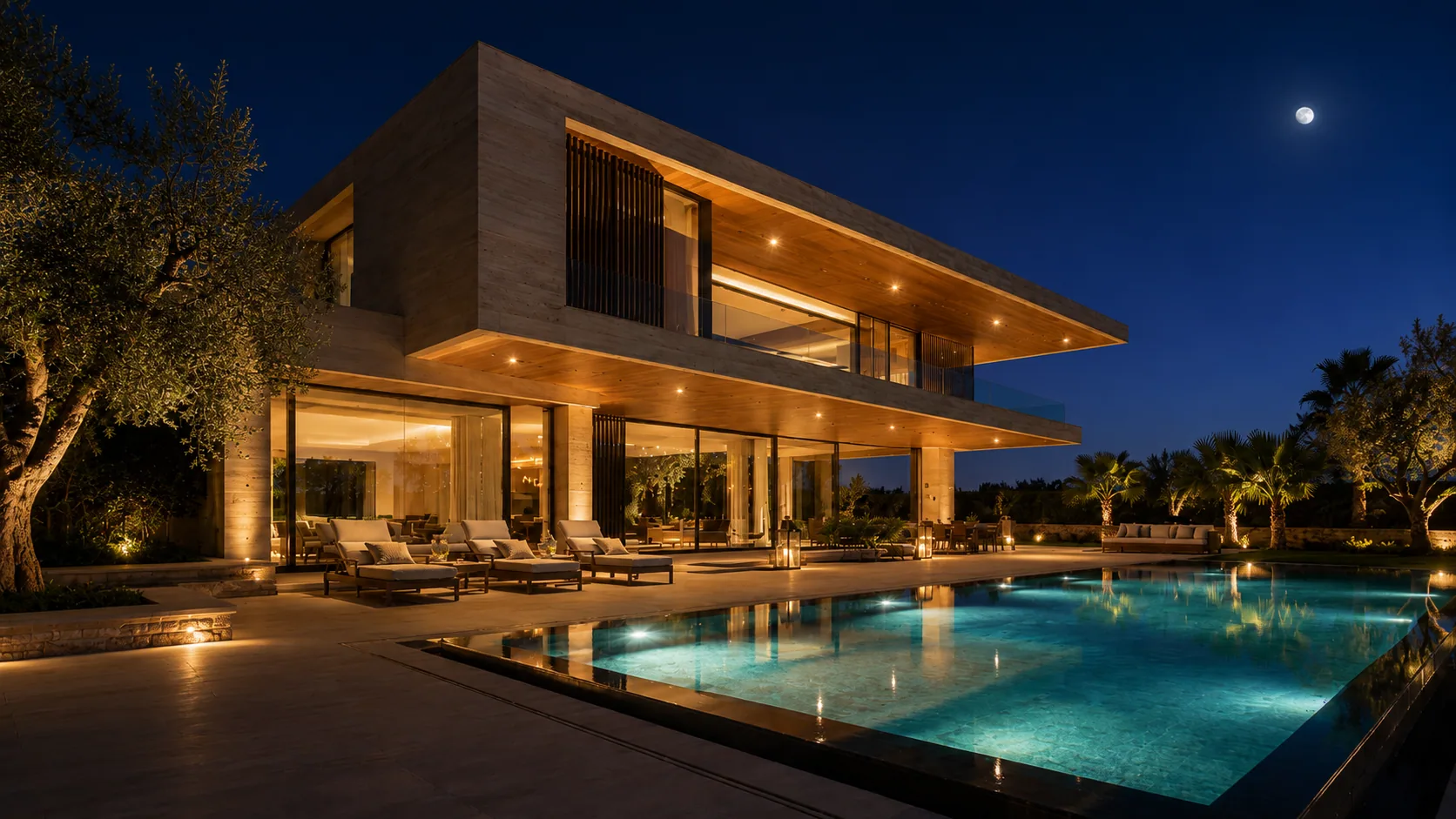
Villa Exterior Facade Design: A Guide to Materials, Style and Decisions
A villa's exterior facade shapes first impressions, value and climate performance all at once. An expert guide to getting material, style, color, lighting and insulation right — and finalizing the facade with a 3D visual.
July 20267 min read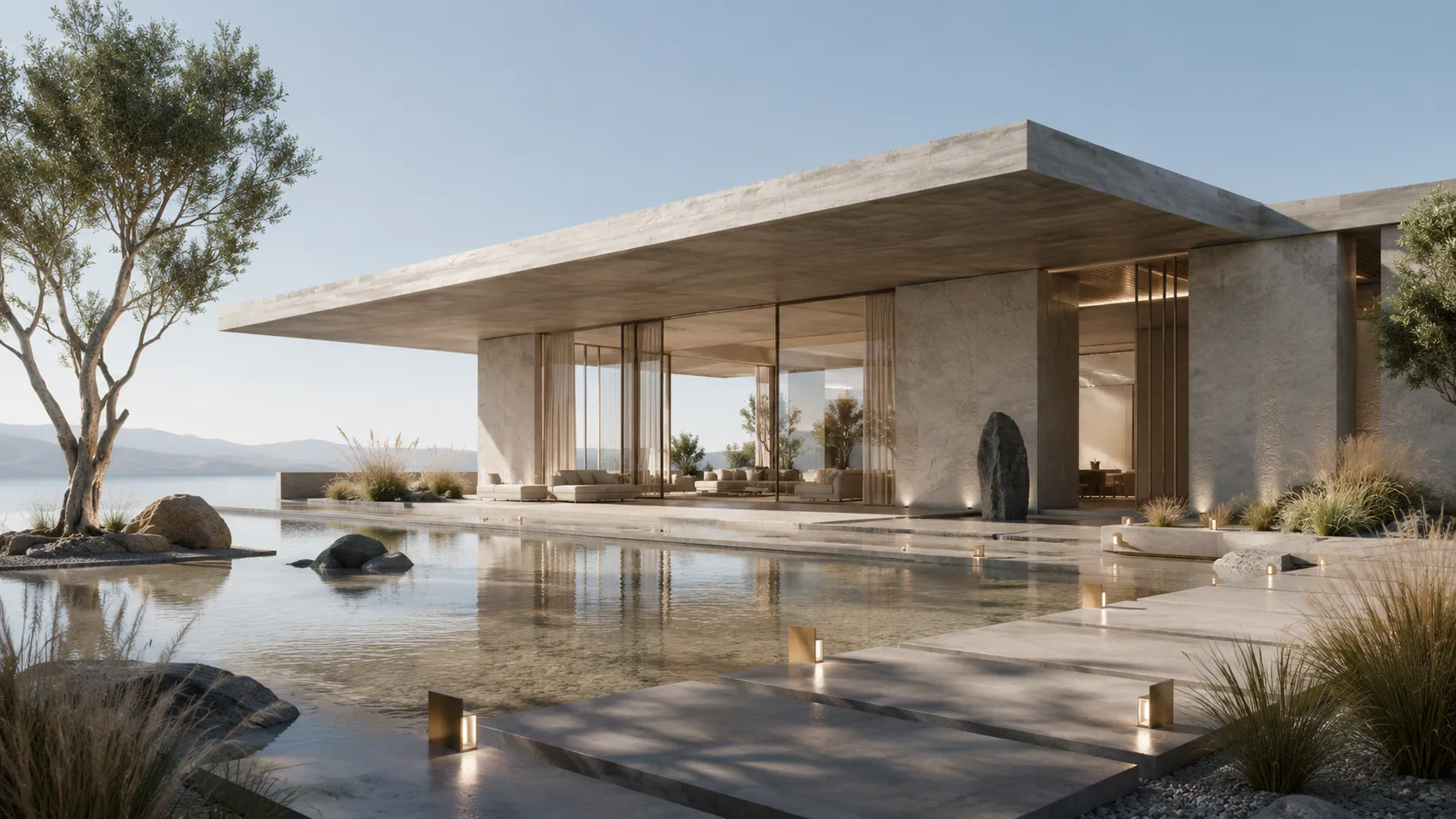 Villa
Villa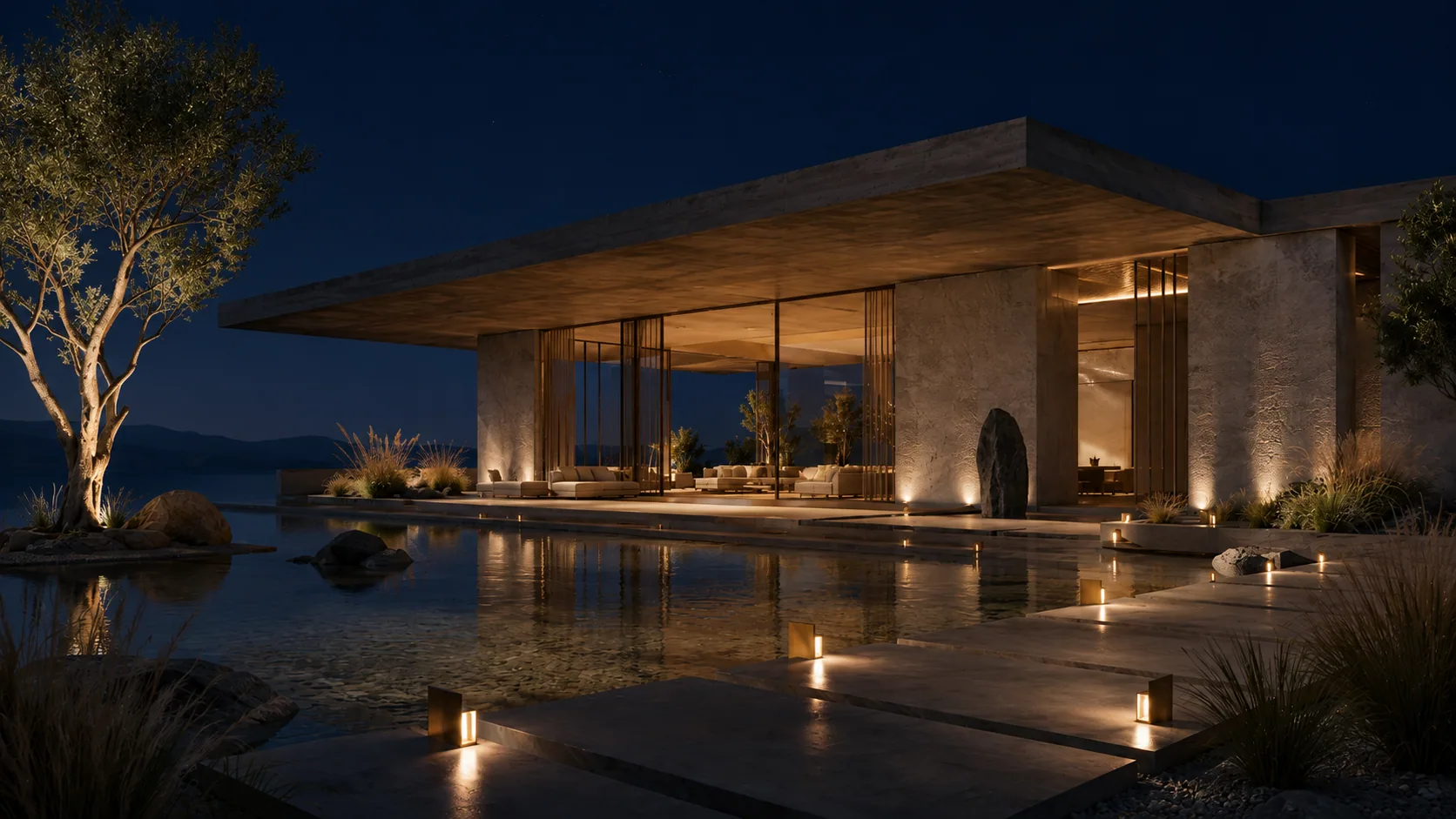
Modern Villa Design: The Architecture of Clean Lines and Light
A modern villa speaks the language of clean lines, wide glass surfaces and the open plan. We explore the lines that define the modern villa, the approach to interior space and the process of seeing the design in 3D.
July 20268 min read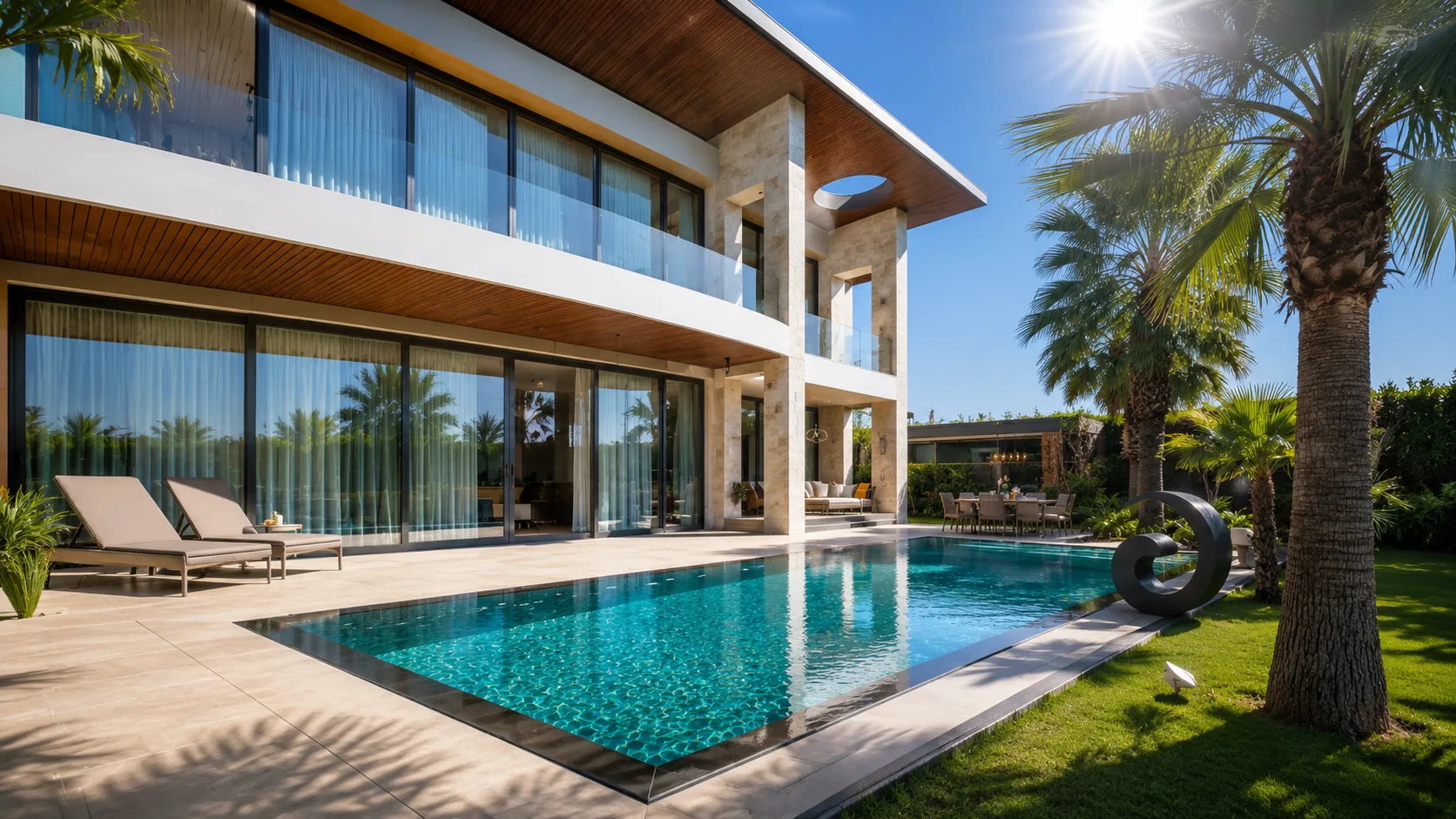 Villa
Villa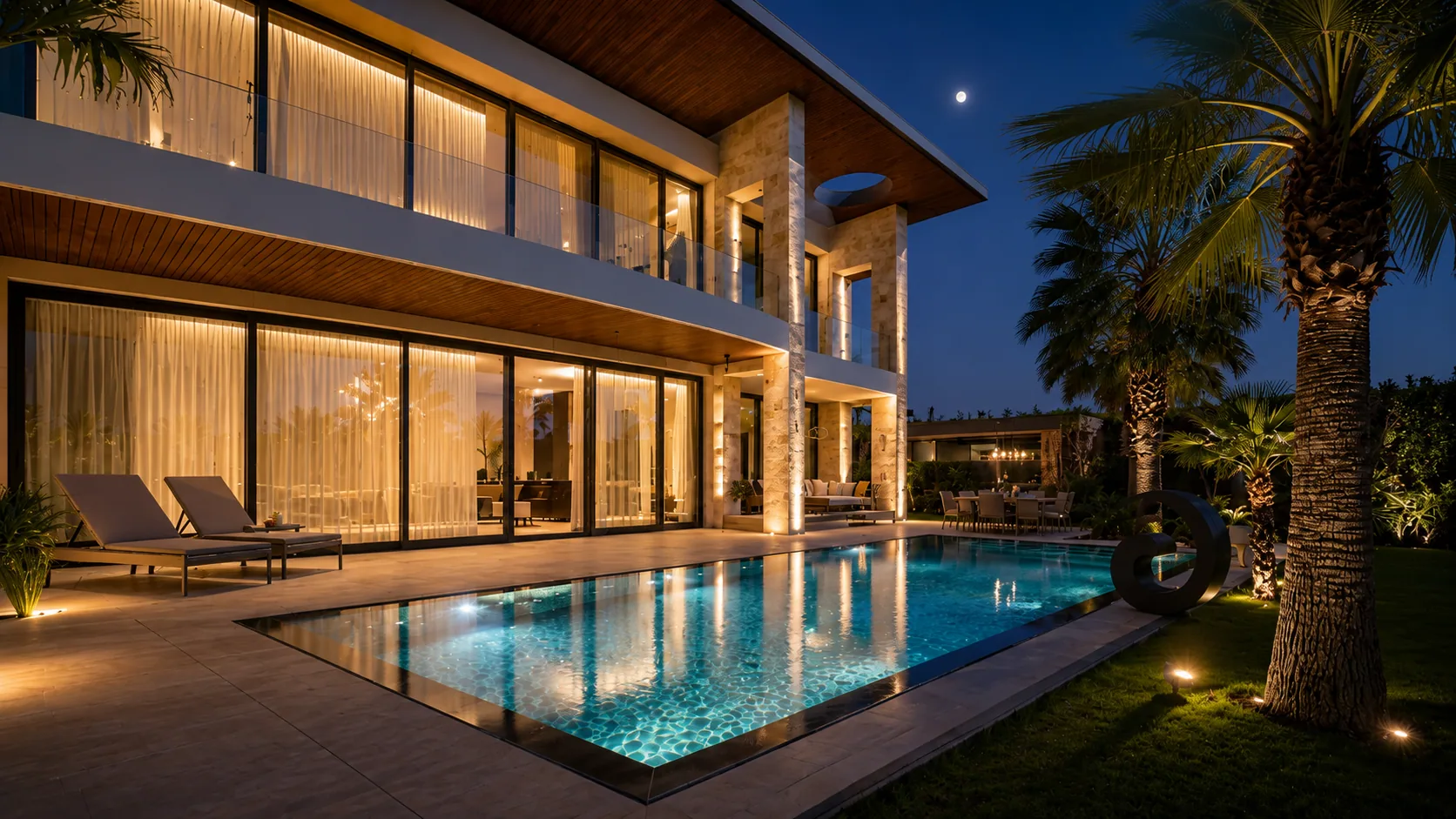
Mediterranean Villa Architecture: Light, Stone and Warm Simplicity
White facades, arches, terracotta tiles and inner courtyards — we examine the origins, characteristic elements and contemporary interpretation of Mediterranean villa architecture with an expert eye.
June 20267 min readFrequently asked questions
Vesya Project Team
Design · Build · Construction
- Response time
- Same day
- Channels
- Phone · Email · WhatsApp
Can't find your answer here? Send us your question directly — our team will reply shortly.
Free consultationThe design begins by reading the plot's sun orientation, slope, wind and view. The garden is then zoned according to function: relaxation, dining, pool, green and service areas are defined. The balance of hardscape and softscape, a climate-appropriate plant selection, lighting and irrigation systems are integrated into this plan to build a holistic composition.
Vesya Project Team
The main factors determining the cost are the size of the plot, the slope of the terrain and the required earthworks, the presence of a pool and water features, the quality of hardscape materials, the type and mature size of plants, and the scope of lighting and automation. A well-planned landscape returns the initial investment through increased comfort and villa value.
Vesya Project Team
The pool should be positioned where it receives the sun the longest and is clearly seen from the villa. The ground survey, drainage, filtration and waterproofing must be set up correctly; the edge type, finish color and the surrounding sun terrace should be chosen in harmony with the architecture. Automation and energy-efficient equipment lower the long-term operating cost.
Vesya Project Team
In the climate of Istanbul and the Mediterranean, species with low water dependence and suited to the region take priority. Olive, cypress, laurel, lavender, rosemary and ornamental grasses require little maintenance while establishing a natural character. When selecting plants, growth rate, root structure and mature size must be taken into account, so that the garden keeps its right proportions over the years.
Vesya Project Team