
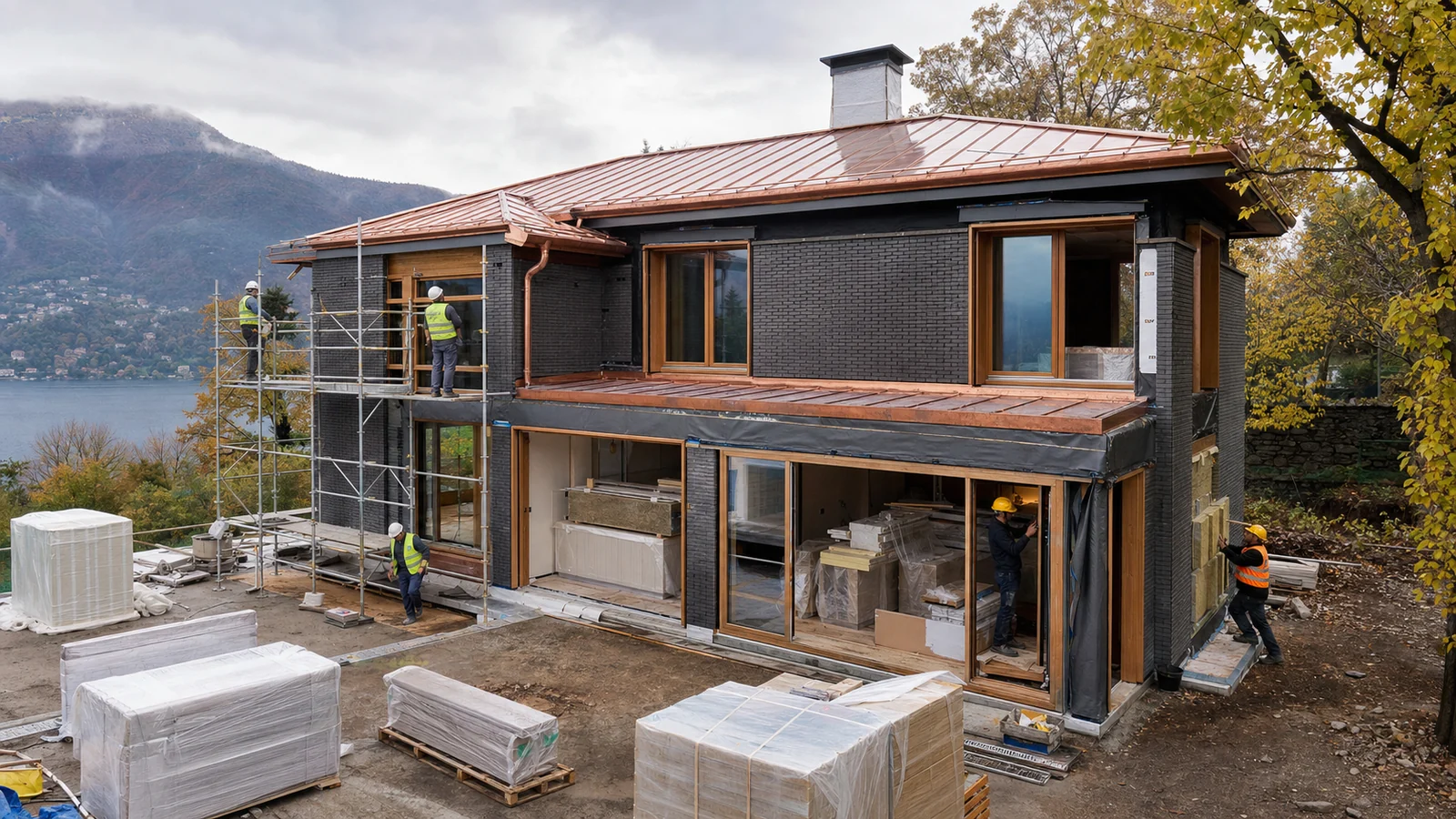
How Long Does It Take to Build a Villa? A Timeline from Land to Keys
A luxury villa is usually completed in 14-22 months from land to keys. We take an expert look at design, permit and construction timelines, the decisions that quietly stretch the schedule, and what to watch for in the contract.
Finishing a luxury villa from land to keys, when everything runs normally, usually takes 14 to 22 months. But there is a truth hidden beneath that figure: what stretches a villa out most of the time is not the construction, but the design, permit and decision processes that come before it. Below we split the process into four blocks and clearly explain the realistic duration of each, the decisions that lengthen the schedule, and what you should look for in the contract.
Let's talk about the keys. When everything runs normally, finishing a standard luxury villa from land to handover most often takes 14 to 22 months. But looking at that figure alone is misleading. What truly stretches a villa out is usually not the construction itself; it is the design, permit and decision processes that come before construction.
Below I have split the process into four blocks: design, permits, structural work, and finishing and handover. For each one I have written the realistic duration range, which decisions lengthen the schedule and how, and what you should look for in the contract. The figures are based on 2026 conditions in Turkey; no exaggeration.
- Design and drafting — 2 to 4 months. Concept, preliminary design, application drawings; the structural, mechanical and electrical projects being drawn and made to fit one another. The fate of the villa is largely written here.
- Permits and approvals — 1 to 3 months. Application to the municipality, zoning review, the required institutional opinions and the issuing of the building permit. It varies by region and by how complete the file is.
- Structural construction — 5 to 8 months. Excavation, foundation, reinforced-concrete frame, walls, roof, exterior facade framing. The period in which the body of the villa rises.
- Finishing and handover — 5 to 8 months. Plaster, screed, wet areas, mechanical and electrical installations, facade cladding, interior architecture, landscaping, cleaning and acceptance. This is where the quality you notice once you step inside comes to life.
Some of these blocks run in parallel. In a well-structured program, excavation and the soil survey are handled while the permit is awaited; while structural work continues, orders for doors, windows and natural stone are placed. On a team with the discipline to work in parallel, the total time shrinks. In a scattered organization where everyone waits their turn, the same villa easily passes two years.
The most common mistake is treating design as a 'formality to get through quickly'. Yet this is what shortens or lengthens the build time most. The location of the kitchen island, the ceiling height, the type of stone on the facade, whether heating comes from the floor or from radiators… If these decisions are not settled in the project, they get settled on site. And every decision made on site costs both time and money.
The architectural, structural, mechanical and electrical projects must talk to one another. An air-conditioning line cannot pass through a beam; the lighting scheme must sit within the ceiling detail. If this coordination is done up front, the site flows smoothly. If it is not, a wall is built, then broken open again for the installation. At Vesya, this is exactly why we insist on finishing the project at the design table; we do not like meeting surprises on site.
The real cost and duration of a villa are determined at the drawing table, long before the first concrete is poured.
A building permit can technically be issued in a few weeks; in practice it swings between 1 and 3 months. Three things make the difference: the zoning status of the land, the file being submitted complete, and region-specific additional approvals. On plots by the sea, at a forest boundary, near a conservation area or on sloped land, the institutional opinions that come into play can lengthen the process noticeably.
Your only protection here is to clarify the zoning status before buying the land or starting the design. Floor-area ratio, setback distances, building height, usable ground-floor area; all of these determine both the size of the villa and the speed of the permit. An experienced team prepares the application file complete on the first attempt; that way the weeks lost to back-and-forth simply never occur.
- Changes midway through the project — Adding a room, changing the facade or enlarging the pool after structural work has begun puts the structural calculation, and often the permit, back on the table. A single 'small' change can cost weeks.
- Imported and custom-made materials — Custom-sized steel joinery, imported natural stone, handmade ceramics or bespoke furniture require long lead times. If the order is placed late, the villa finishes but the material does not arrive.
- Ground surprises — Rock, a high water table or weak soil changes both the foundation solution and the schedule. Having the soil survey done at the very start largely closes off this risk.
- Season and climate — A harsh winter slows concrete and exterior facade work; on the coast, wind and humidity make facade application difficult. A good program factors these windows in from the start.
- Multi-headed organization — In projects where the architect, contractor and interior designer each run separately, coordination gaps open up. Every point where responsibility changes hands produces delay.
Not all villas progress on the same schedule. There are roughly three profiles. Between a single-story, simple holiday villa and a three-story mansion with a lift, a smart-home system and an indoor pool, both the design and the execution time widen considerably.
- Compact villa (250-400 m²) — Usually 12 to 16 months. One or two stories, standard technical systems, a simple facade.
- Mid-scale luxury villa (400-700 m²) — Usually 16 to 22 months. Pool, landscaping, high-end interior architecture; the dose of imported materials increases.
- Large mansion (700 m² and above) — Can climb to 24 months and beyond. A lift, smart home, indoor-outdoor pool, spa, extensive landscaping and custom-made details widen the schedule.
The most concrete place to discuss time is the contract. The sentence 'it will be finished in about a year' carries no binding force at all. In a binding timeline you want to see the following.
- 1Work program — A schedule dated block by block, showing the structural and finishing milestones, should be attached.
- 2Interim delivery points — Control moments at which stages such as the foundation, frame, roof, mechanical installation and the start of finishing will be approved must be defined.
- 3Delay and force majeure clauses — The consequence of a delay caused by the team, and how uncontrollable causes such as weather and official approvals are separated out, must be in writing.
- 4Change procedure — How the effect on time and cost of a change requested during the work will be documented must be clear from the outset.
- 5Payment-progress link — Payments should be tied not to the calendar but to completed and approved work. This disciplines both you and the work.
In a project that runs under one roof from design to construction, this timeline becomes far more reliable; because the party that gives the word and the party that keeps it are the same. In structures where responsibility bounces back and forth between the architect and the contractor, even the clearest contract remains open to delay.
The per-square-meter prices circulating online and promises of 'a villa in so many months' tell you nothing real. The duration and budget of your villa only become clear with a room-by-room specification: which material in which space, which brand, which workmanship. Once this list exists, both an item-by-item, clear quote is formed and the schedule settles on realistic ground.
Our approach is to share a range at the outset and firm up that range with the room-by-room specification. That way you know what to expect throughout the process; you will not face a surprise invoice or a surprise delay. For us, transparency is not a promise but the very way we run the work.
In short
- A luxury villa is completed in 14-22 months from land to keys under normal conditions; the scale of the villa and the material choices determine the timeline.
- What truly stretches the schedule is not the construction but design decisions settling late and the permit process; finishing the work at the table shortens the total duration.
- Mid-project changes, imported materials ordered late and a skipped soil survey are the most common causes of delay.
- The duration should be written into the contract with a binding work program and interim delivery points; on projects run under one hand the timeline is more reliable.
How we can help you on this
Journal
 Villa
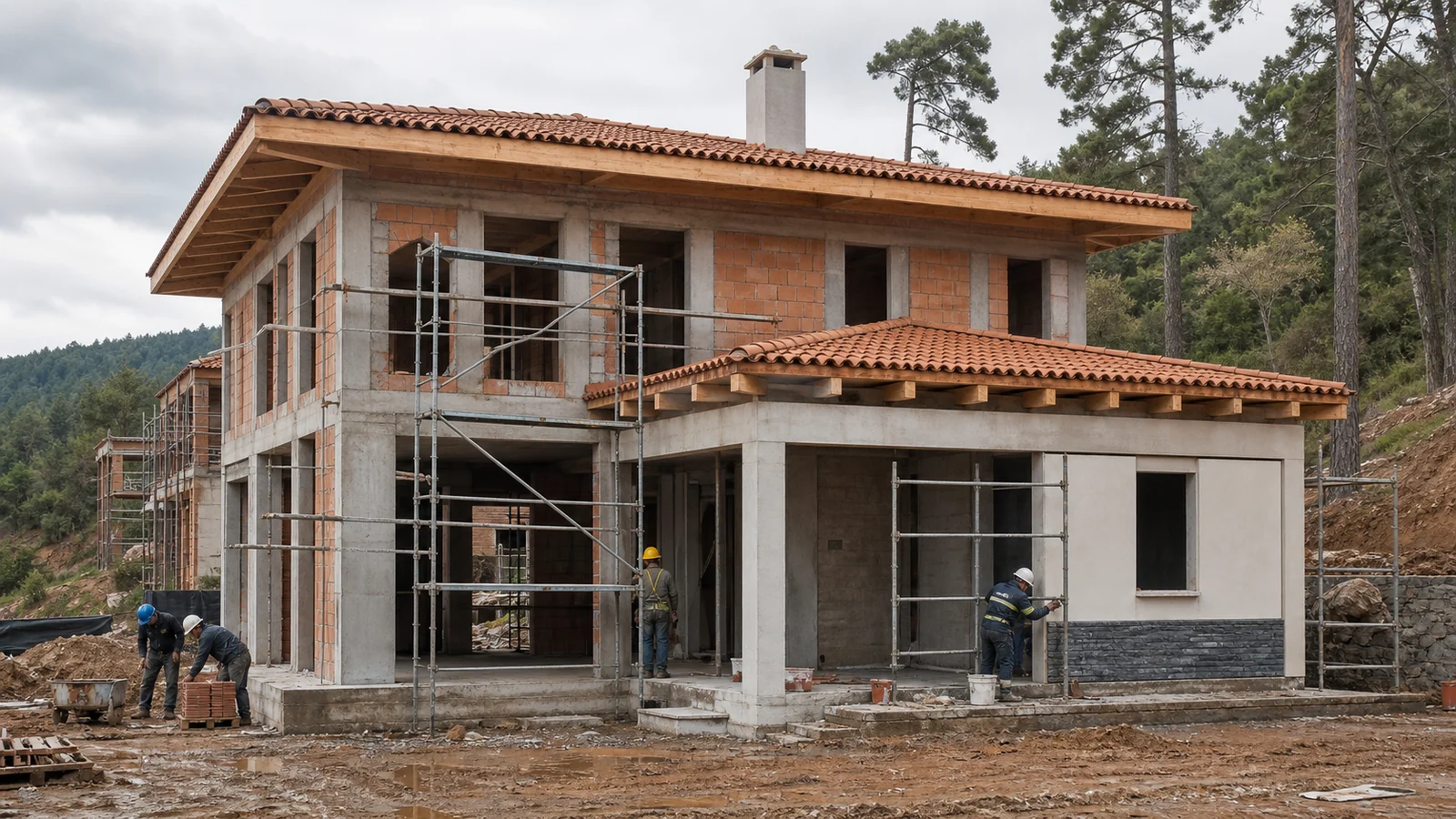
VillaVilla Construction Phases: From Needs Analysis to Permits and Turnkey Handover
From an expert's perspective, we explain the eight phases that take a villa from scratch to handover, the critical hand-offs between them, and what you need to know in the Turkey 2026 context.
June 20268 min read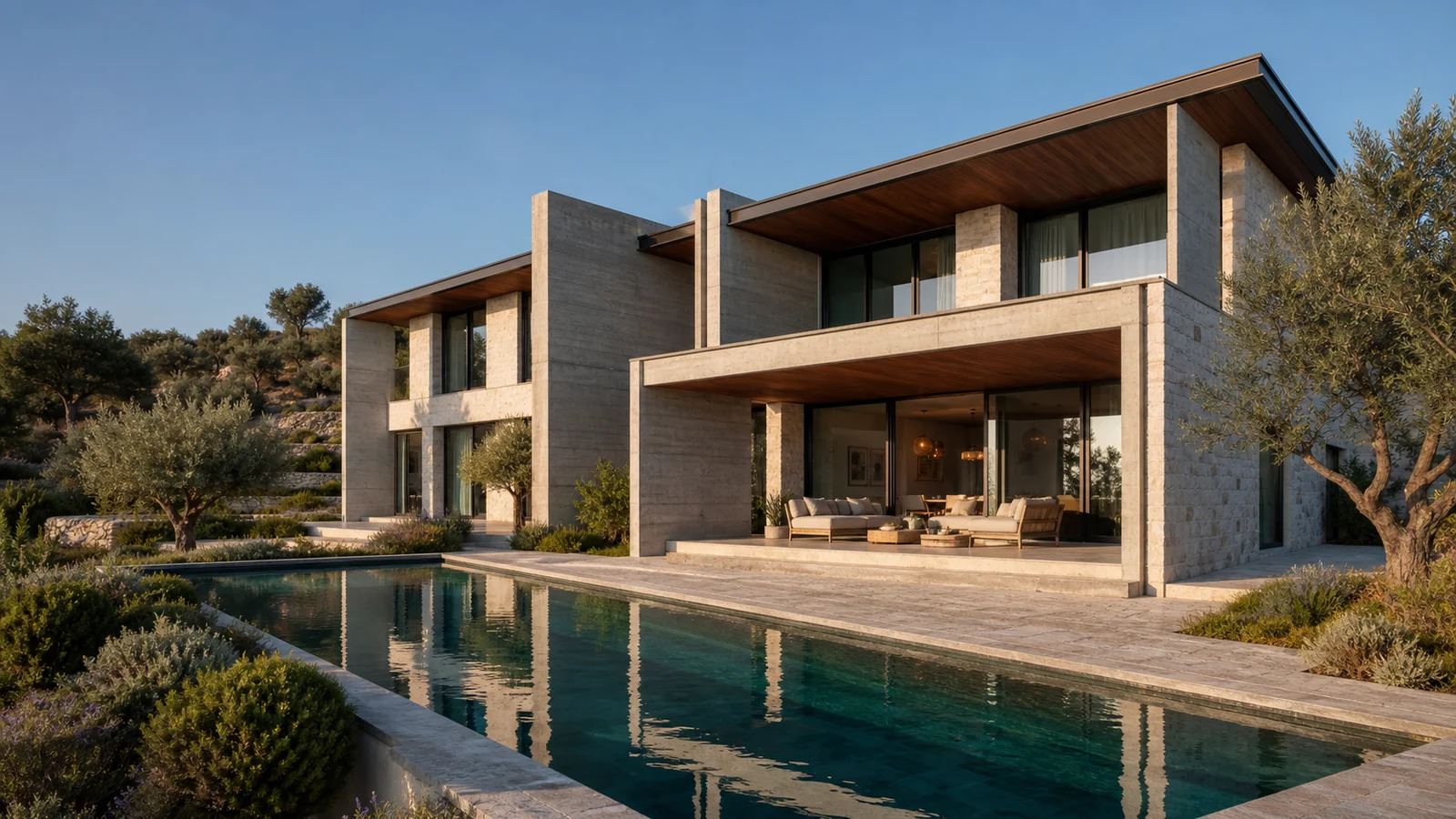 Villa
VillaTurnkey Villa: One Team From Design to Handover
One contract, one responsibility — from land to keys. We explain step by step how a turnkey villa works, what determines its cost and what to watch for in the contract.
July 20269 min read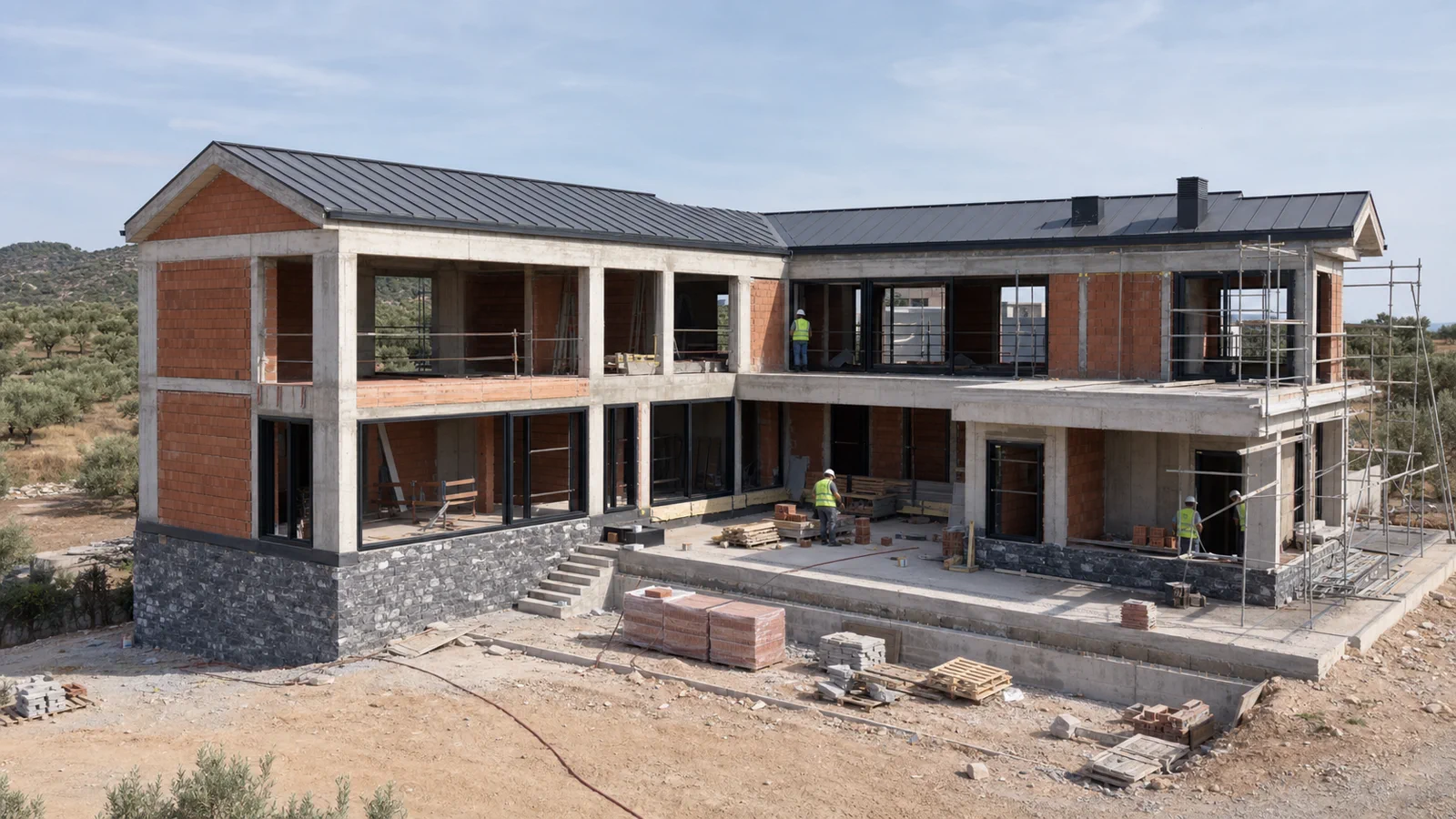 Villa
VillaVilla Construction Cost 2026: The Factors That Set the Price
There is no single answer to "how much does a villa cost?"; the cost is the sum of the decisions you make. We explain what determines the m² price, which line items get overlooked, and how to read a transparent quote.
July 20268 min read Process
What Is Reinforced Concrete? Definition, Elements and Construction Stages
Reinforced concrete is a load-bearing system that combines the compressive strength of concrete with the tensile strength of steel reinforcement. We explain its definition, elements, construction stages and the factors that determine quality.
July 20267 min read Villa
VillaHow Many Months Does It Take to Design a Villa? A Realistic Timeline
The short answer: concept in 2–3 weeks, full architectural project and permit set in 6–10 weeks, 3–4 months together with interiors. The long answer depends on “what is being waited for” — we explain the five things that set the timeline, and our own rhythm.
July 20265 min readFrequently asked questions
Vesya Project Team
Design · Build · Construction
- Response time
- Same day
- Channels
- Phone · Email · WhatsApp
Can't find your answer here? Send us your question directly — our team will reply shortly.
Free consultationA standard luxury villa is usually completed in 14 to 22 months from land to key handover under normal conditions. Of this, roughly 2-4 months is design and drafting, 1-3 months is the permit, 5-8 months is structural construction, and 5-8 months is finishing and handover. The size of the villa, the material choices and the plot conditions change this duration noticeably.
Vesya Project Team
On the surface the longest blocks are structural construction and finishing; however, what truly stretches projects out is usually design decisions settling late and the permit process. In projects that do not finish the design at the table, decisions emerge on site, and this leads to serious time losses such as built walls being torn down and redone. That is why a good design stage is the strongest investment for shortening the total duration.
Vesya Project Team
A building permit is usually issued within 1 to 3 months when the file is prepared complete and the zoning status of the land is clear. In cases requiring additional institutional opinions, such as seafront, conservation areas, forest boundaries or sloped plots, the process may lengthen. The most effective way to speed up the permit process is to clarify the zoning status before buying the land and to submit the application file complete on the first attempt.
Vesya Project Team
The most common reasons are changes made to the project after construction has begun, imported or custom-made materials ordered late, foundation surprises that arise because no soil survey was done, harsh winter conditions and multi-headed organization. In projects where the architect, contractor and interior designer run separately, coordination gaps produce delay. In projects run under one hand and planned up front, most of these risks disappear.
Vesya Project Team
There is a serious difference. A compact villa (250-400 m²) is usually completed in 12-16 months, while a mid-scale luxury villa (400-700 m²) takes 16-22 months, and a large mansion over 700 m² can take 24 months or more. A lift, smart-home systems, indoor-outdoor pools, a spa and custom-made details widen both the design and the execution schedule.
Vesya Project Team
The duration is secured by writing a binding work program and interim delivery points into the contract. Milestones such as the foundation, frame, roof and the start of finishing should be dated; delay and force majeure clauses should be separated out; the change procedure should be defined; and payments should be tied not to the calendar but to completed work. In projects run under one hand this timeline becomes more reliable, because the party that gives the word and the one that keeps it are the same.
Vesya Project Team