
What Does Decor Mean? Its Meaning, Elements and Difference from Decoration
Decor is the whole of the visual order that gives a space its character. We clearly separate the concepts of decor, decoration and interior architecture and explain the principles of good decor in expert language.
Decor is the whole of the order that visually and atmospherically shapes a space: the character created by color, texture, lighting, furniture, textiles and accessories together. The word comes from the Latin root “decorare” (to adorn, to make fitting) and describes what “suits” a volume. It is often confused with decoration, and even with interior architecture; yet the three are different layers. Roughly put: decor is the result — the visible and felt atmosphere of a space. Decoration is the application process that produces this result. Interior architecture is the higher discipline that designs the layout, function and structural relationships of the space. In this article we clearly distinguish all three.
Decor is the whole of all the visual elements that make up the appearance of an interior space or a stage set. The word entered our language through the French “décor,” while its root lies in the Latin verb “decorare” — to adorn, to make suitable and fitting. The nuance here matters: decor is not merely “ornament,” but expresses what suits a space, what belongs to it. The warmth of a living room, the serenity of a bedroom or the character of a hotel lobby are all results of decor. Decor is the atmosphere the eye reads as a whole, ranging from permanent surfaces (wall, floor, ceiling finishes) to movable elements (furniture, rugs, objects).
These three concepts are often used interchangeably, but there is a clear hierarchy among them. We can set out the most understandable distinction as follows:
- Decor — the result: The visible and felt whole of a space; the atmosphere created by color, texture, light and objects. When we say a space “has beautiful decor,” we are speaking of the result that emerges.
- Decoration — the process: The act of choosing and arranging in order to produce this result; determining and placing the furniture, color, textile and accessories. Decoration mostly works at the layer of surfaces and objects, without altering the existing space.
- Interior architecture — the layout: The higher discipline that designs the space itself. The placement of walls, the composition of light and circulation, function, proportion and the relationship with structure. Interior architecture builds the skeleton on which decor will rest.
By a simple analogy: interior architecture is the grammar of the sentence, decoration is the act of writing the sentence, and decor is the feeling it leaves in the reader. Good decor becomes lasting and coherent when it sits upon a sound interior-architectural layout; upon a weak layout, even the most expensive objects remain mere “dressing.”
Decor is not made of a single thing; it arises from the harmony of several layers. The fundamental elements that establish a space's atmosphere are these:
- Color — The first layer that sets the mood of a space. Neutral and earth tones bring calm, while contrast and saturated colors bring energy.
- Texture — The tactile feel of surfaces: matte plaster, veined stone, brushed wood, linen. Texture, together with light, creates depth.
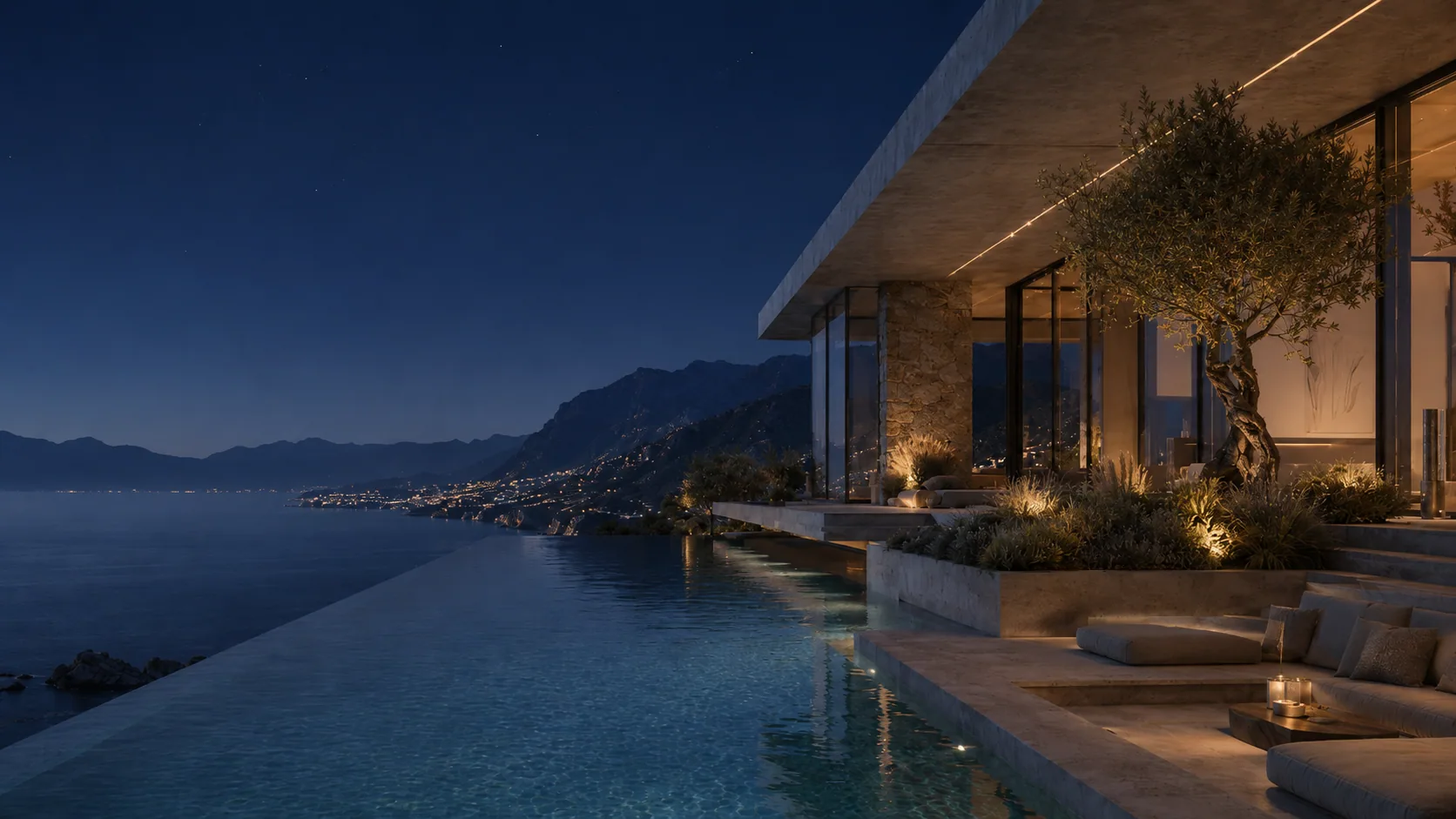
- Lighting — Perhaps the most decisive element. Natural light, layered artificial lighting (general, task, accent) and shadow can clothe the same space in entirely different feelings.
- Textile — Curtains, rugs, upholstery and cushions; they soften sound, add warmth and comfort, and balance hardness.
- Accessories and objects — Artwork, vases, books, ceramics. The final touches that carry personal character and story into the space.
- Plants and greenery — The biophilic element that adds vitality, a natural bond and scale; it makes the space feel alive.
None of these elements builds decor on its own. Mastery lies in bringing them together in the right proportion: too many objects produce clutter, too much emptiness produces coldness. Good decor balances these layers like an orchestra.
Decor has a “style,” and style is the gathering of elements around a coherent language. Let us briefly get to know the most frequently encountered approaches:
- Minimalism — Few objects, plain lines, emptiness itself a design element. Serenity and order are essential.
- Modern — Clean lines, functionality, a neutral palette and balanced materials; free of ostentation yet warm.
- Classical — Symmetry, proportion, rich detail and timelessness; it draws its weight from tradition.
- Scandinavian — Light tones, natural wood, simplicity and a priority on light; comfortable plainness.
- Industrial — Raw material, metal, concrete and exposed details; characterful and honest.
- Warm minimalism — A contemporary line that softens simplicity with layered texture and natural material; among the most preferred in luxury residences.
The right style is not what is “fashionable,” but what suits the space, the site and the person who will live there. In a luxury villa, style is most often not a single unadulterated movement, but an original synthesis distilled according to the space's identity.
Good decor is not chance; it rests on a few basic principles. These principles most often explain why a space feels “right”:
- Balance — The even distribution of visual weight across the space. It can be symmetrical or asymmetrical; what matters is that no corner remains empty or overly full.
- Proportion and scale — Furniture, objects and empty space being the right size relative to the room. Wrong scale makes even the most beautiful piece look out of place.
- Focal point — The place the eye goes first: a fireplace, an artwork, a view. Every space should have a lead role, and the rest should support it.
- Layering — Building light, texture and color layer upon layer. The sense of depth and richness arises from these layers.
Good decor does not tire the eye; it rests it. Its secret lies not in the most expensive object, but in the right proportion, the right light and the right emptiness.
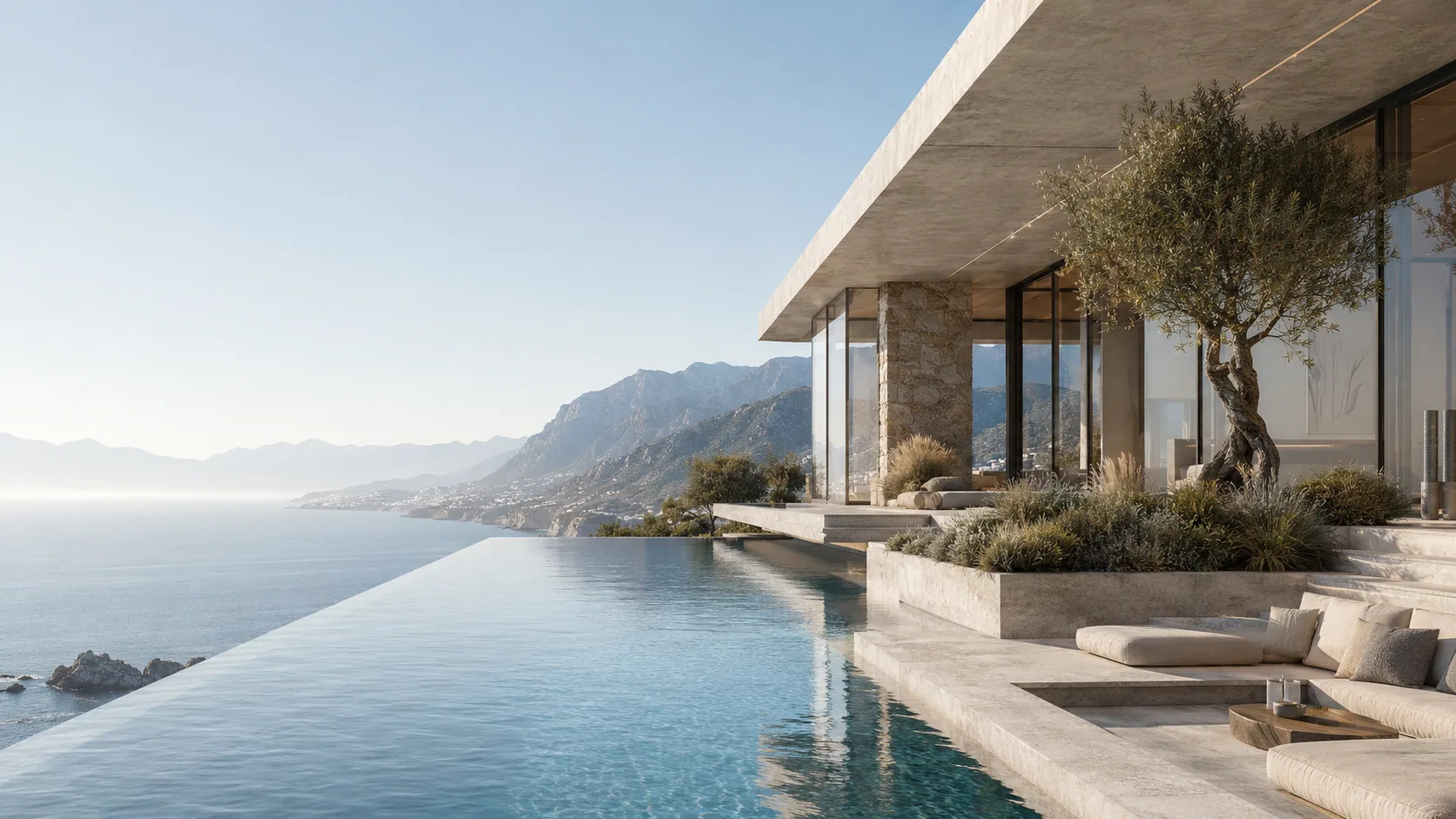
In a luxury villa, decor is not an ornament added to a surface; it is a holistic composition conceived together with the space. Here, the quality of decor is measured by how coherent it is with the architecture. If a living room's ceiling height, window proportions and natural light have been correctly composed beforehand, decor rests effortlessly upon this skeleton. Material choice is different too: solid wood, natural stone, handcrafted finishes and honest materials that grow more beautiful with age are preferred. The measure of luxury decor is not display but a sense of calm and continuity — the space does not shout at you; it opens itself as you draw near.
In some projects decoration alone is enough: if the space's layout is good, renewing the color-textile-object layer is enough for a new atmosphere. But if wall positions, light composition, circulation or function are problematic, no decoration can close this gap. That is precisely where interior architecture comes in; it rethinks the space itself. In a newly built or ground-up villa, the ideal is to compose the two together from the very beginning. This is exactly why at Vesya we carry out design, interior architecture and construction under a single roof: when the architectural layout and the decor come from the same mind, the result is integrated, coherent and durable over time. What emerges is not a copy-paste decor, but an identity that belongs to the space and to you.
In short
- Decor is the visual-atmospheric whole of a space formed by color, texture, light and objects — it comes from the root “decorare” (to make fitting).
- The distinction is clear: decor is the result, decoration is the process, and interior architecture is the higher discipline that designs the space's layout.
- Good decor rests on four principles: balance, correct proportion/scale, a strong focal point and layering.
- In a luxury residence, the best result is achieved when decor and the architectural layout are designed together from the very beginning, by a single hand.
How we can help you on this
Journal
 Interior
Home Decoration: Where to Start, an Expert Guide
Home decoration is not about collecting beautiful objects; it is about composing a way of living. We explain where to start, how to plan the budget and how to define style and color — step by step.
July 20268 min read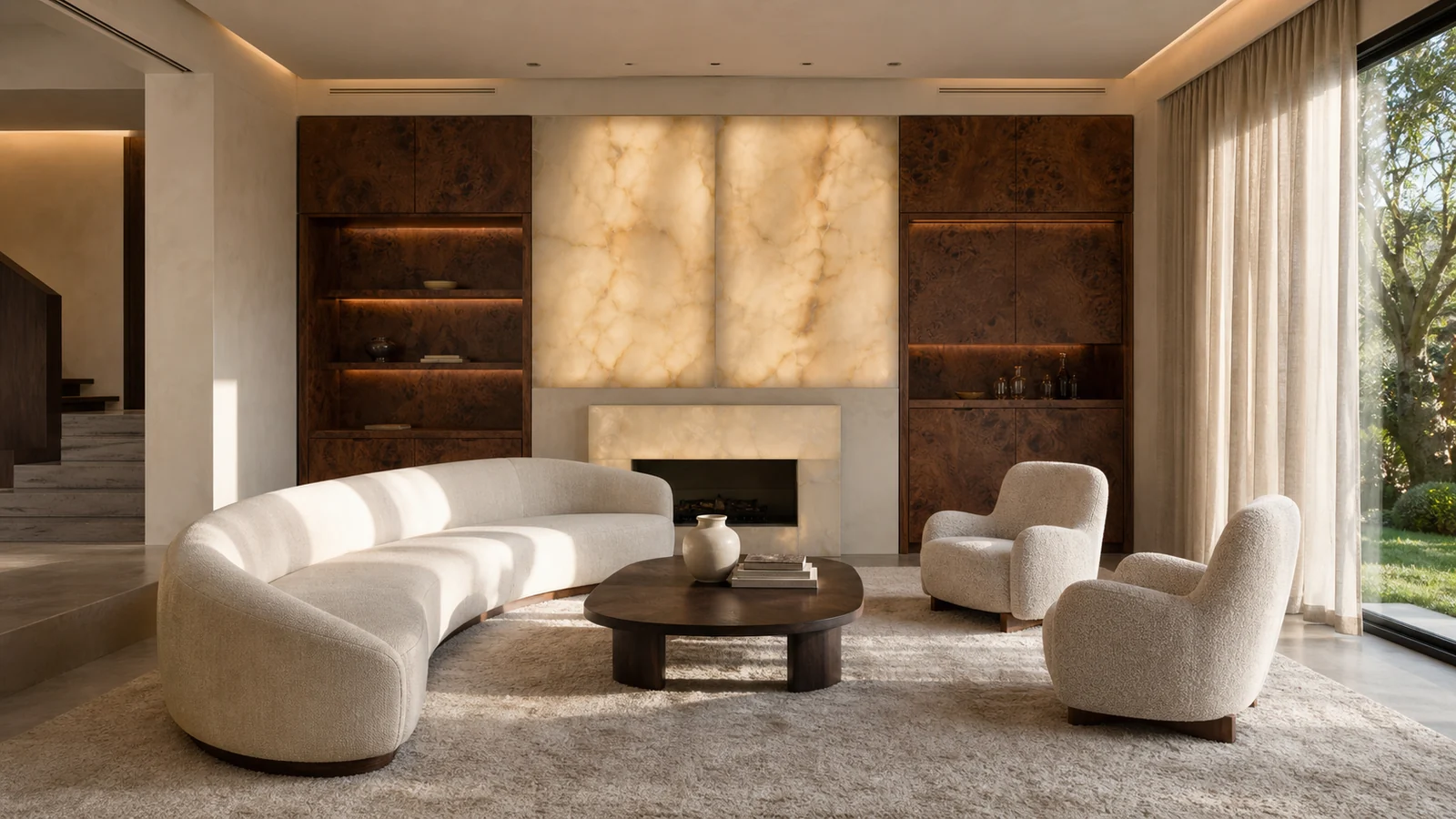 Interior
Luxury Villa Interior Design: Material, Texture, Light and the Grammar of Quiet Luxury
What makes a villa "good" rather than merely "expensive" is honesty of material, consistency of texture and the staging of light. We spell out the grammar of quiet luxury, line by line.
July 20268 min read Interior
What Does an Interior Designer Do? When Do They Step Into a Project?
An interior designer shapes both how a space works and how it feels. We explain what they do, how they differ from an architect, and exactly when they should step into a villa or hotel project — through an expert lens.
July 20268 min readInteriorWhat Does Anthracite Mean? Definition, Shades and Use of the Color
Anthracite is a deep color tone between dark gray and smoke. It takes its name from anthracite coal. We cover its definition, shades, complementary colors and balanced use in interiors.
July 20266 min readFrequently asked questions
Vesya Project Team
Design · Build · Construction
- Response time
- Same day
- Channels
- Phone · Email · WhatsApp
Can't find your answer here? Send us your question directly — our team will reply shortly.
Free consultationDecor is the whole of all the visual elements that make up the appearance and atmosphere of an interior space: the character created by color, texture, lighting, furniture, textiles and accessories together. The word comes from the Latin root “decorare” (to adorn, to make fitting) and describes what suits a space, what belongs to it.
Vesya Project Team
Decoration is the process of choosing and arranging so that a space attains the desired appearance: determining and placing the color, furniture, textile and accessories. It is generally the act of application that works at the layer of surfaces and objects, without touching the structure of the space. In short, decoration is the process that produces the decor result.
Vesya Project Team
The difference is that between result and process. Decor is the visual whole that emerges — the felt atmosphere of the space. Decoration is the act of arranging carried out to produce that result. In other words, you do decoration and you obtain decor; one is a verb, the other its result.
Vesya Project Team
If you only want to renew the layer of color, furniture and objects, a decorator may be enough. But if you are going to change the space's layout — walls, light, circulation or function — you need an interior architect, because an interior architect designs the space itself. In a new or luxury project, the ideal is a holistic team that composes the design and the decor together from the very beginning.
Vesya Project Team