
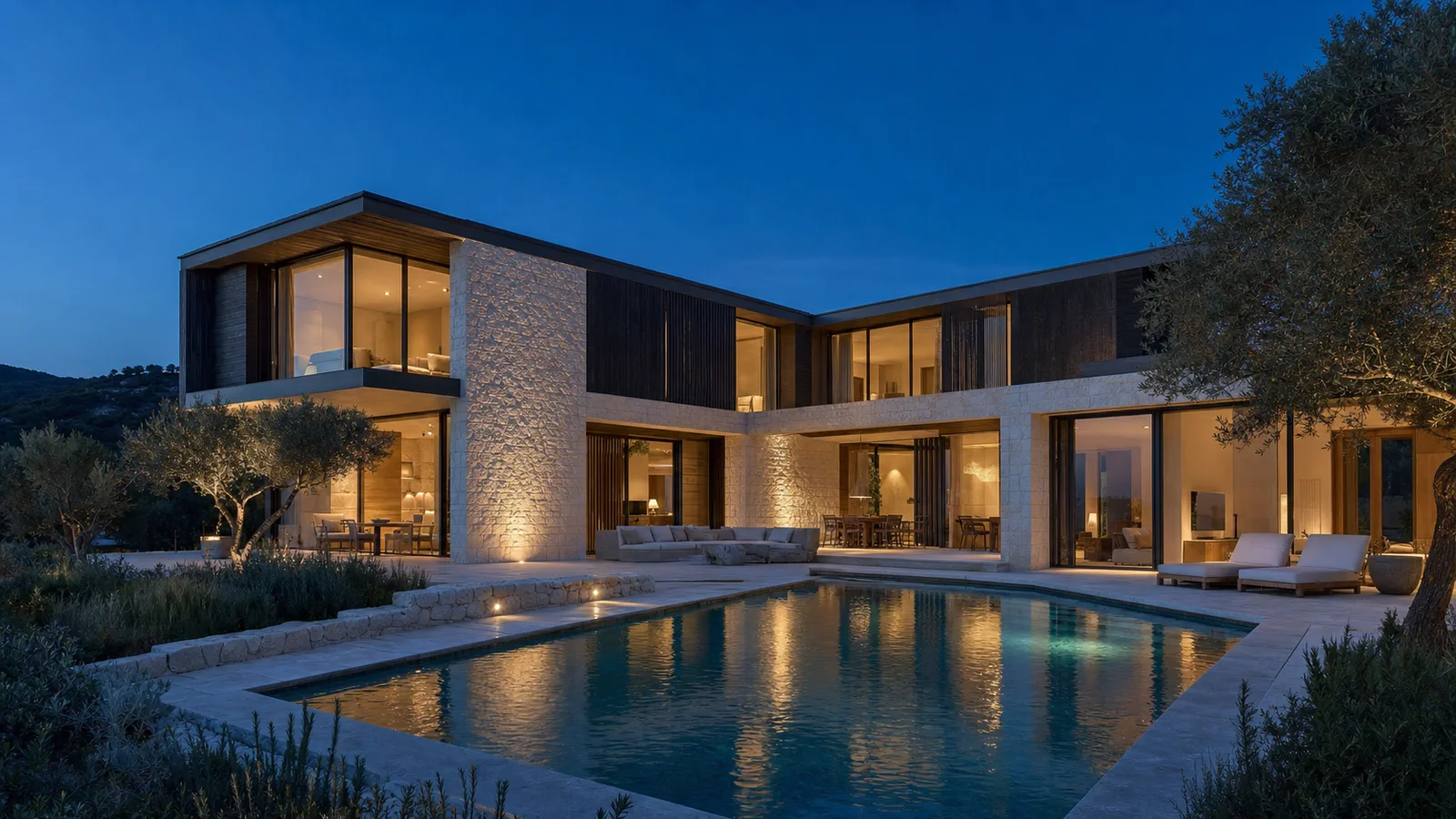
Where Does a Night Rendering Get Its Atmosphere?
Moonlight, warm interior lighting and reflections falling on the water — the three layers that carry a night scene, and how we build them in Corona. Why does a night built with a single light look like a 'darkened day'?
A night scene is not a darkened version of the day scene. Lower the exposure and deepen the sky, and what you get is not night but a day without light. A real night atmosphere is born from three separate layers of light, built one on top of the other, each on its own.
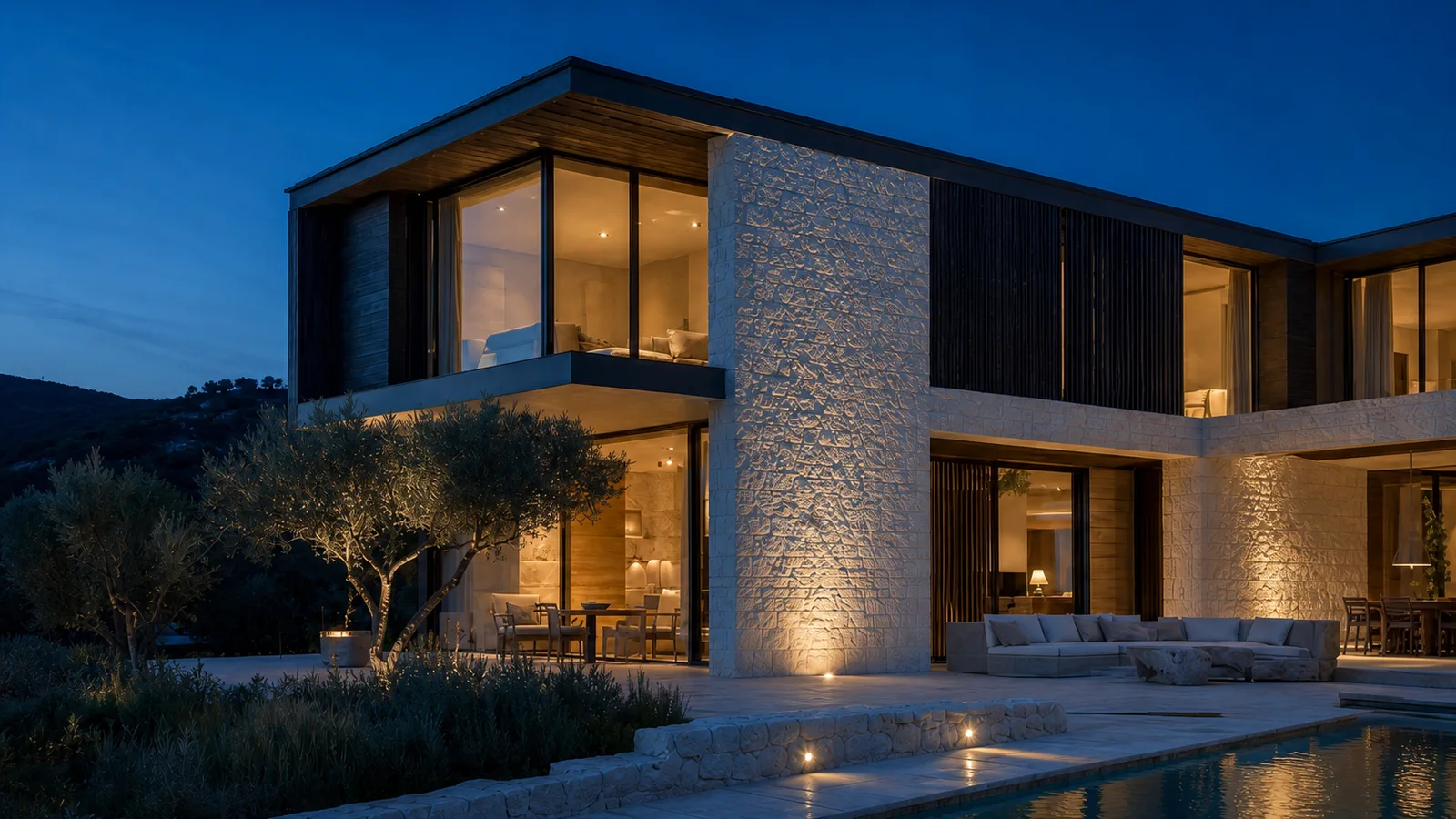
The moon's light is cool (around 7,000K), soft and directional; it describes the mass and stretches the shadows. This layer builds the 'skeleton' of the scene: which face of the facade turns toward the night, where the shadow of the eaves falls. In Corona we set this up with the balance of a low-intensity, cool directional light and a sky HDRI.
The warm 2,700–3,000K light spilling from inside the house is the emotion of the night scene: the feeling that 'there is life inside' comes from here. Behind every window stands a real fixture plan — not randomly glowing rectangles, but that house's actual night scenario. This is the advantage of the interior lighting plan and the rendering plan coming from the same hand.
The pool is the mirror of the night scene: warm interior light and cool moonlight meet on the water's surface. Exaggerate the ripple scale and the reflection falls apart; leave it flat and it looks like plastic — the right balance lies in the subtle stir where the water 'breathes'. If there is underwater lighting, it is balanced separately as a third color temperature.
Because each layer has a different job: the moon carries the mass, the interior light the emotion, the reflection the depth. A night scene built with a single light loads these three jobs onto one source and looks like a 'darkened day'. This discipline is also why every project in our portfolio has a day/night pair — same framing, two lights, two separate setups.
The moon carries the mass, the interior light the emotion, the reflection the depth — night is the balance of three layers.
For our full visualization process, see our Architectural Visualization page; for the engine choice, our article Corona or V-Ray.
By day glass is transparent; at night it splits in two. When the inside is brighter than the outside, the glass becomes a display case and the villa's interior spills onto the facade — this is the strongest narrative of a night render. The same glass is a mirror for whoever looks from inside: a person sitting in the living room sees not the sea but their own room. In a good night image this duality is built deliberately; which pane will show the interior and which will be left to reflection is a framing decision. A render that treats glass as a single material always looks fake at night.
The garden is the most neglected side of a night render; yet it is the garden that makes a villa look 'settled' at night. Three basic moves establish the work: washing the trunk of a tree with light thrown upward from the ground, grazing a surface with light coming down from an eave or wall, and marking the walking paths with low fittings that do not glare. The rule is not to see the lighting but to see what is lit: if the fitting itself glows in the frame, the light is in the wrong place. If there is a pool, the water surface plays all of this light a second time — which is why the night frame of a villa with a pool is worked harder than the daytime one.
- Turning every light on: a villa with every room lit looks like an office, not a home. In real houses some rooms are dark at night, and that is exactly where believability comes from.
- Pushing moonlight too blue: when the sky drifts into saturated blue the scene reads as a filter rather than as night; moonlight should be cool, not blue.
- Leaving nothing dark: there is no night without shadow. In an image where part of the frame is not deliberately left dark, depth disappears and every surface settles onto the same plane.
A night render is not mandatory on every project, but in three situations it is close to essential. The first is the sales and investor presentation: the night frame shows the space in its 'lived-in' state and builds emotion. The second is hotel and boutique accommodation projects; a hotel's character is largely read in its night lighting. The third is work where the lighting design itself is a deliverable — there the night image is not a presentation but a control tool. We describe the process and deliverables on our architectural visualization service page, and the engine-side choice in our Corona vs V-Ray article.
In short
- A night scene is three layers: moonlight (mass), interior lighting (emotion), water reflection (depth).
- A night built with a single light looks like a 'darkened day' — three jobs cannot be loaded onto one source.
- The light spilling from the windows is not random; it comes from the house's real fixture plan.
- The day/night pair is our signature: same framing, two separate lighting setups.
Project visuals
03 media
 01
01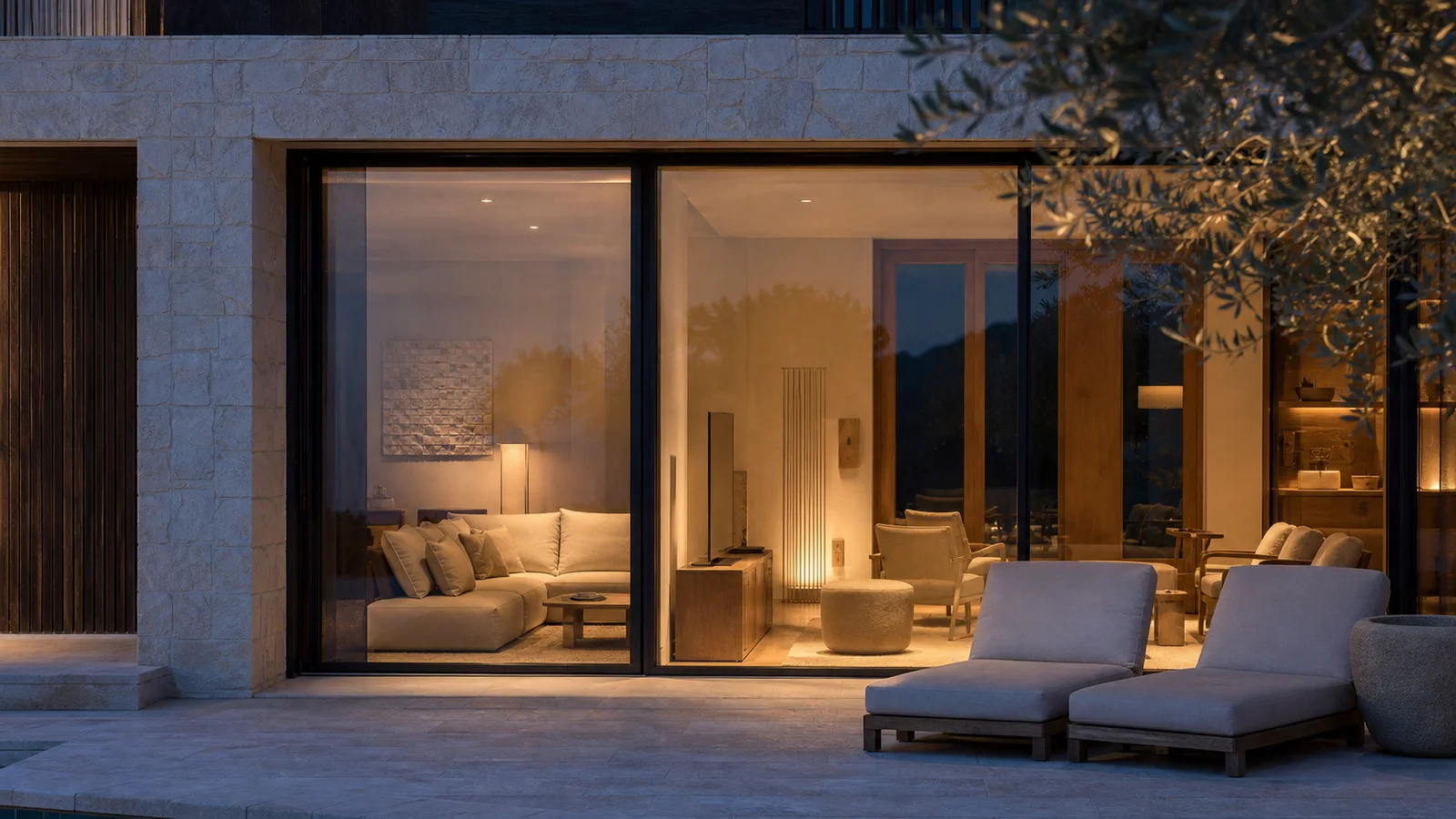 02
02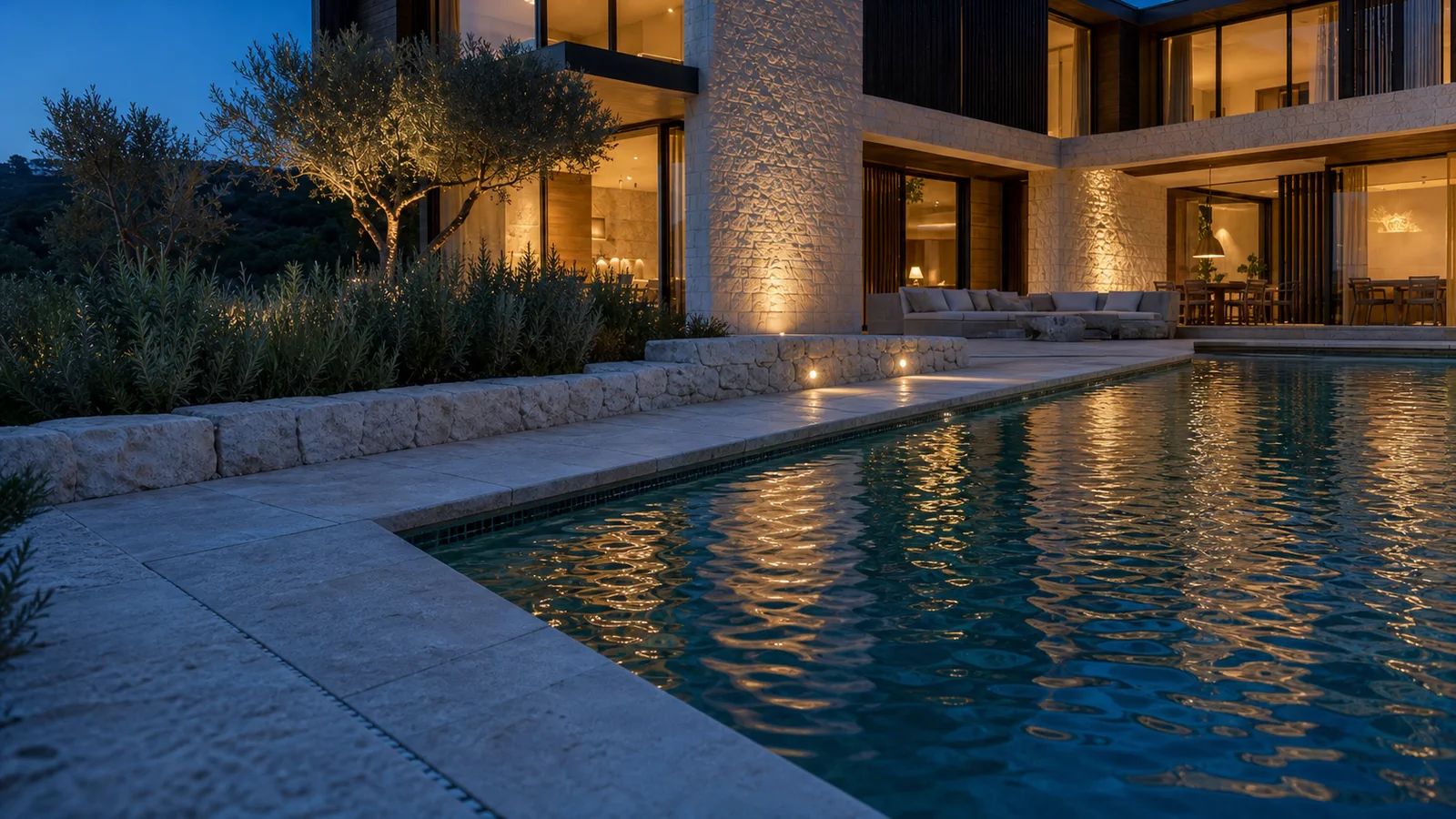 03
03How we can help you on this
Journal
 Process
What Is Architectural Visualization? Process, Tools and the Measure of a Good Rendering
Architectural visualization is the representation of a building with photorealistic images and films before it is built. The four-layer production process, the tools we use and the three measures that separate a good rendering from an ordinary one.
July 20266 min read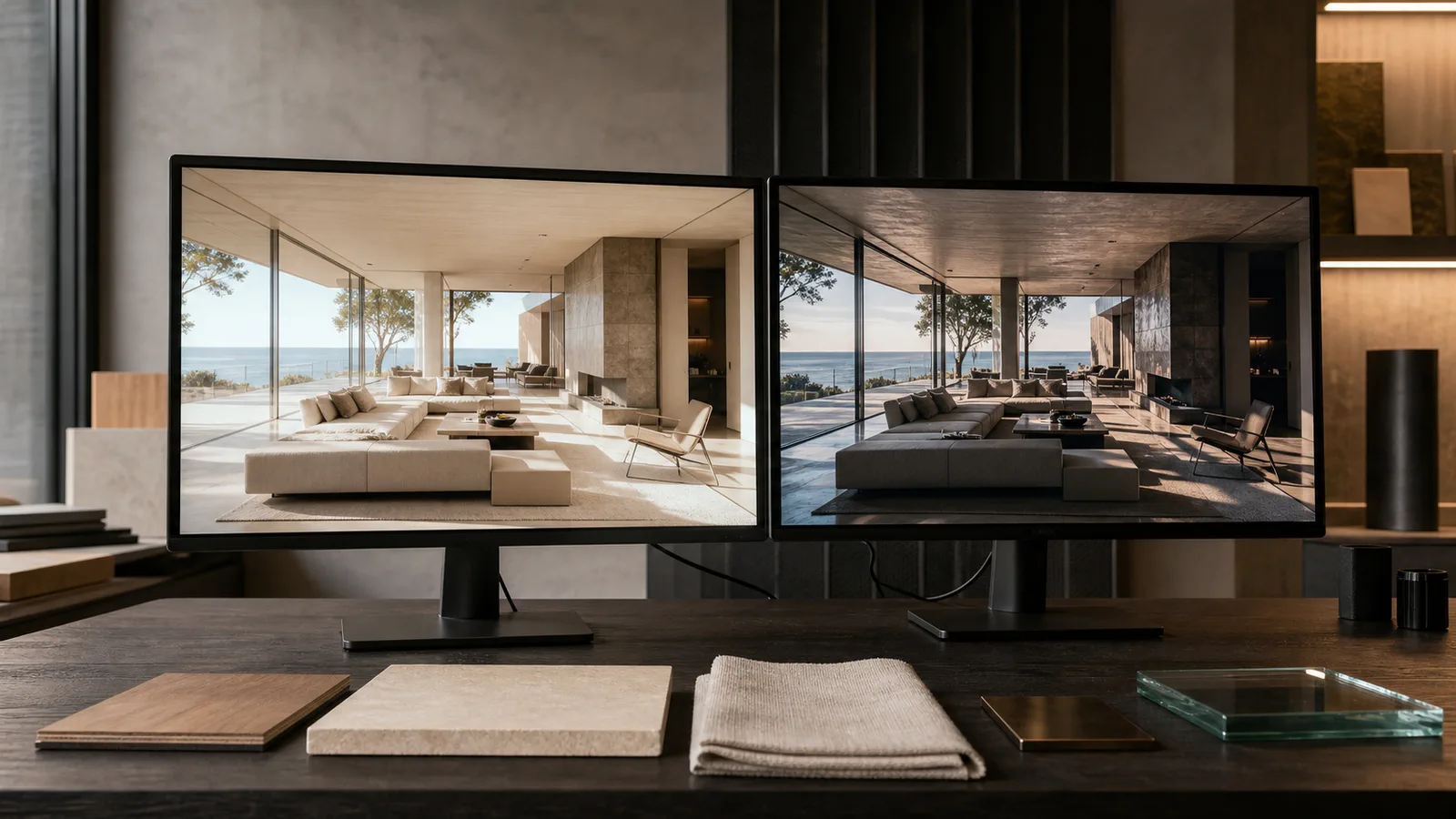 Process
Corona or V-Ray? Which Engine We Use on Which Project
We use both engines; the choice depends on the project. Corona stands out in interiors with its natural light behavior, V-Ray in films and corporate work with its depth of control. Our practical rule and the answer to the 'tool or mastery' question.
July 20265 min read Process
Architectural 3D Visualization and Rendering: See and Decide Before Construction
Architectural rendering and 3D visualization show your villa or hotel with photographic clarity before construction begins. The role of seeing before deciding, photorealism and a transparent quote in the process.
June 20266 min readFrequently asked questions
Vesya Project Team
Design · Build · Construction
- Response time
- Same day
- Channels
- Phone · Email · WhatsApp
Can't find your answer here? Send us your question directly — our team will reply shortly.
Free consultationBecause it is a separate lighting setup: moonlight, the interior lighting plan and the reflections are built layer by layer, independently of the day scene. Separate labor, separate line item.
Vesya Project Team
Usually Corona for night atmosphere and interior-driven scenes; V-Ray for films and complex exterior scenes. Details in our article 'Corona or V-Ray'.
Vesya Project Team
For sales and presentation work, yes — the day/night set is the format that increases conversion the most. For technical uses such as permit annexes, a day set is sufficient.
Vesya Project Team