Architecture & Interior Design Consultancy: When, Why, and to What Scope?
When, why and to what scope is architecture & interior design consultancy needed? We explain why, in hotel and villa investment, a question asked at the right moment is far cheaper than concrete poured on site.
Architecture & interior design consultancy is the expert mind that ties a building idea to the right decisions without wasting money or time. Its true value emerges at two moments: the decision moment before you buy the land, and the transition from design to construction site. In this article we discuss when, why and to what scope consultancy is needed, and what a single-source process brings to hotel and villa investment.
Architecture consultancy, at its simplest, is the moment an expert mind steps in to tie a building idea to the right decisions without wasting money or time. When is it needed? Usually at two critical moments: right before you decide on land or an existing building, and during that rough transition between design and the construction site. Miss both and the mistake gets expensive.
Most people think consultancy means "drawing up a project." It isn't. Consultancy is the layer that questions whether the decisions made before pencil ever touches paper are the right ones. Does the land's zoning suit a villa? Does a basement make sense on that slope? In a hotel concept, what does the cost per room strain? Which material will you regret five years from now? These are not drawing questions, they are decision questions. And when answered wrong, they aren't fixed by drawing; they are fixed only by demolition.
Interior design consultancy, in turn, descends into the space itself. What a lobby makes you feel in the first ten seconds, whether a suite bathroom's ventilation traps odours, whether the kitchen and service flow collides with the guest. In a hotel and a villa these details determine not comfort but reputation. A guest won't know the brand of the marble; but they will never forget why the shower floods the floor.
Value is hidden in the early stage. The fate of an investment is almost sealed by the decisions taken in the first small spending slice; yet the money really flows in the large slice that follows. That is exactly where the mathematics of consultancy lies. A question asked before you buy the land is often a renovation invoice you won't pay two years later.
- Before the decision to buy land or a building — Signing before zoning, level, ground and concept fit are clear is the most expensive kind of inexperience. Feasibility begins right here.
- While the concept is still uncertain — Every square meter drawn before the question "boutique hotel, family villa, or rental investment?" is settled is a decision that will later be undone.
- In the transition from design to site — Beautifully drawn but unbuildable projects are more common than assumed. Here the consultant reconciles the idea on paper with the reality on site.
- When an ongoing project gets stuck — If quantities have swelled, subcontractors contradict each other and cost has spun out of control, an outside expert eye stops the bleeding.
- In an overseas investment — A step taken without knowing foreign regulations, climate and the supply chain looks cheap locally but multiplies in total.
The cost of a wall torn down on site is a drop in the ocean next to a question asked before that wall was ever built.
Not every project needs consultancy at the same depth. The scope must be narrowed or widened to the need; saying "take everything" can be as wrong as saying "take the cheapest." In practice, three levels do the job.
- Point consultancy — An expert opinion for a single decision: land assessment, a second pair of eyes, material or cost control. Short, targeted, limited budget.
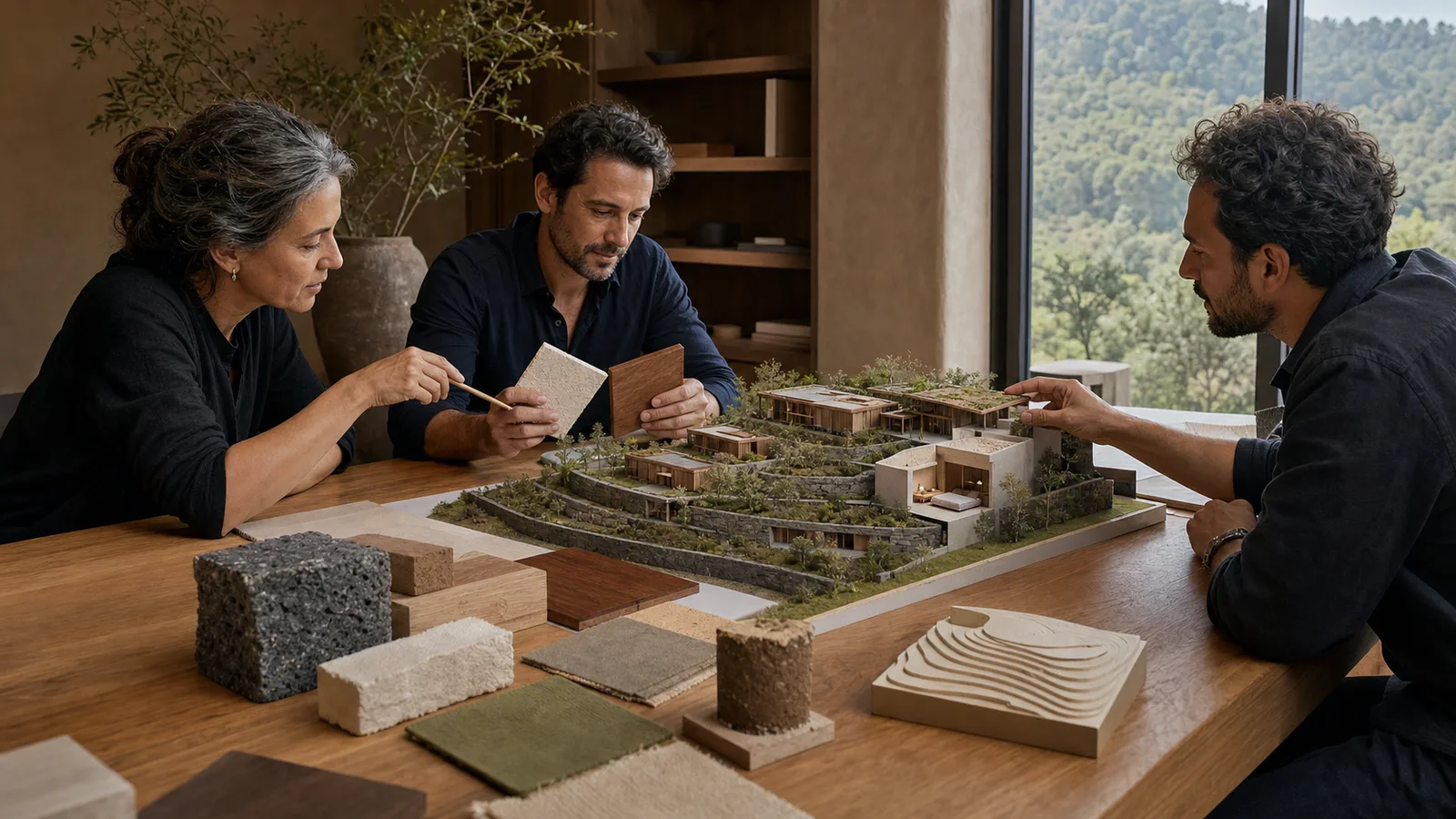
- Comprehensive consultancy — The process that builds the project's skeleton, from feasibility to concept, from the room schedule to the preliminary budget. From here the investor sets off knowing exactly what they will do.
- Consultancy throughout implementation — Continuous oversight that audits cost, quality and schedule while design, manufacturing and construction proceed. In single-source projects this delivers the highest return.
In the classic model the architect works separately, the interior designer separately, the contractor entirely apart. Everyone defends their own work, no one is responsible for the whole. And when a problem arises, a familiar chorus begins: the architect says "my drawing was right," the contractor says "the project was unbuildable anyway," the interior designer says "I was told too late." The investor is left in the middle; and pays the bill too.
In a model where design, implementation and construction proceed under the same roof and bound to the same goal, this gap closes. The one who decides and the one who implements sit at the same table; what one draws, the other does not sabotage on site. Vesya's full-cycle approach is built precisely to close this gap: from idea to turnkey, a single responsibility, a single point of contact, a single account.
Its most concrete counterpart is seen in transparency. The line items of the work are not hidden; with a room schedule, item by item, which work is done in what scope and why at that price stands out clearly. A surprise extra invoice is where the consultancy relationship collapses. In a well-built process there are no surprises; there are revisions, and those too are made by talking.
The honest answer is this: don't believe the "so much per square meter" figures floating around online. In luxury hotels and villas, cost varies end to end according to land, level, material class, mechanical setup and concept. The same square meter can cost twice as much in one project as in another; both are correct, because the two are not the same building.
A serious consultant does not tell you a price up front, they tell you a method. First the need and concept are clarified, then the room schedule is drawn up, then a net, item-by-item quote based on that list is given. In Turkey's 2026 conditions, with currency and supply volatility high, the trustworthy quote is not the one promising a single round figure but the one that clearly shows the items. A range can be given; a firm price only carries meaning once the scope is clear.
A good quote is not a number; it is a list showing what is done, why, and in what scope, for that price.
- 1Clarify your need and intent — Investment, living, or rental income? State the ceiling of your budget and your red lines from the outset. The more the consultant knows, the more accurately they steer.
- 2Have the land or existing situation assessed — Put zoning, level, ground, infrastructure and concept fit on the table before the binding decision.
- 3Build the concept and room schedule — Which space, how many square meters, which function and which material class? Budget is not discussed until these are clear.
- 4Get a net, item-by-item quote — Ask for a transparent, surprise-free quote based on the room schedule. Look at the items, not at a single round figure.
- 5Oversee implementation from a single source — Let design, manufacturing and construction proceed under the same responsibility; let cost and quality control be continuous from start to finish.
Consultancy looks like a cost item added to the project; yet it is often insurance that pays for itself several times over. A question asked at the right moment comes far cheaper than concrete poured on site. That is why Vesya starts the work not with a drawing but with a question: what do you want to do, why, and within which limits? The rest is built on top of that answer, from a single source and with open accounts.
In short
- Consultancy's highest return is hidden before the land/building purchase decision and in the transition from design to the construction site.
- Choose the scope to fit the need: point consultancy, comprehensive consultancy, or oversight throughout implementation.
- Trust not an upfront per-square-meter price, but a net, item-by-item, transparent quote based on the room schedule.
- The model where design, implementation and construction run from a single source reduces surprise invoices: a single point of contact, a single account.
How we can help you on this
Journal
 Process
How to Choose the Right Architecture Firm: The Questions You Should Ask
How do you choose the right architecture firm? A practical guide built around references, itemized proposals and a single point of contact: the questions to ask in the first meeting, the contract clauses everyone misses, and the red flags that should stop you.
July 20267 min read Process
Villa Project Consultancy: What It Is, What It Covers, When You Need It
What is villa project consultancy, what does it cover and when do you need it? We explain, through an expert's eye, the difference made by single-point management — from feasibility to site supervision — and how the cost becomes clear.
July 20267 min read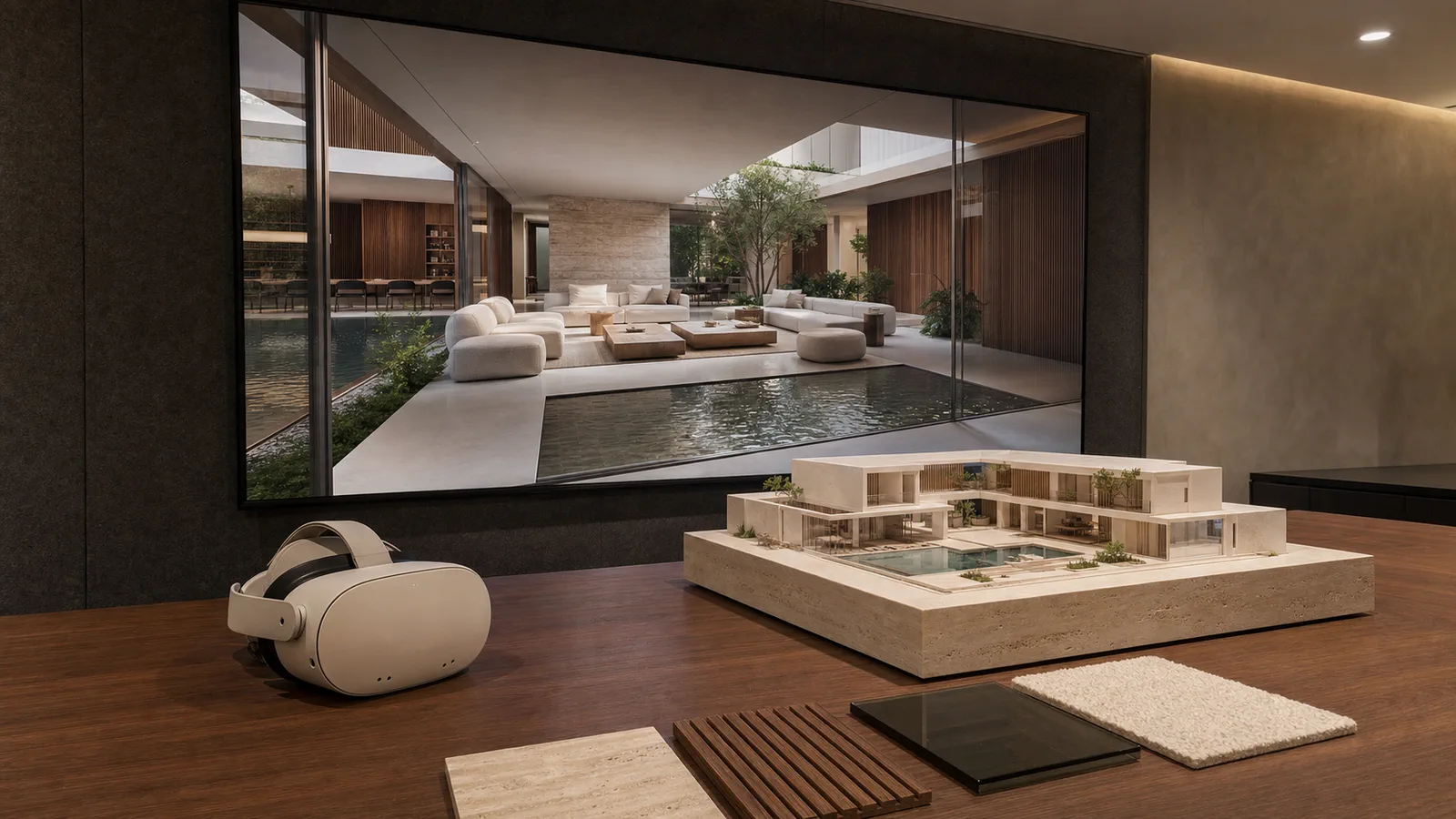 Process
Architectural 3D Visualization and Rendering: See and Decide Before Construction
Architectural rendering and 3D visualization show your villa or hotel with photographic clarity before construction begins. The role of seeing before deciding, photorealism and a transparent quote in the process.
June 20266 min read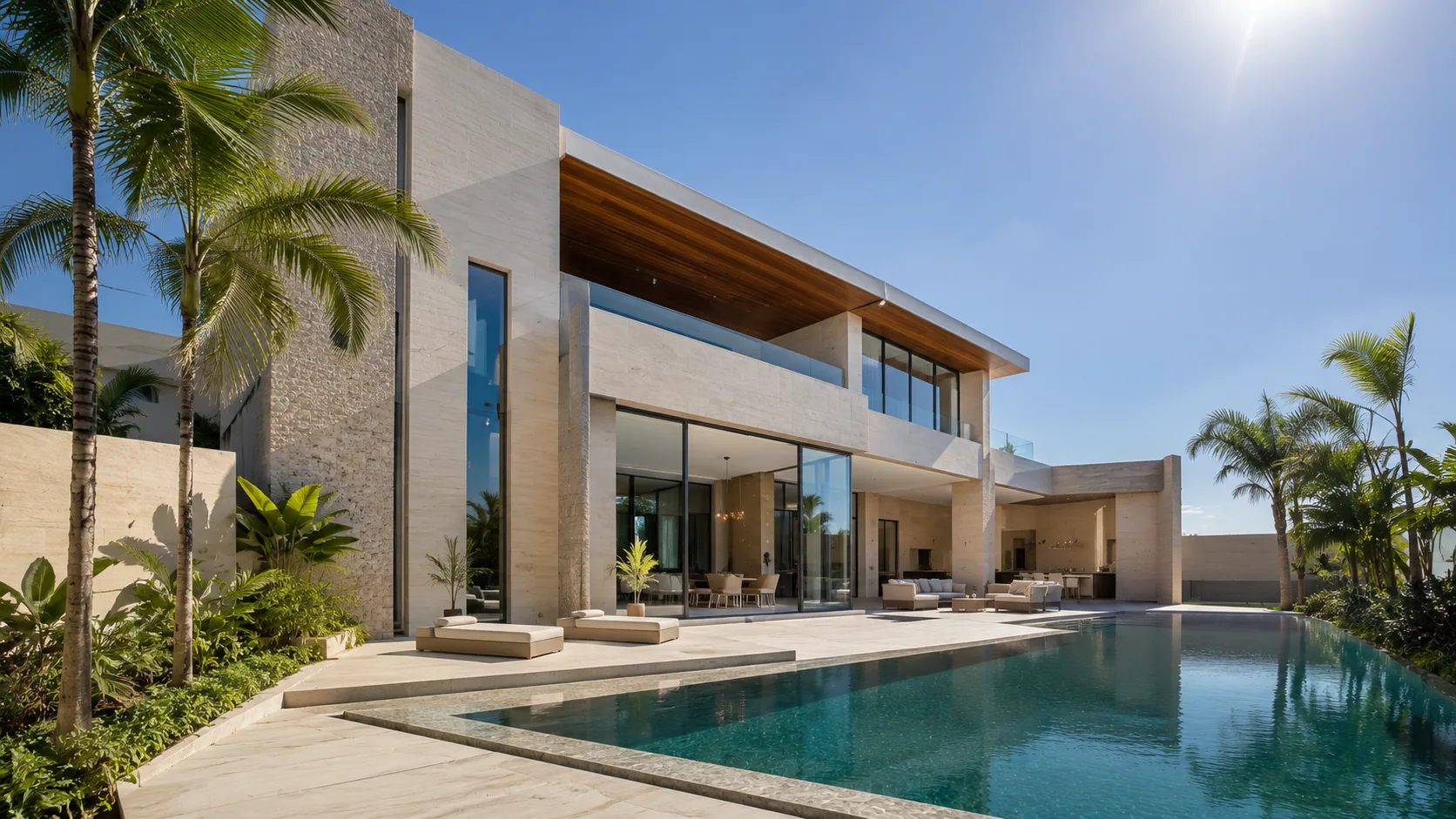 Trends
What Is Bauhaus? The School and Movement Where Modern Design Was Born
Bauhaus is the school and movement that laid the foundation of modern design. We examine its "form follows function" principle, its philosophy of simplicity and functionality, its characteristic elements and its reflection in today's luxury interiors.
July 20267 min read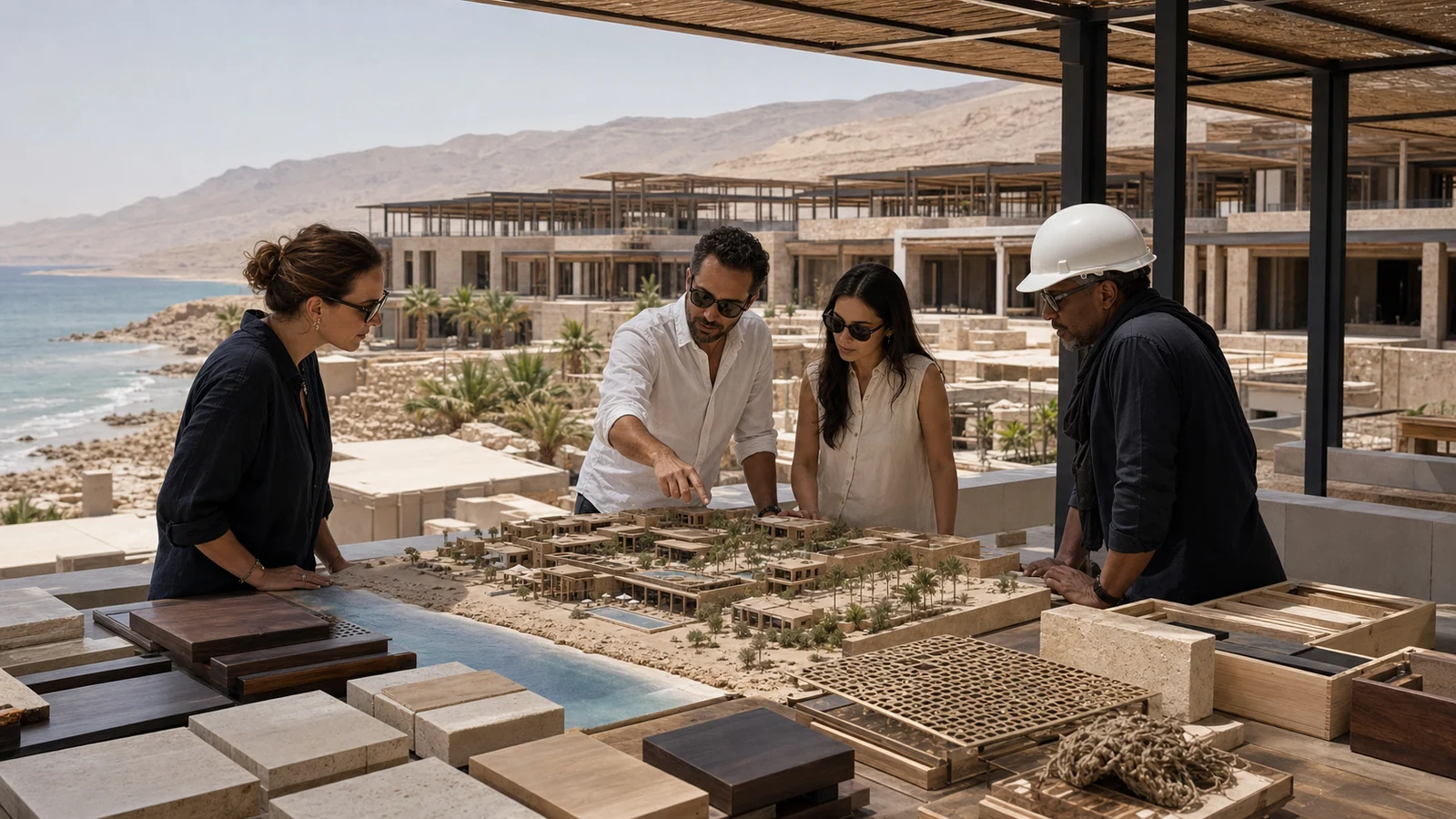 Process
Villa and Hotel Projects Abroad: A Guide to the International Process and Coordination
A villa or hotel project abroad demands that local regulation, procurement and remote coordination be managed from a single hand. We explain how to run it with the right sequence, a transparent budget and a line-by-line quotation, drawing on examples from the field.
June 20267 min readFrequently asked questions
Vesya Project Team
Design · Build · Construction
- Response time
- Same day
- Channels
- Phone · Email · WhatsApp
Can't find your answer here? Send us your question directly — our team will reply shortly.
Free consultationThe most valuable moment is the decision moment before you buy the land or the existing building; the second critical point is the transition from design to the construction site. If zoning, level, ground and concept fit are assessed before signing, the expensive mistakes that would later be corrected by demolition and renovation are cut off. If cost has swelled on an ongoing project or subcontractors contradict each other, an outside expert eye can also be brought in to put the process back on track.
Vesya Project Team
No. Project drawing is putting decisions already made onto paper; consultancy is the layer that questions, before the drawing, whether those decisions are right. Questions such as the land's fit to the concept, the long-term outcome of a material choice, and where the cost will be strained are the domain of consultancy. A wrong decision is not fixed by drawing; but if caught at the consultancy stage it is solved cheaply.
Vesya Project Team
In practice, three levels do the job. Point consultancy is for a single decision: land assessment, a second pair of eyes or cost control. Comprehensive consultancy builds the project's skeleton, from feasibility to concept and the room schedule. Consultancy throughout implementation continuously audits cost, quality and schedule while construction proceeds. The scope is narrowed or widened according to the project's size and risk.
Vesya Project Team
It is wise to be cautious of any source quoting an upfront, firm price per square meter. Cost varies end to end according to land, level, material class, mechanical setup and concept. The right method is to first clarify the need and concept, then draw up a room schedule and get a net, item-by-item quote based on that list. In Turkey's 2026 conditions, a transparent quote that clearly shows the items is more trustworthy than a single round figure.
Vesya Project Team
In the classic model where the architect, interior designer and contractor work separately, no one is responsible for the whole; when a problem arises everyone points at the others and the investor pays the bill. In the single-source model where design, implementation and construction proceed under the same roof, there is a single point of contact, a single responsibility and a single account. This reduces surprise extra invoices and makes the process transparently trackable with a room schedule.
Vesya Project Team
Calling it essential would be no exaggeration. A step taken without knowing foreign regulations, the local climate, ground conditions and the supply chain looks cheap locally but multiplies in the total cost. In overseas projects, consultancy maps both legal and technical surprises from the outset and safeguards the return on the investment.
Vesya Project Team