
Villa Project Consultancy: What It Is, What It Covers, When You Need It
What is villa project consultancy, what does it cover and when do you need it? We explain, through an expert's eye, the difference made by single-point management — from feasibility to site supervision — and how the cost becomes clear.
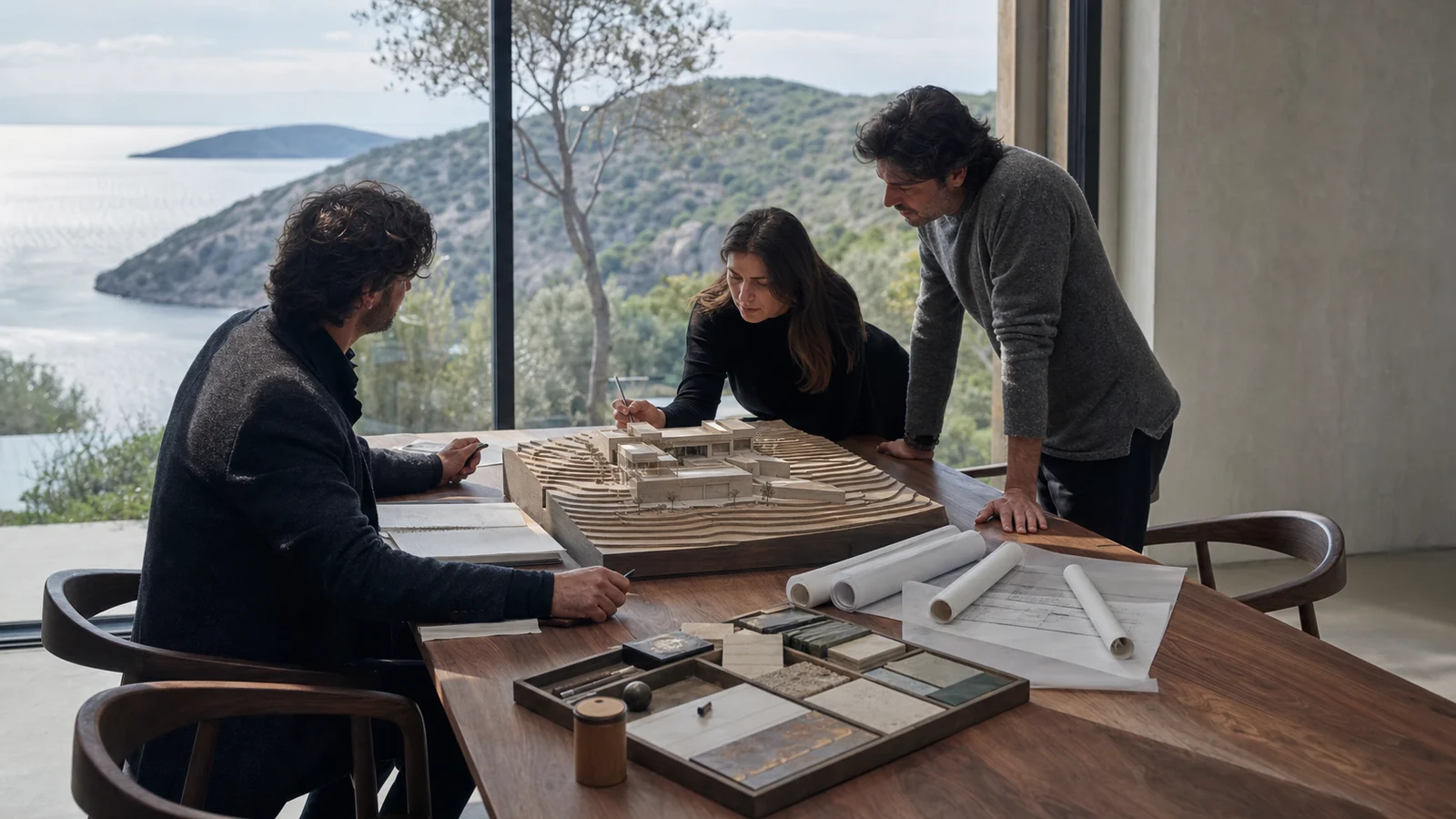
Villa project consultancy is the expert service that, as a villa is carried from land to turnkey delivery, gathers the decisions, the risks and every stakeholder into one hand. Instead of dealing one by one with the architect, the contractor and the municipality, you have a single point of contact who runs the process on your behalf. But what exactly does this service cover, when do you need it, and how does its cost become clear?
Villa project consultancy, in a single sentence: it is the expert service that builds the decision framework on your behalf as a villa moves from raw land to turnkey delivery, foresees risk, and brings every stakeholder together under one hand. In other words, instead of wrestling one by one with the architect, the structural and mechanical engineers, the municipality and the contractor, you have a single point of contact who manages them all.
We gave the definition above; but the real value hides behind it. A consultant does not decide in your place — they make sure you make the right decision. Building a villa is a once- or twice-in-a-lifetime affair for most people; for a consultant it is a weekly routine. They have already seen which plot can carry what, which line item blows the budget and where, and how well a given contractor keeps their word. In essence, the job is to turn that difference in experience to your advantage.
The word is used very loosely in the market. Some firms merely draw and call it “consultancy”; others produce a cost estimate and walk away. Real consultancy is neither of these. It is a matter of judgment that comes before the project itself and continues throughout it: asking the right question in the right order, telling you what the plot can truly bear, and grounding the budget in a room-by-room schedule rather than in wishful thinking.
This is where the difference shows. In the bad scenario you first fall in love with a beautiful render, then learn — once construction has begun — that the design does not fit the zoning plan, the soil survey or your budget. In good consultancy the order is reversed: first the questions of what can be built, for how much and in what time are settled; aesthetics then take their place inside that framework. The story of the villa is written at the table, not on the site.
The most expensive m² is never the most expensive material; it is the m² that is torn down and rebuilt. The whole job of consultancy is to make sure you never live through that demolition.
Although the scope varies from firm to firm, the backbone of a genuine service is clear. The following should be written line by line in the contract; instead of vague phrases like “all inclusive,” you should see exactly what is included and what is excluded.
- Feasibility and reading the plot — Zoning status, floor and building coverage ratios, setback distances, level differences and soil; a clear determination of how many m² of enclosed area and how many stories the plot allows.
- Concept and needs program — How many bedrooms, how many bathrooms, the indoor–outdoor living scheme, the pool–terrace–view relationship; drawing up the room schedule according to the family's way of life.
- Preliminary cost and budget framework — Separate estimates for the shell, finishes, mechanical and electrical, landscaping and pool; setting the budget within a realistic range from the outset.
- Technical project coordination — Producing the architectural, structural, mechanical, electrical and landscape projects under a single scheme, without clashing with one another.
- Permit and official process tracking — Filing the municipality, relevant authorities and required approvals; letting the process run without you having to chase it.
- Tender and contractor selection — Inviting the right firms, comparing bids apple to apple, and setting the contract terms in your favour.
- Site supervision and progress-payment control — Checking on site that the construction complies with the project and the quality standard, and approving payments according to the work actually completed.
Note this: half of this list is not about design but about protection. The real value of a consultant emerges less from the beauty of the drawing than from that second half, which protects your money, your time and your nerves.
The right time is the one most people miss: before buying the plot. On a given plot, the answer to the question “what can I build here?” directly determines the plot's value. A beautiful villa cannot be built on the wrong plot; all you get is an expensive mistake. In practice, people usually realize they need consultancy at one of three moments.
- 1Before deciding to buy the plot — to get a solid answer to the question, “How many m², how many stories and which view can I capture on this parcel?” One hour of correct analysis at this stage prevents hundreds of thousands of liras of later regret.
- 2When starting the design — to clarify the needs program and the budget framework before sitting down with the architect; so that the architect designs toward a defined target rather than into a void.
- 3When moving to construction — for contractor selection, the contract and site supervision; to be sure the work progresses at the promised quality.
There is also a hidden threshold: if you are building a villa abroad or somewhere far from the province where you live, consultancy is not a luxury but a necessity. If there is no one on site acting as your eyes, distance turns every small mistake into a big problem.
In villa projects, most money and time are lost where responsibility is passed around between stakeholders like a ball. The architect says “the engineer said so,” the contractor says “it wasn't in the project,” the plumber says “nobody told me”; you, the homeowner, are the one caught in the middle. The single-point model closes this gap: when design, implementation and construction sit under one roof, no one can point a finger at anyone else, because there is only one point of contact.
Vesya's full-cycle approach aims at exactly this. When the hand that draws the concept and the hand that pours the concrete on site share the same discipline, that famous gap between the villa on paper and the villa that gets built closes. Here consultancy is not a sale but a relationship of trust; the measure of success is not the signed contract but the home that, on handover, makes you say “it turned out exactly as we discussed.”
Let us start here: approach the “villa price per m² is such-and-such” tables you see online with caution. In the Turkey of 2026, material prices, the exchange rate and labour are so volatile that a firm figure given without seeing the plot is either inflated or will multiply later. A serious consultant will not give you a firm price upfront; they first give a range, then turn that range, line by line, into a real quote with a room schedule.
The right method is this: it is written down in which quality class each space of the villa (kitchen, wet areas, façade, pool, landscaping) will be built, each line item is priced separately, and the total emerges from this transparent table. That way, when you want to cut the budget you see where to cut, and when you want to raise it you see what will change. Price stops being a surprise and becomes a decision you control. The consultancy fee itself is a very small item relative to the total project cost; more often than not it is less than the cost of a single mistake it prevents.
The answers to a few concrete questions quickly show whether the firm in front of you is a real consultant or a fancy drawing office.
- Is the scope clear in the contract — Does it spell out, one by one, which items are included under the word “consultancy” and which are excluded?
- How do they give the cost — Do they name a firm figure immediately, or explain that they will give a range and firm it up with a room schedule? The second is the right one.
- Are they on site — Are site supervision and progress-payment control included in the service, or do they hand over the drawing and withdraw?
- Are the references real — Can they show finished, visitable projects whose owners you can talk to, or do they present only renders?
- Is the point of contact single — When a problem arises, is there a single name you can call, or is responsibility scattered among stakeholders?
If you set out with a firm that can comfortably answer all five of these questions, the villa process becomes not a struggle but a manageable project. That, after all, is what good consultancy gives you: an order that lifts the burden off your shoulders and hands it to those who know the work.
In short
- Villa consultancy is not drawing but decision management: first the question of what can be built, for how much and in what time; aesthetics come after.
- The best time is before buying the plot; the m² and stories a parcel can carry directly determine its value.
- Trust not a firm per-m² price but a transparent quote made clear line by line with a room schedule.
- Keeping design, implementation and construction in one hand prevents responsibility from getting lost among stakeholders.
How we can help you on this
Journal
 Process
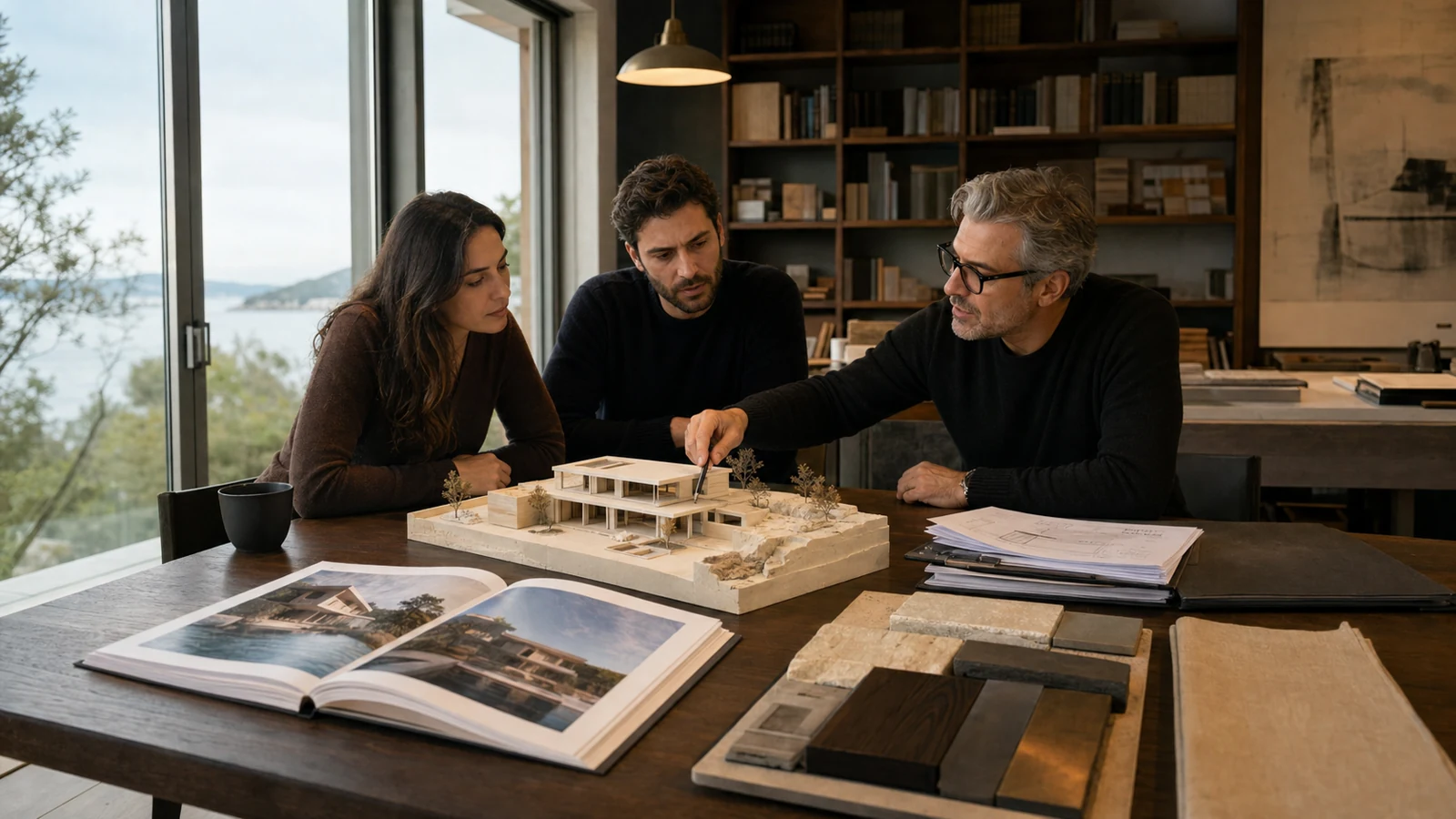
How to Choose the Right Architecture Firm: The Questions You Should Ask
How do you choose the right architecture firm? A practical guide built around references, itemized proposals and a single point of contact: the questions to ask in the first meeting, the contract clauses everyone misses, and the red flags that should stop you.
July 20267 min read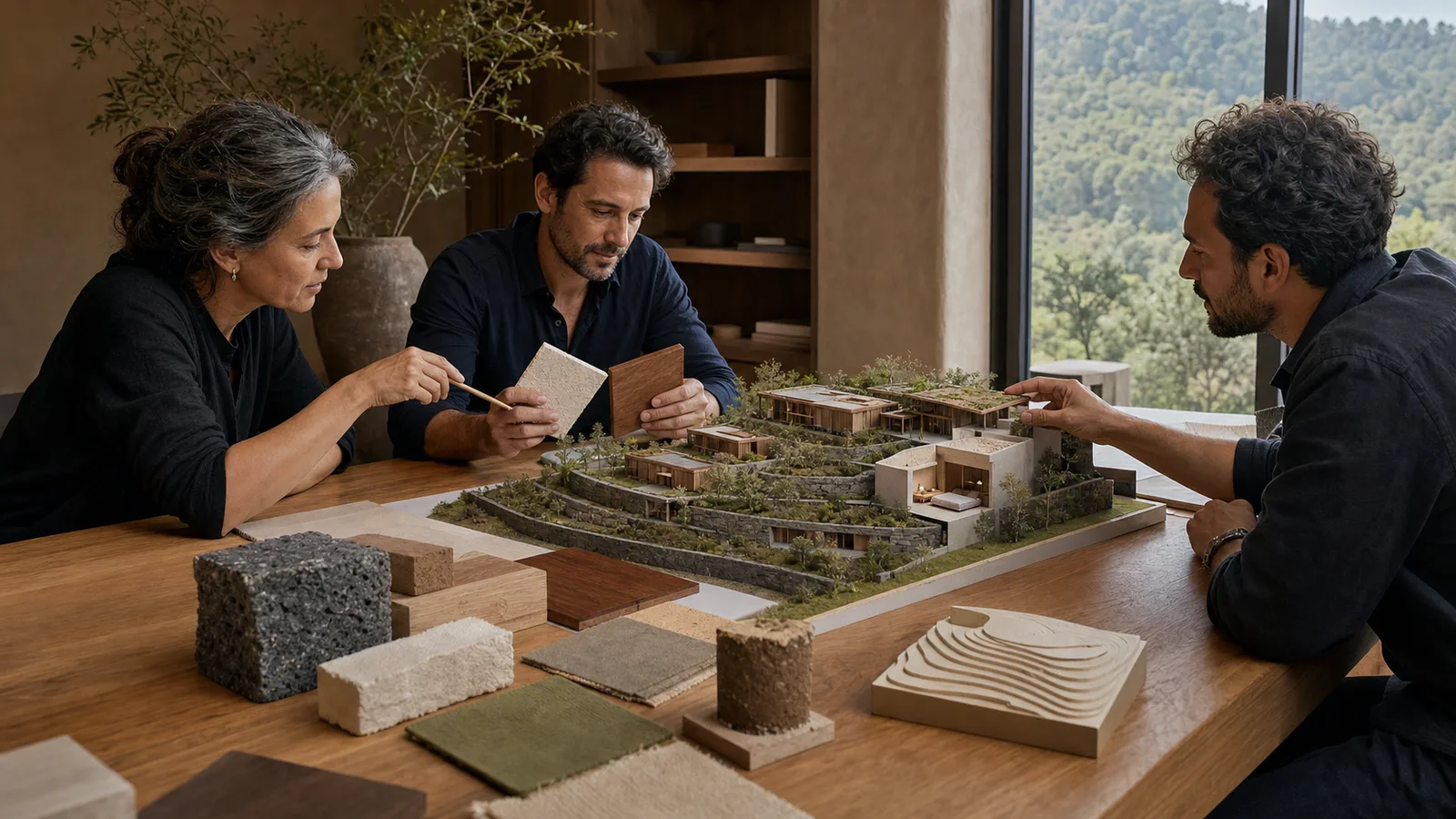 Process
Architecture & Interior Design Consultancy: When, Why, and to What Scope?
When, why and to what scope is architecture & interior design consultancy needed? We explain why, in hotel and villa investment, a question asked at the right moment is far cheaper than concrete poured on site.
July 20267 min read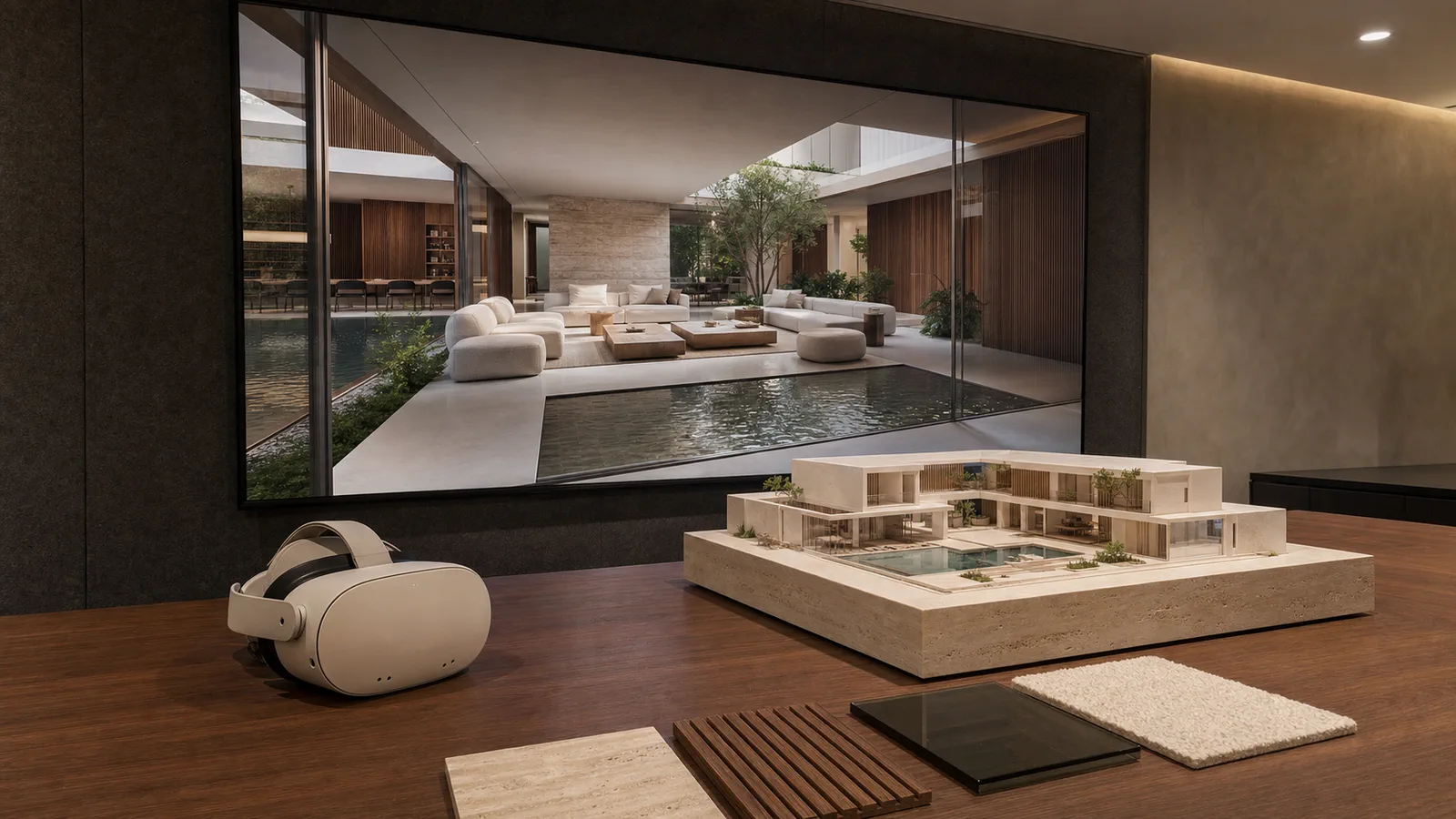 Process
Architectural 3D Visualization and Rendering: See and Decide Before Construction
Architectural rendering and 3D visualization show your villa or hotel with photographic clarity before construction begins. The role of seeing before deciding, photorealism and a transparent quote in the process.
June 20266 min read Process
What Does Turnkey Mean? Definition, Scope and Process
Turnkey means entrusting a project, from design to finished handover, to a single firm under a single contract. What it covers, how it differs from managing the work piece by piece, and what to watch for — we make it clear.
July 20266 min read Process
Villa and Hotel Projects Abroad: A Guide to the International Process and Coordination
A villa or hotel project abroad demands that local regulation, procurement and remote coordination be managed from a single hand. We explain how to run it with the right sequence, a transparent budget and a line-by-line quotation, drawing on examples from the field.
June 20267 min readFrequently asked questions
Vesya Project Team
Design · Build · Construction
- Response time
- Same day
- Channels
- Phone · Email · WhatsApp
Can't find your answer here? Send us your question directly — our team will reply shortly.
Free consultationVilla project consultancy is the expert service that manages the decision process on your behalf as a villa moves from raw land to turnkey delivery. It brings feasibility, concept, the cost framework, technical project coordination, permit tracking, contractor selection and site supervision together under a single point of contact. Its aim is not merely to produce a beautiful design; it is to manage the risk to time, budget and quality from the outset by preventing wrong decisions.
Vesya Project Team
The best time is before buying the plot, because how many m² of enclosed area, how many stories and which view a parcel allows directly determines that plot's value. Beyond that, consultancy is critical when starting the design to clarify the needs program and the budget, and when moving to construction for contractor selection and site supervision. If you are building a villa far from where you live or abroad, consultancy is not a preference but a necessity.
Vesya Project Team
A genuine service includes this backbone: plot feasibility and zoning reading, the needs program and concept, preliminary cost and budget framework, coordination of the architectural, structural, mechanical, electrical and landscape projects, permit and official-process tracking, tender and contractor selection, and finally site supervision with progress-payment control. These items must be written clearly in the contract, with a distinction between what is included and what is excluded.
Vesya Project Team
Do not trust firm per-m² prices given without seeing the plot; under Turkey's 2026 conditions, the volatility of materials, the exchange rate and labour usually makes these figures inflated or ones that multiply later. The right method is to give a realistic range first, then turn that range, line by line, into a firm quote with a room schedule that states the quality class of each space. The consultancy fee, for its part, is a small item relative to the total project cost and often costs less than a single mistake it prevents.
Vesya Project Team
In villa projects, most money and time are lost in the gaps where responsibility is passed around like a ball between the architect, the structural engineer, the contractor and the plumber. When design, implementation and construction sit under one roof, there is a single point of contact, no one can pass responsibility to someone else, and the gap between the villa on paper and the villa that gets built closes. This increases both accountability and consistency in the final quality.
Vesya Project Team
Five questions are enough: Is the scope in the contract clear, item by item? Do they give the cost immediately as a firm figure, or firm it up with a range and a room schedule? Are site supervision and progress-payment control included in the service? Can they show real, finished, visitable references? When a problem arises, is there a single point of contact you can call? A firm that comfortably answers all five is not a drawing office but a real consultant.
Vesya Project Team